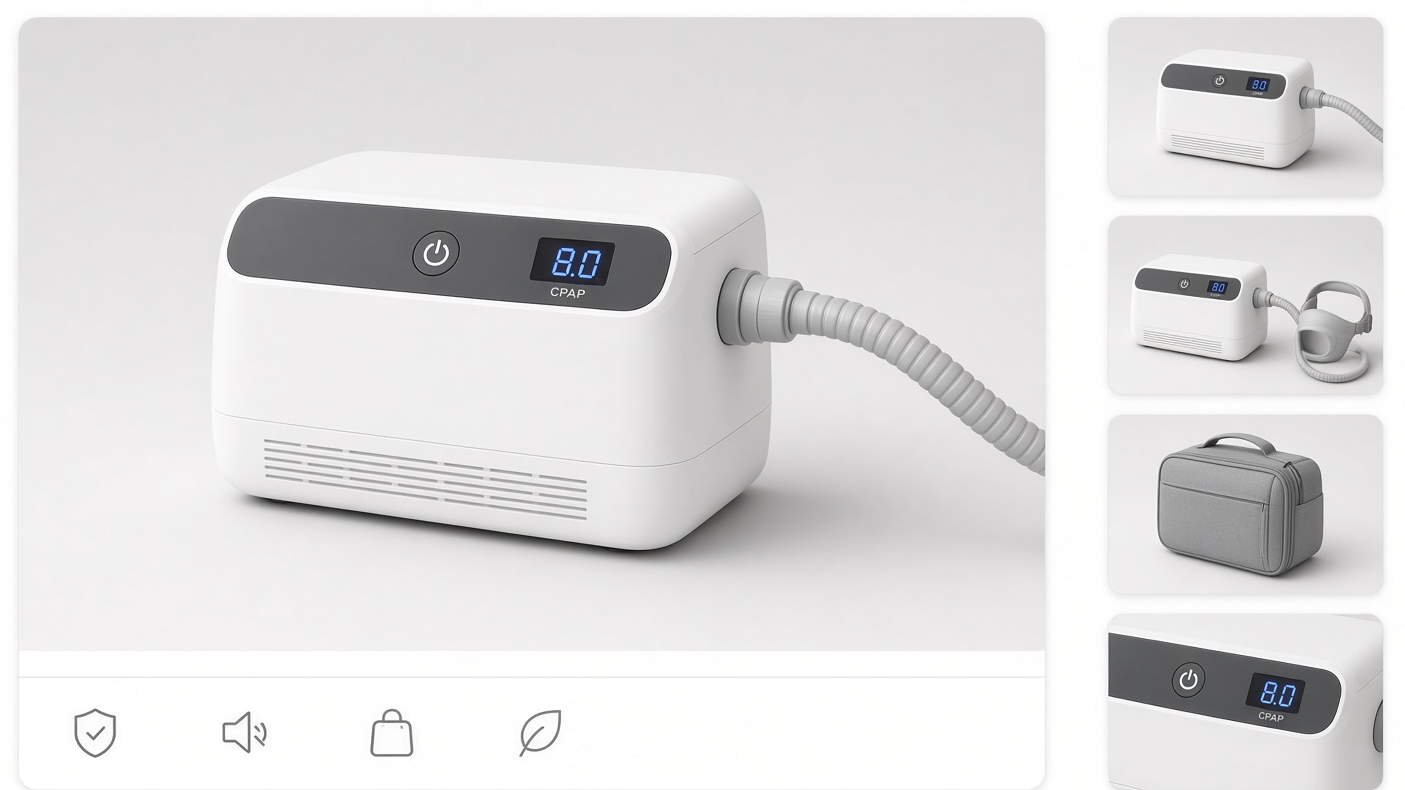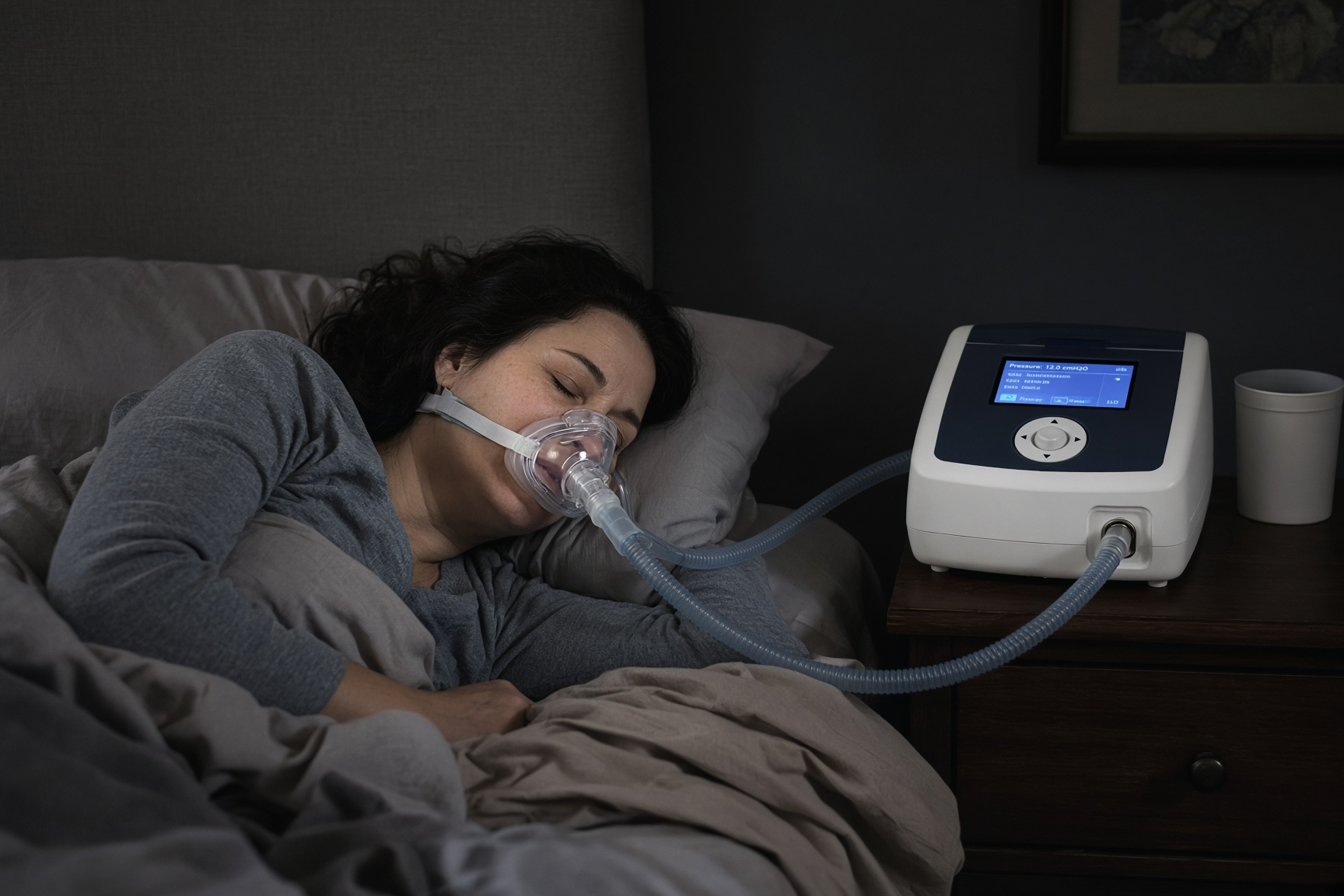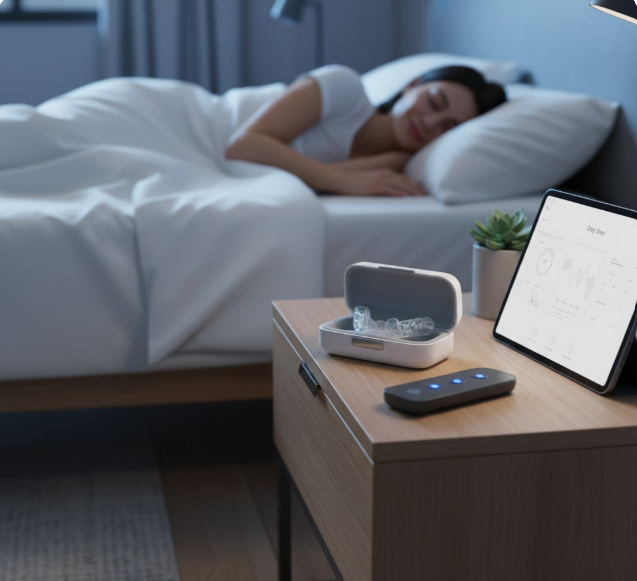
You've been diagnosed with sleep apnea. Your doctor mentioned CPAP. Maybe you tried it and couldn't tolerate it. Maybe you haven't tried it yet, but you've heard the stories, the mask, the noise, the claustrophobia, the dry mouth, the marks on your face, the travel hassle.
You're wondering: isn't there another way?
The answer is yes. CPAP (continuous positive airway pressure) remains the gold standard treatment for obstructive sleep apnea because it works for almost everyone when used correctly. But "when used correctly" is doing a lot of heavy lifting in that sentence. Real-world CPAP adherence rates hover around 50%, meaning half of all people prescribed CPAP don't use it enough to benefit.
And an unused treatment, no matter how effective, helps no one.
The good news: sleep medicine has evolved dramatically. In 2026, you have more treatment options than ever before, from dental devices to implantable nerve stimulators to precision surgeries guided by drug-induced sleep endoscopy. The key is finding the right treatment for your specific anatomy, severity, and lifestyle.
This guide covers every major CPAP alternative available today, who each option works best for, and how to navigate the decision with your sleep specialist.
First: Understanding Why CPAP Is Still the Standard
Before exploring alternatives, it's worth understanding why CPAP became the default treatment, and why your doctor likely recommended it first.
CPAP works mechanically. It delivers a continuous stream of pressurized air through a mask, creating a pneumatic splint that holds your airway open. It doesn't matter why your airway collapses, whether it's your tongue, your soft palate, your throat walls, excess tissue, or some combination. CPAP pressurizes the entire space.
This universality is its strength. CPAP works for mild, moderate, and severe sleep apnea. It works regardless of body weight or facial anatomy. When used consistently (typically defined as 4+ hours per night), it dramatically reduces apnea events and improves oxygen levels.
But that universality is also its limitation. CPAP is a one-size-fits-all solution in a world where sleep apnea has many different causes. Some people have obstruction primarily at the tongue base. Others have palatal collapse. Some have nasal obstruction that makes CPAP intolerable. Some have anatomy that could be permanently corrected with surgery.
Alternatives to CPAP work by addressing these individual differences. They tend to be more targeted, which means they work brilliantly for the right patients and not at all for the wrong ones. Success depends on matching the treatment to the person.
Option 1: Oral Appliance Therapy
What it is: A custom-fitted dental device worn during sleep that repositions your lower jaw (mandible) forward, pulling your tongue and soft tissues away from your airway.
Also called: Mandibular advancement device (MAD), mandibular advancement splint (MAS), dental sleep device
Oral appliances look something like athletic mouthguards or orthodontic retainers, though they're considerably more sophisticated. They're fabricated by dentists with specialized training in dental sleep medicine, custom-fitted to your teeth, and adjustable to find the optimal jaw position.
How Oral Appliances Work
Your tongue is anchored to your lower jaw. When you advance the mandible forward, even by a few millimeters, the tongue comes with it. This increases the airway space behind the tongue and reduces the likelihood of collapse.
The best oral appliances are titratable, meaning they can be gradually adjusted over weeks to find the "sweet spot", forward enough to control apnea, but not so far forward that it causes jaw pain or bite changes.
Who Oral Appliances Work Best For
Oral appliances are FDA-approved for mild to moderate obstructive sleep apnea and for severe OSA in patients who can't tolerate CPAP. In practice, they work best when:
- Apnea is mild to moderate. Success rates are highest when AHI (apnea-hypopnea index) is under 30. Some patients with severe apnea respond well, but the odds are lower.
- Obstruction is primarily at the tongue base. If your airway collapses mainly because your tongue falls back, advancing the jaw helps. If collapse is primarily palatal or in the throat walls, jaw advancement has less effect.
- You have enough healthy teeth. Oral appliances anchor to your teeth. You typically need at least 8-10 teeth in each arch, and they can't have significant periodontal disease.
- You don't have severe TMJ problems. Some jaw joint issues can be worsened by mandibular advancement. A dental sleep specialist can assess your TMJ before proceeding.
Effectiveness
A 2015 meta-analysis in the journal Sleep found that oral appliances reduced AHI by an average of about 50%, less than CPAP's near-total elimination of events, but still clinically meaningful. More importantly, long-term adherence with oral appliances is higher than with CPAP, and treatment that's used consistently outperforms treatment that sits in a closet.
Studies comparing health outcomes (rather than just AHI numbers) have found similar cardiovascular benefits between CPAP and oral appliances when both are used consistently.
Pros and Cons
Pros:
- No mask, no hose, no machine, no electricity
- Silent
- Easy to travel with
- High adherence rates
- Comfortable for most people once fitted
Cons:
- Less effective than CPAP for severe apnea
- Can cause jaw discomfort, especially initially
- May cause gradual bite changes over years of use
- Requires healthy teeth
- Insurance coverage varies; out-of-pocket costs range from $1,500-$3,000
- Requires finding a qualified dental sleep medicine provider
Finding a Provider
Look for a dentist who is a member of the American Academy of Dental Sleep Medicine (AADSM) or has Qualified Dentist status from the American Board of Dental Sleep Medicine. These credentials indicate specialized training beyond general dentistry.
Option 2: Positional Therapy
What it is: Techniques and devices that prevent you from sleeping on your back, keeping you on your side where the airway is less likely to collapse.
For many people, estimates range from 25% to 60% of sleep apnea patients, apnea events occur primarily or exclusively when sleeping supine (on the back). This is called positional obstructive sleep apnea. In these patients, simply avoiding the supine position can dramatically reduce or even eliminate apnea.
How Positional Therapy Works
When you lie on your back, gravity pulls your tongue and soft tissues directly backward into your airway. When you lie on your side, gravity pulls these tissues laterally, away from the airway. For people with marginal airways, this difference is enough to prevent obstruction.
Positional Therapy Options
Tennis ball technique: The classic low-tech approach. Sew a pocket on the back of a sleep shirt and insert a tennis ball. When you roll onto your back, discomfort prompts you to turn. Effective but uncomfortable and often abandoned.
Positional pillows: Specialty pillows designed to make side-sleeping easier and back-sleeping harder. Effectiveness varies.
Wearable devices: Modern positional therapy has been transformed by wearable devices that detect when you roll onto your back and deliver gentle vibrations to prompt repositioning, without fully waking you. Devices like Night Shift, Philips NightBalance, and others fit around the neck or chest and provide a more sophisticated, comfortable solution than the tennis ball.
Who Positional Therapy Works Best For
- Confirmed positional sleep apnea. Your sleep study should show that your AHI is at least 50% lower in non-supine positions compared to supine. Ideally, non-supine AHI should be below 5-10.
- Mild to moderate OSA. Positional therapy rarely fully controls severe apnea.
- People who naturally sleep on their back. If you already sleep on your side, positional therapy won't help.
Pros and Cons
Pros:
- Non-invasive
- No equipment beyond a small wearable
- Can be used alongside other treatments
- Relatively inexpensive
- Some devices covered by insurance
Cons:
- Only works for positional apnea
- Doesn't eliminate apnea, just reduces it
- Some people find vibrating devices disruptive
- May be difficult to maintain long-term
Option 3: Hypoglossal Nerve Stimulation (Inspire)
What it is: An implantable device that stimulates the nerve controlling your tongue, causing it to move forward and open your airway with each breath.
Inspire is often called a "pacemaker for sleep apnea" because it works similarly to a cardiac pacemaker, a small generator implanted under the skin sends electrical signals to move tissue at the right moment.
How It Works
The hypoglossal nerve controls the genioglossus muscle, the main muscle that protrudes your tongue. Inspire consists of three components:
- A small generator implanted under the skin in the upper chest (like a pacemaker)
- A stimulation lead tunneled under the skin to the hypoglossal nerve in the neck
- A sensing lead placed between the ribs to detect breathing effort
When you're asleep and the sensing lead detects an inhalation, the generator sends a mild electrical pulse to the hypoglossal nerve, causing your tongue to move forward and open the airway. This happens automatically with every breath, all night long.
You turn the device on with a handheld remote before bed and turn it off when you wake up.
Who Inspire Works Best For
FDA approval and candidacy requirements include:
- Moderate to severe obstructive sleep apnea (AHI between 15 and 100)
- Inability to tolerate or benefit from CPAP
- BMI under 40 (some centers have stricter limits around 32-35)
- Age 18 or older
- No complete concentric collapse at the palate (determined by drug-induced sleep endoscopy)
The last criterion is critical. Before implantation, you undergo a DISE procedure, a brief exam where you're sedated and a doctor uses a tiny camera to observe exactly how and where your airway collapses. If your soft palate collapses in a complete circle (concentric collapse), the tongue stimulation won't help because the obstruction is above the tongue's influence.
Effectiveness
The STAR trial, published in the New England Journal of Medicine, found that Inspire reduced AHI by 68% at 12 months. Five-year follow-up data showed durable results, with median AHI reduced from 29 to 6, essentially from moderate-severe apnea to near-normal.
Patient satisfaction rates are high, typically above 90%, and adherence is excellent, the device requires no action beyond clicking a button.
Pros and Cons
Pros:
- No mask, no machine, no airway pressure
- High adherence (it's implanted)
- Durable long-term results
- Most patients report it's unnoticeable during use
- Can be turned off if needed
Cons:
- Requires surgical implantation under general anesthesia
- Not everyone is a candidate (BMI limits, anatomy requirements)
- Expensive (often $30,000-$50,000 before insurance)
- Battery requires replacement every 10-15 years
- Some patients feel the stimulation or find it uncomfortable
- Rare risks of infection, lead migration, or tongue weakness
Getting Evaluated
Inspire is offered at select medical centers with trained implanting surgeons. The evaluation process typically involves a clinic visit, imaging, and a DISE procedure to assess candidacy.
Option 4: Surgical Options
Surgery for sleep apnea aims to permanently enlarge the airway or remove/stiffen the tissues that collapse during sleep. Modern sleep surgery has evolved far beyond the aggressive procedures of decades past, with better patient selection and more targeted techniques.
Uvulopalatopharyngoplasty (UPPP)
What it is: Surgical removal of excess tissue from the soft palate, uvula, and often the tonsils to widen the upper airway.
UPPP was the first widely performed sleep apnea surgery and remains common today, though its role has narrowed. It works best when obstruction is primarily at the palatal level and tonsils are enlarged.
Success rates: Highly variable, 40-60% reduction in AHI on average, but response depends heavily on patient selection. UPPP alone rarely cures moderate or severe apnea.
Considerations: Significant post-operative pain for 1-2 weeks. Possible long-term side effects include voice changes, difficulty swallowing, and velopharyngeal insufficiency (nasal regurgitation of liquids). Often performed with other procedures.
Tonsillectomy and Adenoidectomy
In patients (especially children and young adults) with significantly enlarged tonsils, removing them can be curative. Even in adults, tonsillectomy is sometimes the first-line surgical option if tonsils are a major contributor to obstruction.
Nasal Surgery
What it includes: Septoplasty (straightening a deviated septum), turbinate reduction, nasal valve repair
Nasal surgery rarely cures sleep apnea on its own, but it can improve CPAP tolerance dramatically or enhance the effectiveness of other treatments. If you can't use CPAP because your nose is too blocked, fixing the nasal obstruction may make CPAP viable.
Tongue Base Procedures
Multiple techniques target obstruction at the base of the tongue:
- Genioglossus advancement: Moves the chin bone where the tongue attaches forward, pulling the tongue away from the airway
- Hyoid suspension: Repositions the hyoid bone to open the airway behind the tongue
- Radiofrequency tongue base reduction: Uses radiofrequency energy to shrink and stiffen tongue tissue
- TORS (transoral robotic surgery): Removes tissue from the tongue base using robotic surgical instruments through the mouth
Maxillomandibular Advancement (MMA)
What it is: Major facial surgery that moves both the upper jaw (maxilla) and lower jaw (mandible) forward, dramatically enlarging the airway.
MMA is the most effective surgical treatment for sleep apnea, with success rates approaching 90% in well-selected patients. It's typically reserved for patients with severe apnea who have failed other treatments, or those with retrognathic (recessed) jaw anatomy.
Considerations: Major surgery with 4-6 week recovery. Changes facial appearance (usually considered an improvement, but significant). Requires an experienced maxillofacial surgeon.
Multi-Level Surgery
Modern sleep surgery often combines multiple procedures in a single operation, for example, UPPP plus tongue base reduction plus nasal surgery. Drug-induced sleep endoscopy allows surgeons to see exactly where obstruction occurs and target multiple levels as needed.
The Role of DISE
Drug-induced sleep endoscopy has transformed sleep surgery. Rather than guessing where the airway collapses based on physical exam, surgeons can observe the actual collapse pattern under sedation. This allows for personalized surgical planning and dramatically improves success rates.
If you're considering surgery, ask whether your surgeon uses DISE for surgical planning.
Option 5: Weight Loss
What it is: Reducing body weight to decrease fatty tissue around the airway and reduce apnea severity.
Weight loss isn't a device or procedure, but for many patients it's the most effective long-term treatment, and the only one that addresses a root cause.
How Weight Loss Helps
Excess weight contributes to sleep apnea through multiple mechanisms:
- Fat deposits around the neck and throat narrow the airway
- Abdominal fat reduces lung volumes, making the airway more collapsible
- Fat infiltration into the tongue increases its size
- Obesity promotes inflammation that affects airway muscles
Studies suggest that every 10% reduction in body weight reduces AHI by approximately 26%. For some patients, modest weight loss can move them from severe apnea to mild, or eliminate apnea entirely.
Medical Weight Loss Options
In 2026, medical weight loss has been transformed by GLP-1 receptor agonists like semaglutide (Wegovy, Ozempic) and tirzepatide (Zepbound, Mounjaro). These medications produce average weight losses of 15-25%, far exceeding what most people achieve through diet and exercise alone.
For patients whose sleep apnea is significantly driven by obesity, these medications may be the most effective "CPAP alternative", addressing the underlying cause rather than treating the symptom.
Weight Loss Surgery
Bariatric surgery (gastric bypass, sleeve gastrectomy) produces even more dramatic weight loss and can cure or dramatically improve sleep apnea in many patients. Studies show 70-80% reductions in AHI following bariatric surgery.
Considerations
Weight loss takes time, months to years. It requires ongoing effort or continued medication. Not everyone responds equally, and some patients have significant sleep apnea even at normal weight.
Weight loss is best viewed as a complement to other treatments rather than an alternative. Many patients benefit from using CPAP or oral appliances while working on weight loss, then reassessing once weight has stabilized.
Option 6: Expiratory Positive Airway Pressure (EPAP)
What it is: Small disposable devices worn over the nostrils that create resistance when you exhale, generating positive pressure that splints the airway.
EPAP devices (like the now-discontinued Provent, or current options like ULTepap) use a one-way valve concept. You inhale freely through the device, but exhaling requires pushing against resistance. This backpressure during exhalation carries over into early inhalation, helping to hold the airway open.
Who EPAP Works Best For
- Mild to moderate sleep apnea
- Patients who need something for occasional use (travel, camping)
- Those who can't tolerate any kind of mask
Effectiveness
Studies have shown approximately 50% reductions in AHI with EPAP devices, with high individual variability. Some patients respond dramatically; others barely respond at all.
Pros and Cons
Pros:
- Tiny, disposable, no equipment
- Silent
- Excellent for travel
- No power needed
Cons:
- Limited effectiveness for moderate/severe apnea
- Some people can't tolerate the exhalation resistance
- Ongoing cost (devices are single-use)
- Currently limited availability after Provent discontinuation
Option 7: Combination Therapy
For many patients, the best approach isn't choosing one treatment but combining several:
- Oral appliance + positional therapy: For patients with positional apnea who don't fully respond to either approach alone
- CPAP at lower pressure + oral appliance: The oral appliance partially opens the airway, allowing lower and more comfortable CPAP pressures
- Surgery + CPAP: Surgery to improve anatomy enough to make CPAP tolerable or effective
- Weight loss + any of the above: Addressing the underlying contributor while managing symptoms
Combination approaches require working with a sleep specialist who can coordinate care across multiple treatments.
Emerging and Experimental Options
Several newer approaches show promise:
Targeted drug therapy: Medications that increase upper airway muscle tone during sleep are in clinical trials. If successful, they could offer a pill-based treatment for sleep apnea.
Daytime myofunctional therapy: Exercises to strengthen tongue and throat muscles have shown modest benefits in some studies. Sometimes called "oropharyngeal exercises" or "mouth exercises for sleep apnea."
Transcutaneous electrical stimulation: Non-invasive external stimulation devices (worn like a collar) are being developed as alternatives to implanted hypoglossal nerve stimulators.
Newer implantables: Next-generation nerve stimulation systems aim to expand candidacy and improve outcomes beyond the current Inspire system.
How to Navigate Your Options
With so many choices, how do you decide? Here's a framework:
1. Get a Proper Diagnosis
Understand your sleep apnea completely:
- What's your AHI? Mild (5-15), moderate (15-30), or severe (30+)?
- Is it positional?
- What's your oxygen level doing overnight?
- Do you have central apnea or only obstructive?
2. Try CPAP First (Usually)
Unless you have clear contraindications, it's often worth giving CPAP a fair trial, typically 2-3 months with proper mask fitting, humidification, and support. Modern CPAP machines are quieter and more comfortable than older versions, and many people who expect to hate CPAP find it tolerable or even preferable.
If you've already tried CPAP and truly can't use it, you have legitimate reasons to explore alternatives.
3. Assess Your Specific Situation
Consider:
- Severity: Mild apnea has more options. Severe apnea may require CPAP or surgery.
- BMI: If significantly elevated, weight loss should be part of the plan
- Anatomy: Do you have large tonsils? Deviated septum? Recessed jaw? These affect which treatments might work.
- Positional component: If strongly positional, positional therapy may help.
4. Consult Specialists
An ideal evaluation for CPAP alternatives might involve:
- A sleep medicine physician to review options
- A dental sleep medicine specialist to evaluate oral appliance candidacy
- An ENT or sleep surgeon if considering surgical options
- DISE if surgery or Inspire is being considered
5. Verify Treatment Effectiveness
Whatever you try, follow up with objective testing. A repeat sleep study (or home sleep test) while using your alternative treatment tells you whether it's actually working, not just whether you feel better, but whether your AHI is controlled and your oxygen is stable.
Feeling better isn't enough. Untreated sleep apnea can cause damage even when you don't feel symptomatic.
The Bottom Line
CPAP works, but it's not the only path to treating sleep apnea. In 2026, you have a genuine menu of options:
- Oral appliances offer an effective, comfortable alternative for many with mild to moderate apnea
- Positional therapy can transform outcomes for those with strongly positional apnea
- Inspire provides an implantable, adherence-proof solution for selected patients
- Surgery can permanently alter anatomy, especially with modern DISE-guided planning
- Weight loss addresses root causes and improves every other treatment
- Combination approaches tailor treatment to individual needs
The key is working with knowledgeable providers who can match you to the right treatment, and following up to ensure it's working.
Sleep apnea has real consequences for your brain, heart, and quality of life. Untreated apnea isn't an option. But that doesn't mean suffering through a treatment that doesn't fit your life.
Ready to explore your options? Find an accredited sleep clinic near you to discuss which CPAP alternatives might be right for your situation.
Shop CPAP masks, machines, and supplies
CPAP.com carries a wide range of machines, masks, cushions, filters, and cleaning supplies, with guidance to help you find the right fit for your therapy.
Shop CPAP.comAdvertising disclosure: this is a paid partnership. We may earn a commission if you sign up through this link, at no extra cost to you.
Written by
Daniel Marin
Sharing insights on sleep health and wellness to help you achieve better rest and improved quality of life.