When adults don't sleep well, they get tired. When children don't sleep well, they often get wired.
This paradox is one of the reasons sleep disorders in children are so frequently missed. The symptoms don't look like what parents expect. Instead of a drowsy child who can't keep their eyes open, you might see hyperactivity, emotional meltdowns, difficulty focusing, or behavioral problems that get labeled as ADHD, anxiety, or "just being difficult."
An estimated 25-50% of children experience sleep problems at some point, and true sleep disorders affect roughly 1-4% of children. Yet pediatric sleep disorders often go undiagnosed for years, sometimes until adulthood, because the signs are misinterpreted or dismissed as normal childhood behavior.
Here's what parents need to know about recognizing sleep disorders in children.
Why Sleep Matters Even More for Children
Sleep isn't just rest for children, it's when critical development happens. During sleep, children's brains consolidate learning and memory, their bodies release growth hormone, and their immune systems strengthen.
Chronic sleep disruption in children has been linked to:
- Cognitive problems: Difficulty with attention, memory, and learning
- Behavioral issues: Hyperactivity, impulsivity, aggression
- Emotional dysregulation: Mood swings, anxiety, depression
- Physical health effects: Obesity, weakened immunity, growth delays
- Academic struggles: Poor school performance, difficulty completing work
The developing brain is particularly vulnerable to sleep deprivation. Problems that might cause mild fatigue in an adult can have outsized effects on a child's behavior, development, and well-being.
The Signs Parents Often Miss
1. Hyperactivity and Difficulty Sitting Still
This is the most counterintuitive symptom. While sleep-deprived adults become sluggish, sleep-deprived children often become more active. Their bodies compensate for fatigue by ramping up arousal, resulting in behavior that looks like ADHD.
What to watch for:
- Constant movement, fidgeting, inability to sit still
- Impulsive behavior that seems out of character
- "Bouncing off the walls" in the evening
- Hyperactivity that improves after a good night's sleep
Research published in Pediatrics found that children with sleep-disordered breathing were significantly more likely to exhibit hyperactive behavior, and that treating the sleep problem often reduced or resolved the hyperactivity.
Important: If your child has been diagnosed with ADHD or is being evaluated for it, make sure sleep disorders have been ruled out first. The symptom overlap is substantial, and addressing a sleep problem may change the picture entirely.
2. Mouth Breathing and Snoring
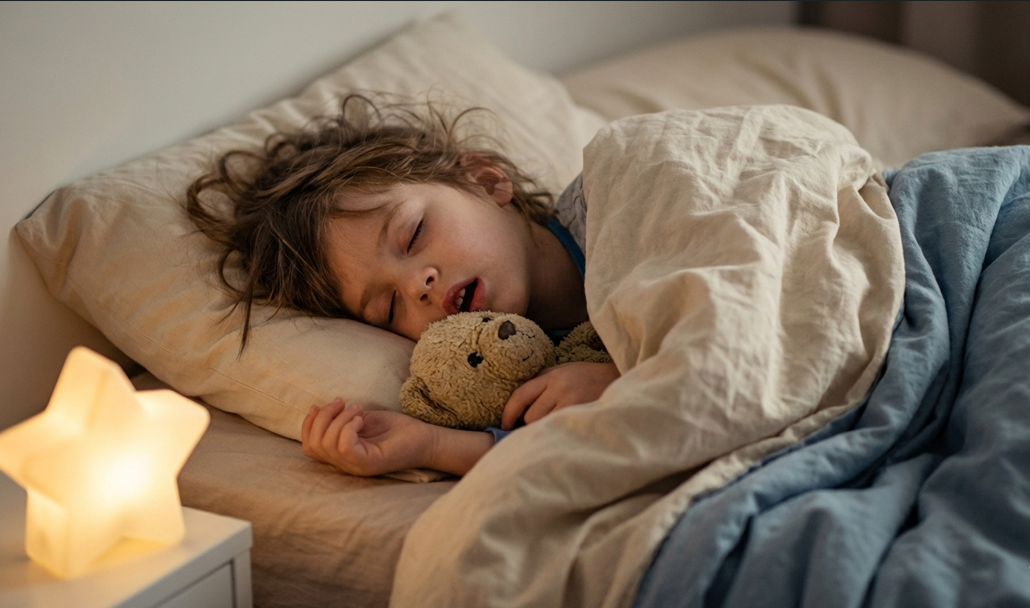
Healthy children should breathe through their nose, both awake and asleep. Chronic mouth breathing, especially during sleep, can indicate an obstructed airway.
What to watch for:
- Mouth hanging open during sleep
- Audible breathing or snoring (any regular snoring in a child warrants evaluation)
- Restless sleep with frequent position changes
- Sleeping with the neck extended (chin up, trying to open airway)
- Gasping, choking, or pauses in breathing during sleep
While occasional snoring during a cold is normal, habitual snoring in children is not normal and should be evaluated. Studies suggest that 10-12% of children snore regularly, and a significant portion of those have obstructive sleep apnea.
3. Bedwetting Beyond Age 5-6
While occasional bedwetting is common in young children, persistent bedwetting (nocturnal enuresis) beyond age 5-6 can be a sign of sleep-disordered breathing.
The connection: during apnea events, the body produces a hormone called atrial natriuretic peptide (ANP) that increases urine production. Children with sleep apnea literally produce more urine at night, making bedwetting more likely.
What to watch for:
- Bedwetting that persists or returns after being dry
- Bedwetting in a child who also snores or mouth breathes
- Bedwetting combined with other signs on this list
Studies have shown that treating sleep apnea in children with enlarged tonsils often resolves bedwetting, sometimes completely.
4. Difficulty Waking Up and Morning Grogginess
Children who get restorative sleep typically wake relatively easily and are reasonably alert in the morning. Significant difficulty waking or prolonged morning grogginess can indicate disrupted sleep.
What to watch for:
- Needing to be woken multiple times
- Being very difficult to rouse in the morning
- Extreme grogginess or disorientation upon waking
- Morning headaches
- Waking up in an unusually bad mood
- Significant improvement in behavior as the day goes on
5. Unusual Sleep Positions
Children with obstructed breathing often unconsciously adopt positions that help open their airway.
What to watch for:
- Sleeping with the head tilted back (hyperextended neck)
- Sleeping propped up on pillows
- Sleeping on hands and knees with bottom in the air
- Frequent position changes throughout the night
- Preferring to sleep sitting up or in a car seat
These compensatory positions are the child's body trying to breathe better. They're a red flag for airway obstruction.
6. Night Terrors, Sleepwalking, and Confusional Arousals
Parasomnias, abnormal behaviors during sleep, are common in children and often outgrown. However, frequent or severe episodes can indicate fragmented sleep or an underlying sleep disorder.
What to watch for:
- Night terrors: sudden screaming, intense fear, racing heart, hard to console, no memory of the episode
- Sleepwalking: getting up and moving around while still asleep
- Confusional arousals: waking in a disoriented, confused state, sometimes with crying or agitation
- Sleep talking: especially if frequent or disruptive
While these behaviors can occur in otherwise healthy children, they're more common and more severe when sleep is fragmented by a disorder like sleep apnea. Treating the underlying condition often reduces or eliminates parasomnias.
7. Restless Sleep and Unusual Movements
A child who thrashes, kicks, moves constantly, or seems unable to get comfortable during sleep may be experiencing fragmented sleep.
What to watch for:
- Constant movement during sleep
- Kicking, thrashing, or rolling frequently
- Grinding teeth (bruxism), can be a sign of apnea
- Sheets and blankets in disarray every morning
- Legs that seem restless or "need to move" at bedtime (restless legs syndrome)
Restless sleep is not the same as a child who moves into odd positions and then sleeps soundly. The key is whether the movement is constant and whether the child appears to be struggling.
8. Excessive Daytime Sleepiness
While hyperactivity is more common, some children with sleep disorders do present with classic sleepiness.
What to watch for:
- Falling asleep at inappropriate times (during meals, in class, during activities)
- Needing naps past the age when most children outgrow them
- Difficulty staying awake during short car rides
- Teachers reporting that the child seems tired or falls asleep in school
Any child who is routinely falling asleep during the day despite getting adequate sleep time at night should be evaluated.
9. Behavioral and Emotional Problems
Sleep deprivation affects emotional regulation, and children often lack the coping mechanisms adults have developed.
What to watch for:
- Frequent tantrums or meltdowns, especially later in the day
- Irritability and mood swings
- Low frustration tolerance
- Anxiety, particularly around bedtime
- Symptoms of depression: withdrawal, loss of interest, persistent sadness
- Aggression or oppositional behavior
These symptoms are frequently attributed to behavioral or psychological causes without considering sleep. If behavioral interventions aren't working, ask whether sleep could be contributing.
10. Attention and Learning Difficulties
Poor sleep impairs attention, concentration, working memory, and executive function, all critical for learning.
What to watch for:
- Difficulty paying attention in class
- Trouble following multi-step instructions
- Forgetting things learned recently
- Poor academic performance despite effort
- Inconsistent performance (good days and bad days)
- Being described as "not reaching potential"
A landmark study found that children who had their tonsils removed for sleep-disordered breathing showed significant improvements in behavior, quality of life, and cognition, with the largest gains in attention.
Common Pediatric Sleep Disorders
Obstructive Sleep Apnea (OSA)
Pediatric OSA affects an estimated 1-5% of children, with peak incidence between ages 2-8 when tonsils and adenoids are largest relative to airway size.
Common causes in children:
- Enlarged tonsils and adenoids (most common)
- Obesity
- Craniofacial abnormalities
- Neuromuscular conditions
- Down syndrome (affects up to 50-80% of children with Down syndrome)
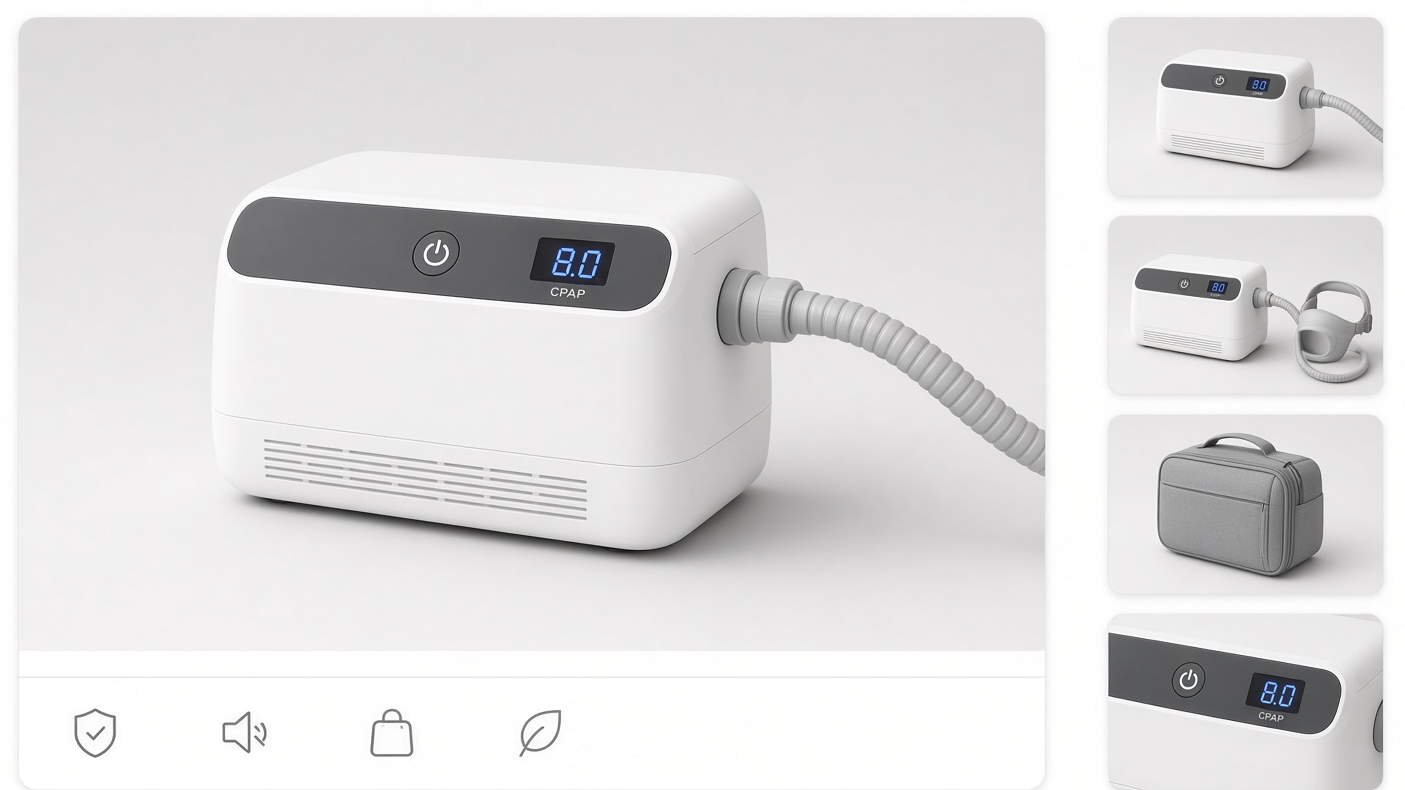
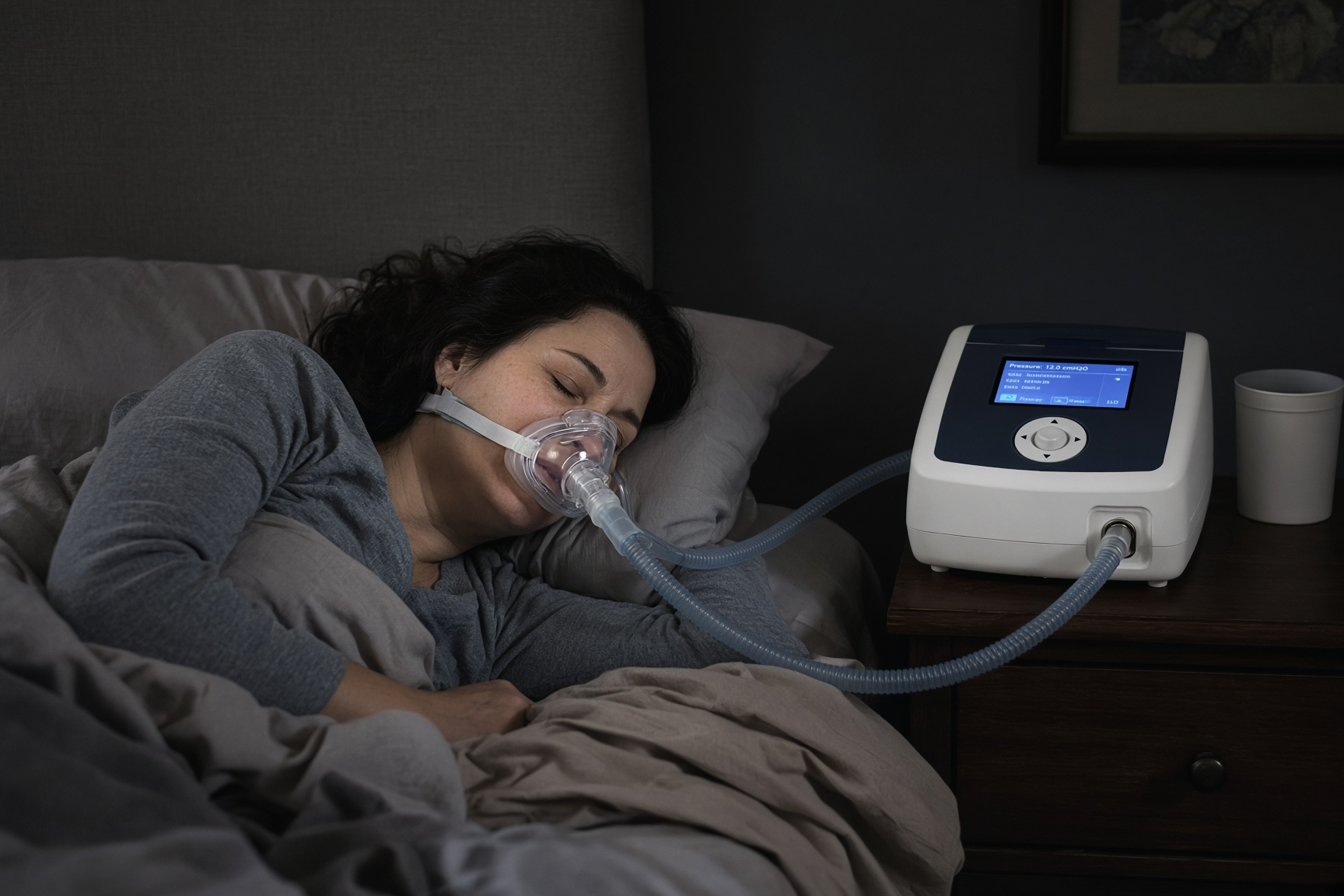
Treatment: Adenotonsillectomy (surgical removal of tonsils and adenoids) is the first-line treatment for most children with OSA. CPAP or other therapies may be used when surgery isn't appropriate or sufficient.
Restless Legs Syndrome (RLS)
RLS in children is underdiagnosed because children often describe the sensations differently than adults, "creepy crawly," "ants in my legs," "need to move," or simply that their legs "hurt."
What to watch for:
- Complaints about leg discomfort at bedtime
- Difficulty sitting still, especially in the evening
- Constant leg movement during sleep
- Family history of RLS (strongly genetic)
- Low iron levels
Treatment: Often involves iron supplementation (after testing ferritin levels), sleep hygiene, and in some cases medication.
Behavioral Insomnia of Childhood
This isn't a medical disorder but a pattern where children have difficulty falling or staying asleep due to behavioral factors, typically related to bedtime routines and sleep associations.
Two types:
- Sleep-onset association type: Child needs specific conditions to fall asleep (being rocked, parent present, TV on) and can't return to sleep without them
- Limit-setting type: Child resists or refuses to go to bed, and parents have difficulty enforcing bedtime
Treatment: Behavioral interventions including consistent bedtime routines, gradual extinction methods, and parent education.
Delayed Sleep Phase Disorder
Common in adolescents, this circadian rhythm disorder causes the natural sleep-wake cycle to be shifted later, the teen genuinely can't fall asleep until 1-2 AM and would naturally sleep until late morning.
What to watch for:
- Inability to fall asleep at a "normal" bedtime despite trying
- Sleeping well and long if allowed to sleep on their own schedule (weekends, summer)
- Extreme difficulty waking for school
- Symptoms of sleep deprivation during the school week
Treatment: Light therapy, chronotherapy (gradually shifting sleep times), and melatonin (timed carefully).
Narcolepsy
Rare but serious, narcolepsy typically emerges in adolescence or young adulthood but can begin in childhood.
What to watch for:
- Extreme, uncontrollable daytime sleepiness
- Sudden episodes of muscle weakness triggered by emotion (cataplexy)
- Vivid hallucinations when falling asleep or waking
- Sleep paralysis
Treatment: Medication management under a sleep specialist.
When to See a Doctor
Seek evaluation if your child has:
- Snoring on most nights
- Any witnessed pauses in breathing, gasping, or choking during sleep
- Persistent mouth breathing during sleep
- Significant difficulty waking or excessive daytime sleepiness
- Behavioral, attention, or learning problems that don't respond to interventions
- Bedwetting beyond age 6, especially with other symptoms
- Restless legs or growing pains that interfere with falling asleep
- Symptoms affecting quality of life, school performance, or family functioning
Where to Start
Your pediatrician can do an initial assessment and refer to a specialist if needed. Be specific about what you're observing, bring a sleep diary and videos of concerning nighttime behaviors if you have them.
A pediatric sleep specialist can conduct a comprehensive evaluation and order appropriate testing. Pediatric sleep studies are available at many accredited sleep centers.
An ENT (otolaryngologist) may be involved if enlarged tonsils and adenoids are suspected. They can evaluate airway anatomy and discuss surgical options.
What Parents Can Do Now
While seeking evaluation, you can support your child's sleep:
Optimize sleep environment:
- Cool, dark, quiet room
- Remove screens and electronic devices
- Consistent, comfortable sleep space
Maintain consistent schedules:
- Same bedtime and wake time every day (including weekends)
- Age-appropriate sleep duration (see chart below)
- Calming bedtime routine
Watch for red flags:
- Record snoring or unusual breathing
- Note behavioral patterns and when they're worse
- Track sleep and wake times in a diary
Recommended Sleep by Age
| Age | Recommended Sleep |
|---|---|
| 4-12 months | 12-16 hours (including naps) |
| 1-2 years | 11-14 hours (including naps) |
| 3-5 years | 10-13 hours (including naps) |
| 6-12 years | 9-12 hours |
| 13-18 years | 8-10 hours |
The Bottom Line
Sleep disorders in children often hide in plain sight. The hyperactive child who can't sit still, the student who can't focus, the child with constant meltdowns, these could all be signs of a treatable sleep problem.
Parents know their children best. If something about your child's sleep seems off, even if you can't quite articulate what, trust that instinct. A snoring child is not just a "noisy sleeper." A child who can't wake up isn't just "not a morning person." A child bouncing off the walls at bedtime isn't necessarily defiant.
Sleep disorders are treatable. Identifying and addressing them can transform a child's behavior, learning, mood, and quality of life. If you're concerned, seek evaluation.
Find a pediatric sleep specialist near you. Use our sleep clinic directory to locate an accredited sleep center that evaluates children and take the first step toward better sleep for your child.
Written by
Daniel Marin
Sharing insights on sleep health and wellness to help you achieve better rest and improved quality of life.