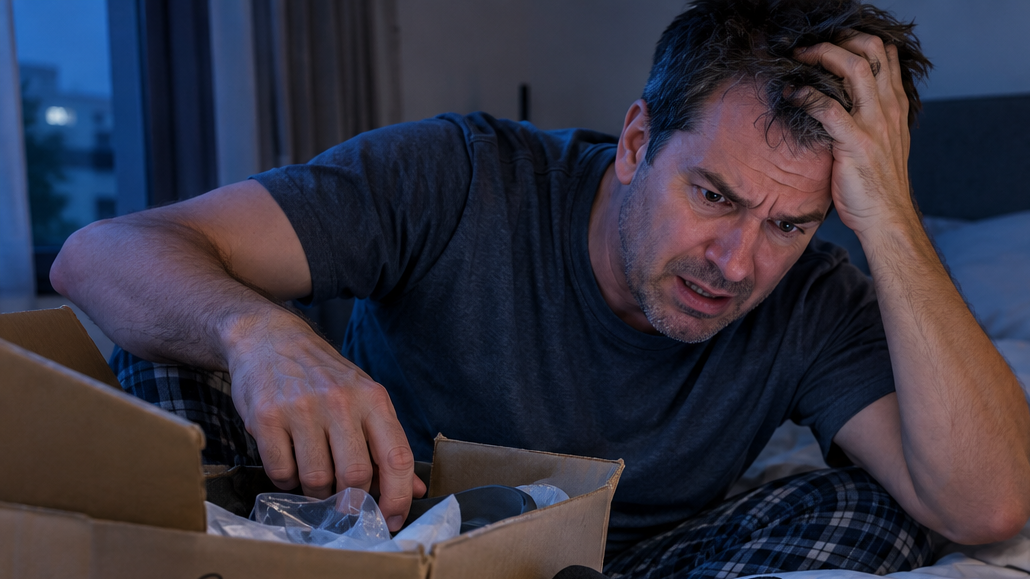
You're exhausted during the day. Sleep feels broken and unrefreshing. You dread bedtime because you know another difficult night awaits.
These experiences are common to both insomnia and sleep apnea, two of the most prevalent sleep disorders. But despite similar symptoms of fatigue and poor sleep quality, these conditions have fundamentally different causes and require completely different treatments.
Treating insomnia when you actually have sleep apnea can delay proper care for years. Taking sleep medications when your real problem is a blocked airway can actually make things worse. Getting the right diagnosis isn't just about semantics, it's about getting treatment that actually works.
Here's how to tell the difference.
The Fundamental Distinction
At their core, insomnia and sleep apnea are opposite problems:
Insomnia is a disorder of being unable to sleep despite having the opportunity. Your brain struggles to initiate or maintain sleep, even when conditions are right for rest.
Sleep apnea is a disorder where your sleep is disrupted by a physical problem, your airway repeatedly collapses, interrupting breathing and fragmenting sleep, often without your conscious awareness.
Put simply: insomnia is a problem of sleeplessness. Sleep apnea is a problem of breathing. Both leave you tired, but for entirely different reasons.
Key Symptoms: Side-by-Side Comparison
| Symptom | Insomnia | Sleep Apnea |
|---|---|---|
| Primary complaint | Can't fall or stay asleep | Unrefreshing sleep despite adequate time in bed |
| Awareness of the problem | Fully aware of sleeplessness | Often unaware of breathing pauses |
| Snoring | Typically not present | Often loud and irregular |
| Breathing pauses | No | Yes (witnessed by partner) |
| Daytime experience | Tired but often can't nap | Sleepy, may fall asleep easily during day |
| Morning headaches | Uncommon | Common |
| Dry mouth on waking | Uncommon | Common |
| Night sweats | Uncommon | Common |
| Need to urinate at night | May occur (from being awake) | Frequent (2+ times, caused by apnea) |
| Time to fall asleep | Often prolonged (30+ min) | Usually normal or quick |
| Gasping/choking at night | No | May occur |
Insomnia: A Closer Look
Insomnia is characterized by difficulty falling asleep, staying asleep, or waking too early, along with daytime impairment as a result. To be diagnosed as a disorder, these problems must occur at least three nights per week for at least three months, despite adequate opportunity for sleep.
Types of Insomnia
Sleep-onset insomnia: Difficulty falling asleep at the beginning of the night. You lie in bed for 30 minutes, an hour, sometimes longer, unable to drift off despite feeling tired.
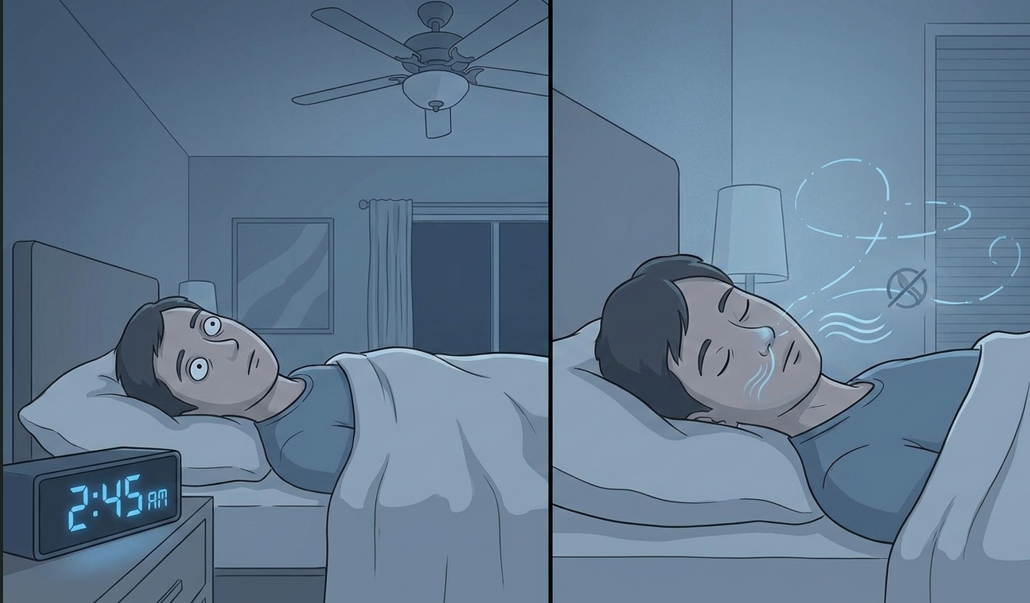
Sleep-maintenance insomnia: Waking up during the night and having difficulty returning to sleep. You might wake at 2 or 3 AM and lie awake for hours.
Early-morning awakening: Waking up significantly earlier than intended (and earlier than desired) and being unable to fall back asleep.
Many people with chronic insomnia experience a combination of these patterns.
What Causes Insomnia?
Insomnia is fundamentally a disorder of hyperarousal, an overactive stress response that prevents the brain from transitioning into sleep. Common contributing factors include:
- Anxiety and worry, racing thoughts at bedtime
- Depression, particularly linked to early-morning awakening
- Poor sleep habits, irregular schedules, stimulating activities before bed
- Conditioned arousal, the bed becomes associated with wakefulness and frustration
- Medical conditions, chronic pain, GERD, restless legs syndrome
- Medications, certain antidepressants, stimulants, steroids
- Caffeine, alcohol, nicotine, even when consumed earlier in the day
The Insomnia Experience
People with insomnia typically describe:
- Lying in bed unable to "turn off" their mind
- Watching the clock and calculating how little sleep they'll get
- Feeling tired but "wired", exhausted yet unable to sleep
- Dreading bedtime because they anticipate another bad night
- Frustration that sleep, which should be natural, feels impossible
Importantly, people with insomnia are acutely aware that they're not sleeping. They experience the sleeplessness in real-time and remember it the next day.
Sleep Apnea: A Closer Look
Sleep apnea is characterized by repeated pauses in breathing during sleep. In obstructive sleep apnea (the most common type), these pauses occur because the soft tissue at the back of the throat collapses, blocking the airway.
Each breathing pause triggers a brief arousal, your brain wakes you just enough to restore muscle tone and reopen the airway. These arousals are usually so brief that you don't remember them, but they prevent you from reaching and maintaining deep, restorative sleep.
The Sleep Apnea Experience
People with sleep apnea often describe:
- Sleeping for 7-8 hours but waking up exhausted
- Feeling like they "could sleep forever" and still be tired
- Waking with a headache, dry mouth, or sore throat
- Struggling to stay awake during passive activities (watching TV, reading, driving)
- Memory and concentration problems that worsen over time
- Being told by a partner that they snore loudly or stop breathing
The critical distinction: people with sleep apnea often have no idea their sleep is being disrupted. They may believe they're "sleeping fine" because they're not consciously awake during the night. The fragmentation happens below the level of awareness.
Risk Factors for Sleep Apnea
- Excess weight, the strongest risk factor
- Neck circumference, larger than 17" (men) or 16" (women)
- Age, risk increases, especially after 40
- Male sex, though women's risk increases after menopause
- Anatomical factors, large tonsils, recessed jaw, narrow airway
- Family history, genetic component to airway structure
- Alcohol and sedatives, relax airway muscles
- Smoking, increases inflammation and fluid retention
When Both Conditions Coexist: COMISA
Here's where things get complicated: insomnia and sleep apnea can occur together. This combination is so common it has its own name, COMISA (Co-Morbid Insomnia and Sleep Apnea).
Studies suggest that 30-50% of people with insomnia also have sleep apnea, and 30-40% of people with sleep apnea have clinically significant insomnia. The overlap is substantial.
How COMISA Develops
The conditions can feed into each other:
- Sleep apnea causes repeated awakenings → person becomes anxious about sleep → develops conditioned insomnia
- Insomnia treatment with sedatives → relaxes airway muscles → worsens apnea
- Fragmented sleep from apnea → hyperarousal during the day → difficulty initiating sleep at night
Why COMISA Matters
When both conditions are present, treating only one often fails. CPAP may not resolve insomnia symptoms. Cognitive behavioral therapy for insomnia may help with sleep initiation but won't address the breathing problem. Successful treatment usually requires addressing both conditions.
If you have symptoms of both insomnia and sleep apnea, make sure your evaluation is comprehensive enough to identify both.
Diagnostic Clues: Questions to Ask Yourself
Clues That Point Toward Insomnia
- Do you lie awake for long periods trying to fall asleep?
- Are you consciously aware of being awake during the night?
- Do you watch the clock and worry about not sleeping?
- Does your mind race with thoughts when you're trying to sleep?
- Do you feel tired during the day but find it hard to nap even when you try?
- Has a bed partner noticed that you sleep quietly when you do sleep?
Clues That Point Toward Sleep Apnea
- Do you fall asleep quickly but wake up unrefreshed?
- Has anyone told you that you snore loudly?
- Has anyone witnessed you stop breathing or gasp during sleep?
- Do you wake with headaches, dry mouth, or sore throat?
- Do you fall asleep easily during the day (in meetings, while reading, watching TV)?
- Do you wake multiple times to urinate?
- Do you have high blood pressure, especially resistant to treatment?
When the Picture Is Mixed
If you answer "yes" to questions from both categories, you may have:
- COMISA (both conditions)
- Sleep apnea with secondary insomnia symptoms
- Insomnia with snoring that isn't apnea
- A different sleep disorder altogether
A sleep study is the only way to definitively identify sleep apnea. A comprehensive evaluation by a sleep specialist can assess for both conditions.
Why Getting the Right Diagnosis Matters
The treatments for insomnia and sleep apnea are completely different, and using the wrong treatment can backfire.
Treating Insomnia
The gold-standard treatment for chronic insomnia is Cognitive Behavioral Therapy for Insomnia (CBT-I), which addresses the thoughts and behaviors that perpetuate sleeplessness. Components include:
- Sleep restriction therapy
- Stimulus control
- Cognitive restructuring
- Relaxation training
- Sleep hygiene education
Medications (sleep aids) may be used short-term but are not recommended for chronic insomnia due to side effects and dependence.
Treating Sleep Apnea
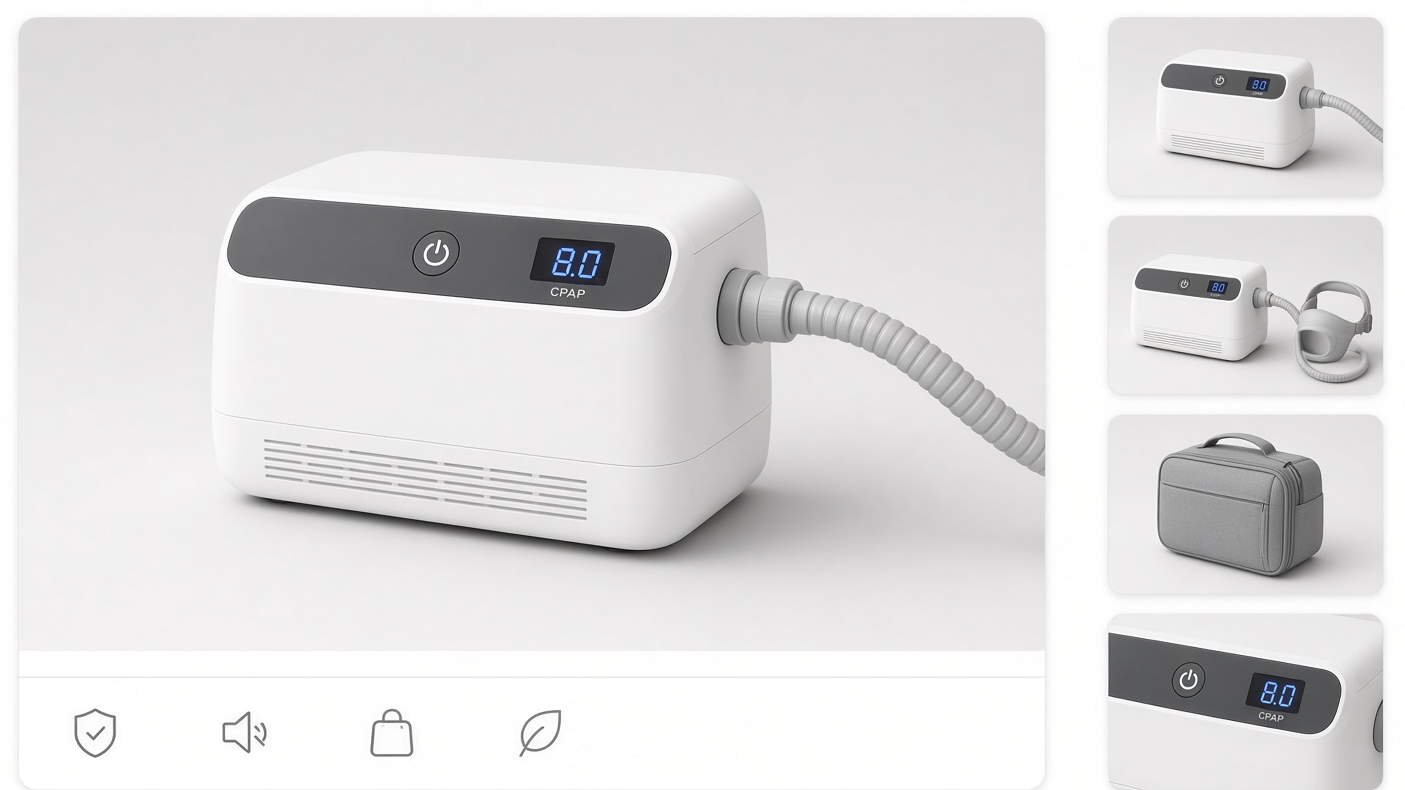
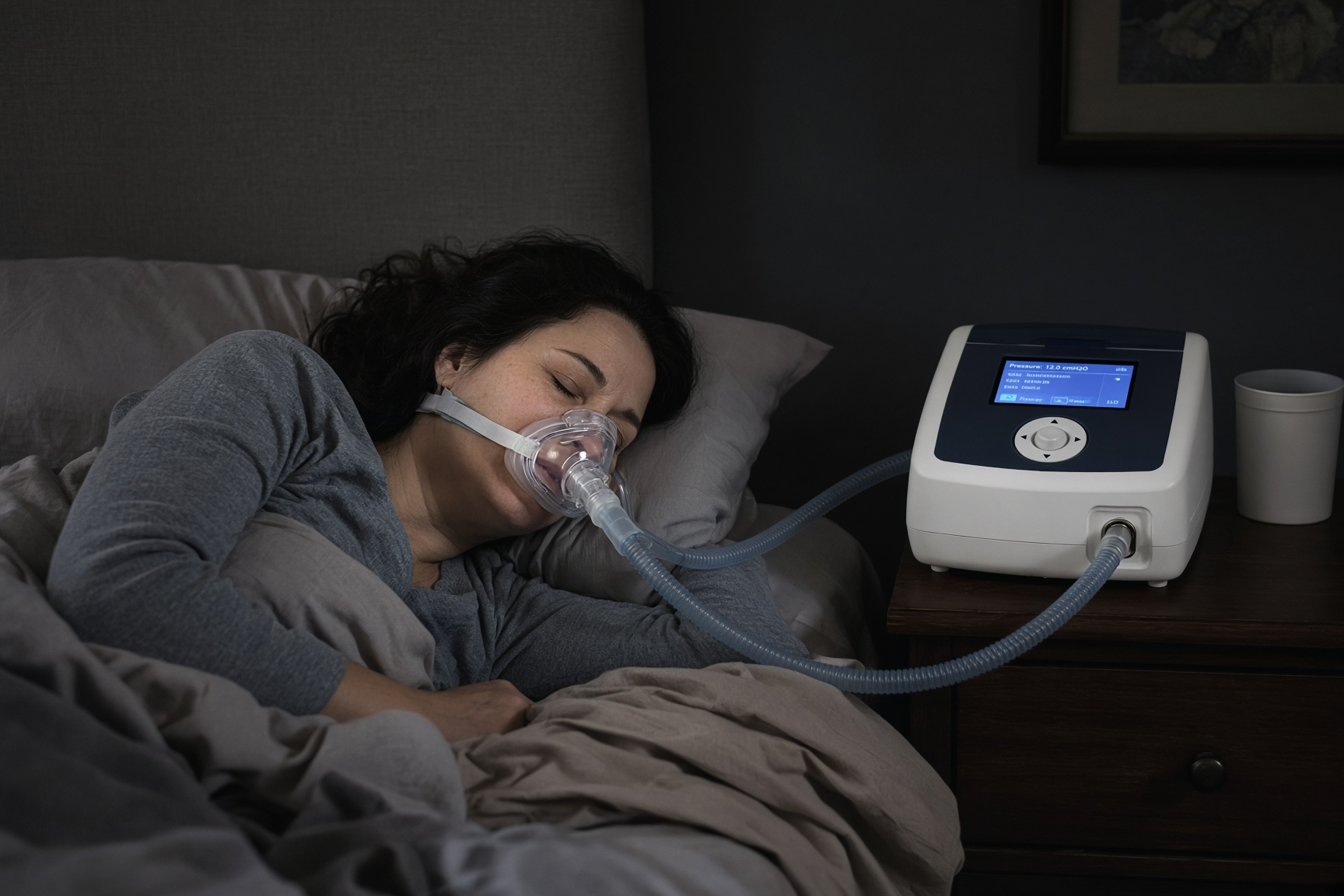
The gold-standard treatment for obstructive sleep apnea is CPAP (Continuous Positive Airway Pressure), which uses a mask to deliver pressurized air that keeps the airway open. Other options include:
- Oral appliances that reposition the jaw
- Positional therapy (for position-dependent apnea)
- Weight loss (for overweight patients)
- Surgery (in select cases)
When Treatments Collide
Using sleep medications when you have sleep apnea is dangerous. Sedatives and hypnotics relax the muscles that keep the airway open, potentially worsening apnea and increasing oxygen desaturation. People with undiagnosed sleep apnea who take sleep aids may be putting themselves at significant risk.
Using CPAP when you only have insomnia doesn't help. If your problem is difficulty initiating or maintaining sleep due to hyperarousal, wearing a mask that delivers pressurized air won't address the underlying issue, and may make sleep even more difficult.
This is why accurate diagnosis matters.
How to Get Properly Evaluated
If you're unsure whether you have insomnia, sleep apnea, or both, here's how to get clarity:
Step 1: See a Sleep Specialist
A board-certified sleep medicine physician can evaluate your symptoms comprehensively. They'll take a detailed sleep history, assess for both disorders, and determine what testing is needed.
Step 2: Keep a Sleep Diary
Before your appointment, track your sleep for two weeks:
- What time you went to bed and got up
- How long it took to fall asleep
- How many times you woke during the night
- How you felt upon waking and during the day
- Any naps taken
This information helps distinguish insomnia from other sleep disorders.
Step 3: Get a Sleep Study If Indicated
A sleep study (polysomnography) is required to diagnose sleep apnea. It measures brain waves, oxygen levels, heart rate, breathing effort, and airflow during sleep. Home sleep tests can screen for moderate to severe apnea; in-lab studies are more comprehensive.
If your symptoms suggest possible apnea (snoring, witnessed pauses, gasping, unrefreshing sleep, morning headaches), don't skip this step. No amount of questionnaires or clinical assessment can definitively rule out sleep apnea without objective testing.
Step 4: Consider Both Conditions
If your sleep study shows apnea but you also have significant difficulty initiating sleep or anxiety about sleeping, make sure COMISA is on the radar. You may need treatment for both conditions.
The Bottom Line
Insomnia and sleep apnea are both common, both cause daytime impairment, and both involve poor sleep quality. But they're fundamentally different disorders:
- Insomnia = difficulty sleeping (a problem of the brain's ability to transition to sleep)
- Sleep apnea = disrupted breathing (a physical obstruction that fragments sleep)
The treatments are different. Using the wrong treatment can delay relief for years, or make things worse. Getting the right diagnosis is the essential first step.
If you're struggling with poor sleep, don't guess. Get evaluated properly. A sleep specialist can determine whether you have insomnia, sleep apnea, both, or something else entirely, and create a treatment plan that actually addresses your problem.
Ready to find answers? Use our sleep clinic directory to locate an accredited sleep center near you and schedule a comprehensive evaluation.
Is your weight affecting your sleep?
As this article covers, the relationship between weight and sleep runs in both directions, and excess weight is one of the most common risk factors for sleep apnea specifically. HealSend offers doctor-prescribed GLP-1 weight loss treatment, with clinician-led care delivered to your door. Talk to your sleep doctor about whether weight loss could be part of your treatment plan.
See if you qualifyAdvertising disclosure: this is a paid partnership. We may earn a commission if you sign up through this link, at no extra cost to you.
Written by
Daniel Marin
Sharing insights on sleep health and wellness to help you achieve better rest and improved quality of life.