You suspect something is wrong with your sleep, and your doctor has mentioned a sleep study. Before you book anything, there's a practical question that matters just as much as the medical one: what is this actually going to cost you?
The honest answer is that it depends enormously, on the type of test, where you have it done, whether you're in-network, and what your specific insurance plan covers. Prices for the exact same diagnostic information can range from under $100 to well over $5,000. That's a wide enough gap that it's worth understanding before you schedule anything.
This guide breaks down real costs for every type of sleep study, what drives the variation, and how to keep your out-of-pocket expense as low as possible.
The Two Types of Sleep Studies (And Why Cost Differs So Much)
Cost starts with which test you need. If you haven't already, our guide on home sleep tests vs. in-lab studies explains the clinical differences in detail. For cost purposes, here's the short version:
Home sleep apnea test (HSAT): A portable device you use in your own bed, measuring airflow, breathing effort, oxygen levels, and heart rate. Designed specifically to detect obstructive sleep apnea.
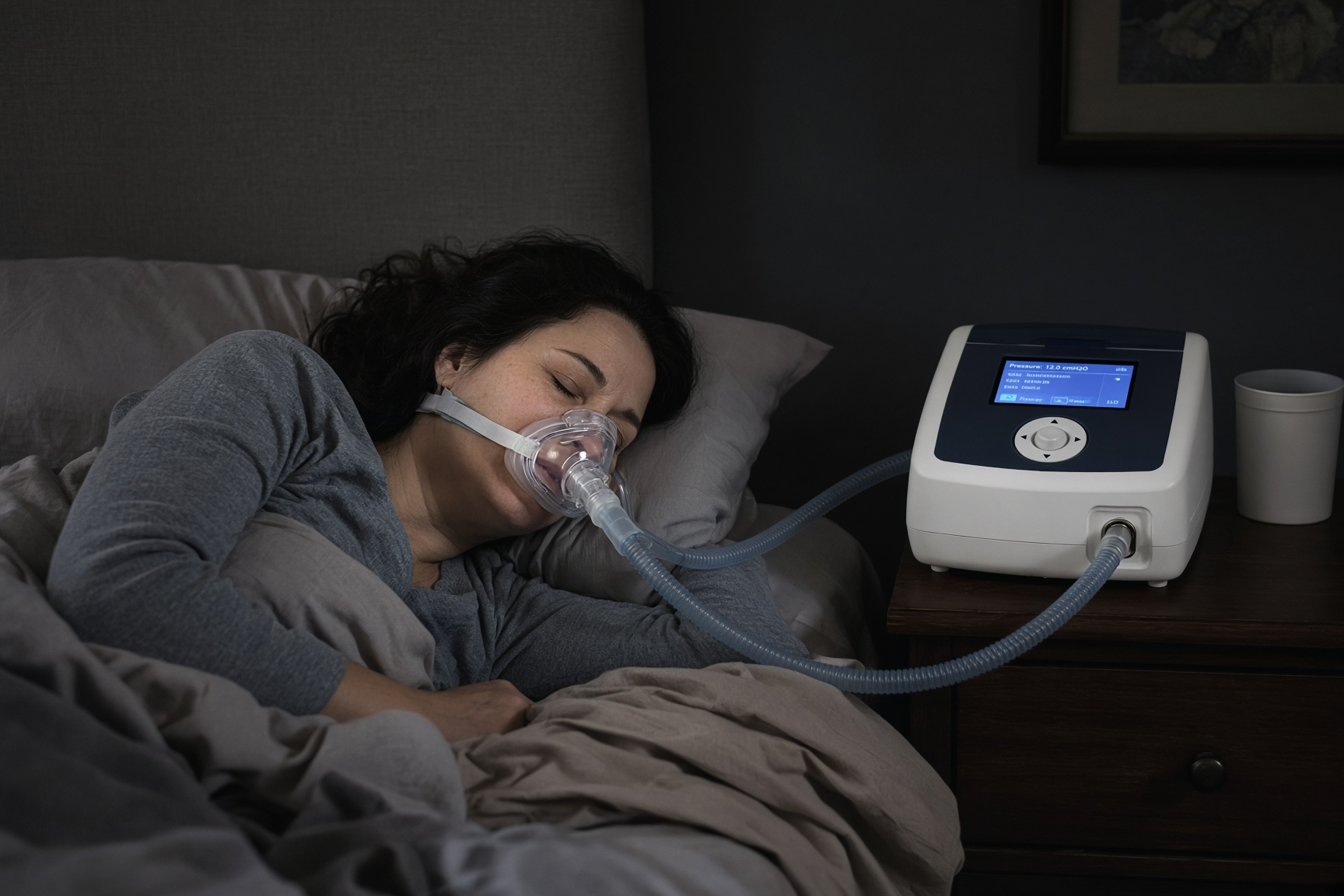
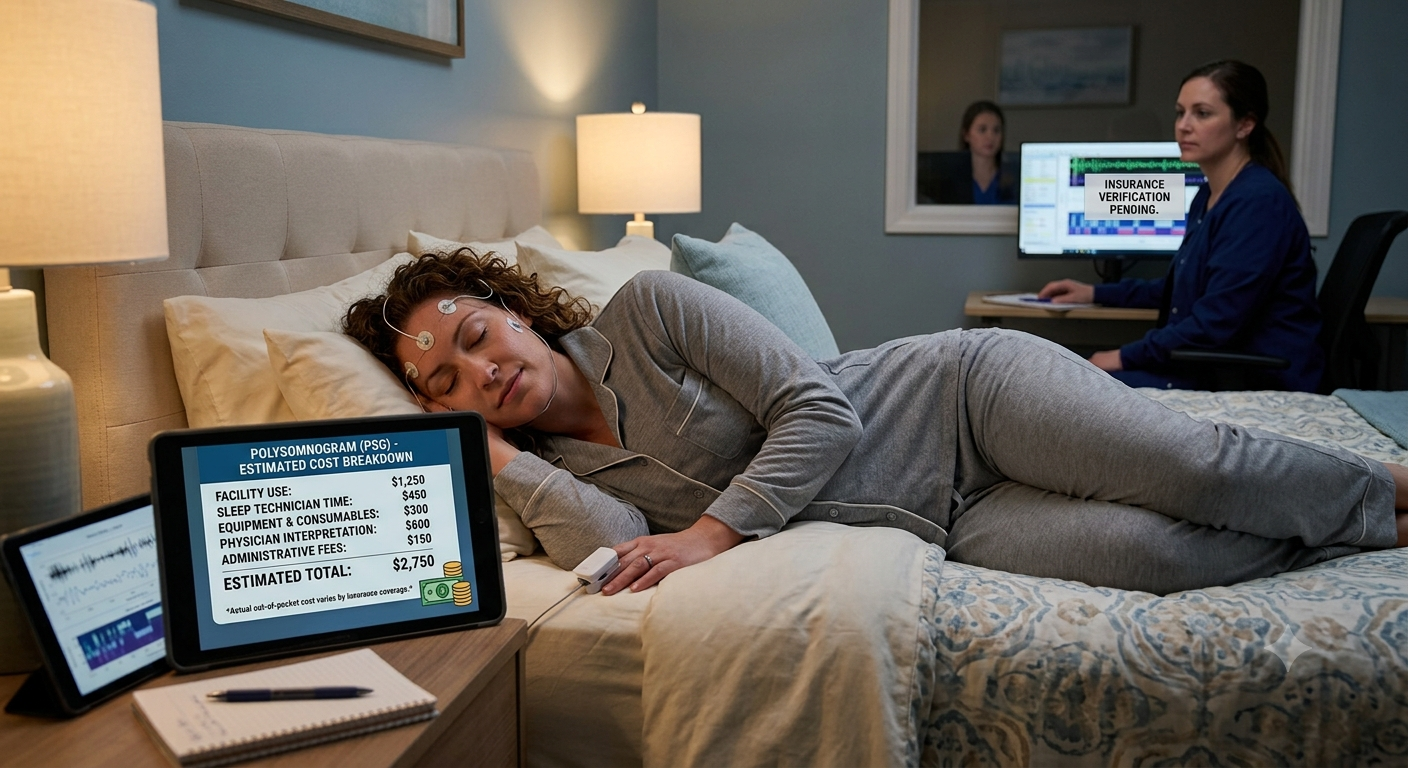
In-lab polysomnography (PSG): An overnight stay at a sleep center with comprehensive monitoring, including brain waves, which allows diagnosis of a much wider range of sleep disorders, not just apnea.
The in-lab study involves more equipment, specialized facility overhead, and a technologist monitoring you overnight. That difference in complexity is the single biggest driver of the cost gap between the two options.
Cost Breakdown: Home Sleep Test
| Scenario | Typical Cost |
|---|---|
| Self-pay, cash price | $150-$500 |
| With insurance (after meeting deductible) | $0-$150 copay/coinsurance |
| With insurance (deductible not yet met) | Full negotiated rate, often $200-$400 |
| Through a telemedicine/mail-order sleep program | $150-$300 |
Home sleep tests are the more affordable option almost across the board. Even paying entirely out of pocket, most home tests land under $500, and telehealth-based sleep programs (which mail you a device and read the results remotely) often come in on the lower end of that range.
Cost Breakdown: In-Lab Sleep Study
| Scenario | Typical Cost |
|---|---|
| Self-pay, cash price | $1,000-$3,000 |
| Hospital-based sleep lab (facility fee included) | $3,000-$7,000+ before insurance |
| Freestanding/independent sleep center | $1,000-$2,500 before insurance |
| With insurance (after deductible) | Copay/coinsurance, often $100-$500 |
| With insurance (deductible not yet met) | Full negotiated rate applies to deductible |
| CPAP titration study (separate night) | Similar range, sometimes combined as a "split-night" study |
The in-lab number varies the most, largely based on where the study is done. A hospital-affiliated sleep lab typically bills a facility fee on top of the physician and technical fees, which can push the total dramatically higher than the same study performed at an independent, freestanding sleep center. This is one of the most overlooked cost levers in sleep medicine.
What's Actually Being Billed
A sleep study isn't one line item. It typically breaks into three components:
- Technical fee: Covers the equipment, facility, and the technologist who sets up and monitors your study
- Professional/interpretation fee: The fee for the board-certified sleep physician who reads and interprets your results
- Facility fee: Charged separately at hospital-affiliated labs (not typically at independent centers), covering the overhead of being performed within a hospital system
Understanding this breakdown explains why the same test can cost wildly different amounts at different locations, even when the physical process is identical.
Does Insurance Cover Sleep Studies?
Generally, yes. Most insurance plans, including Medicare, Medicaid, and commercial insurers, cover sleep studies when they're medically necessary and properly documented. But coverage comes with conditions that affect your actual cost:
Prior authorization. Many insurers require pre-approval before a sleep study, especially an in-lab one. Skipping this step can mean a denied claim, leaving you responsible for the full cost.
Step therapy / home test first. A large number of insurance plans require a home sleep test first for suspected obstructive sleep apnea, and will only approve an in-lab study if the home test is inconclusive, negative despite strong symptoms, or if you have a condition that makes home testing inappropriate (significant heart or lung disease, suspected central sleep apnea, or another suspected sleep disorder).
In-network vs. out-of-network. This is often the single biggest factor in your final bill. An out-of-network sleep lab can bill several times the in-network negotiated rate, and your insurer may cover a much smaller percentage, or none at all, of an out-of-network claim.
Deductible status. If you haven't met your annual deductible, you'll likely pay the full negotiated rate (which is still typically lower than the cash/self-pay price) until you do. If your deductible is already met, you may owe only a copay or coinsurance percentage.
Medicare specifics. Medicare Part B covers sleep studies for diagnosed or suspected sleep disorders, typically at 80% of the Medicare-approved amount after the Part B deductible, with you responsible for the remaining 20% unless you have supplemental coverage.
Hidden or Additional Costs to Watch For
Beyond the test itself, a few line items commonly surprise patients:
- The initial specialist consultation before the study is often billed separately from the test itself
- A follow-up visit to review results and discuss treatment is typically its own billed appointment
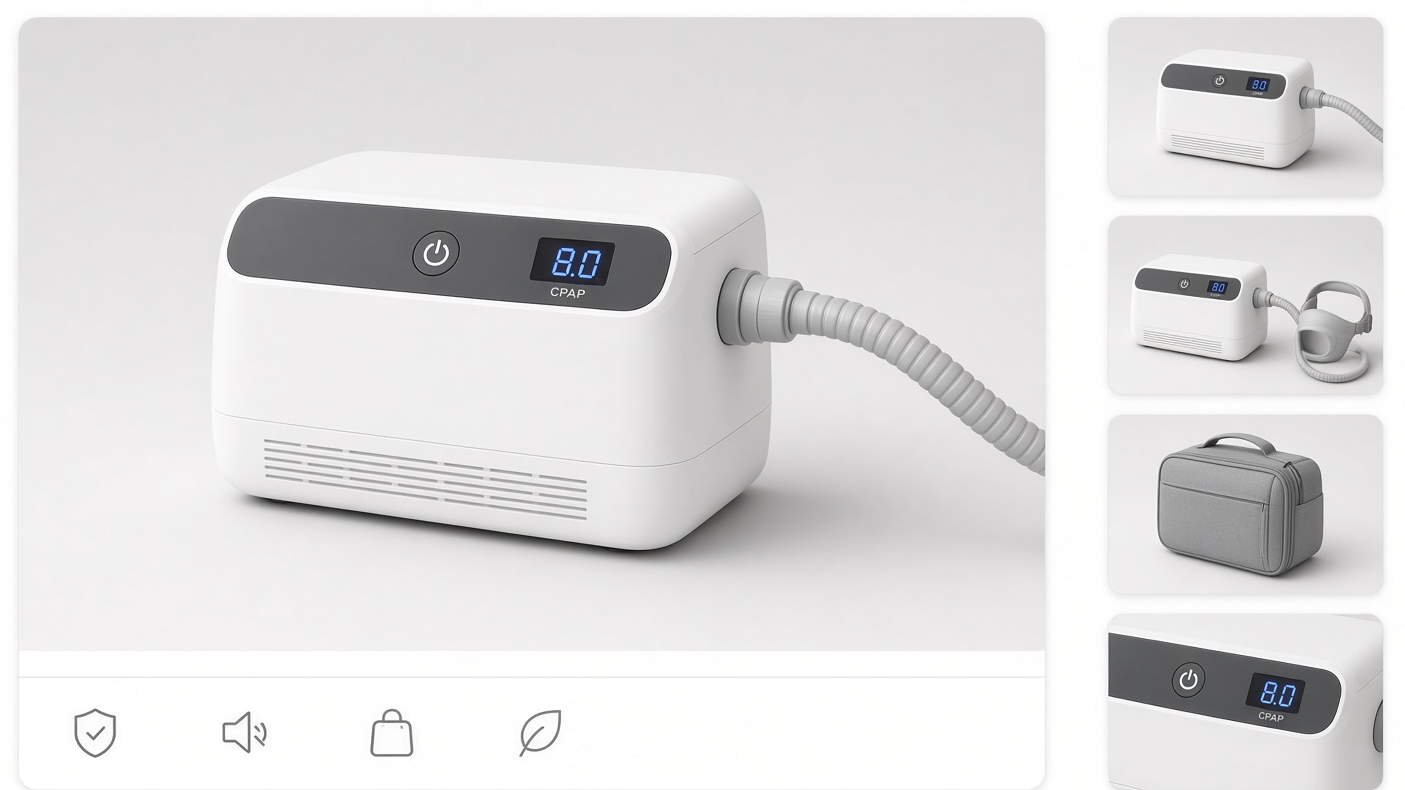
- CPAP equipment, if prescribed, is billed separately: the machine, mask, and supplies, often through a durable medical equipment (DME) supplier, with its own copay or rental structure
- A repeat study, if your first test was inconclusive or didn't capture enough sleep, may not always be covered without new documentation of medical necessity
When budgeting, think of the sleep study as one part of a larger care pathway, not a single isolated expense.
How to Lower Your Cost
Ask about home testing first. If your symptoms suggest straightforward obstructive sleep apnea and you're otherwise healthy, ask your doctor whether a home sleep test is appropriate. It's clinically valid for the right patient and costs a fraction of an in-lab study.
Confirm prior authorization before scheduling. Call your insurer (or have the clinic's billing office confirm) that the study is pre-approved. This single step prevents the most common cause of an unexpectedly large bill.
Choose an independent sleep center over a hospital-based one when possible. Ask directly whether a facility fee applies. The clinical quality can be identical; the billing structure often is not.
Verify in-network status directly with your insurer, not just by trusting the clinic's word, since network status can change and clinic staff aren't always current on it.
Ask for a cost estimate in advance. Under the No Surprises Act, patients are entitled to a good-faith estimate for scheduled care. Ask the clinic's billing department for one before your appointment.
Consider a telehealth sleep program. Several established telemedicine sleep programs offer home sleep testing, physician interpretation, and even CPAP setup at a lower, often transparent, flat cash rate. This can be especially useful if you're uninsured or have a high-deductible plan.
Ask about payment plans or financial assistance. Hospital-based sleep labs, in particular, often have financial assistance programs for patients who qualify, and many clinics offer payment plans for the self-pay portion.
If uninsured, negotiate the cash price directly. Sleep centers frequently have a lower "self-pay" rate that isn't advertised. Ask specifically for the cash-pay price rather than assuming you'll be billed at the standard rate.
Is It Worth the Cost?
Sleep studies aren't cheap, especially the in-lab version, but they answer a question that otherwise tends to cost you far more over time: untreated sleep apnea and other sleep disorders are linked to hypertension, heart disease, diabetes, depression, motor vehicle accidents, and reduced life expectancy. The diagnostic cost, even at the higher end, is small compared to the cumulative cost, medical and otherwise, of years of undiagnosed and untreated sleep disruption.
If cost is a genuine barrier, that's a reason to have a direct conversation with your doctor and the clinic's billing team about the most affordable path to a diagnosis, not a reason to skip testing altogether.
The Bottom Line
- Home sleep tests typically cost $150-$500 out of pocket, or far less with insurance, and are appropriate for many people with suspected obstructive sleep apnea
- In-lab studies range from roughly $1,000-$7,000 depending heavily on whether the facility is hospital-based or independent
- Insurance usually covers medically necessary sleep studies, but prior authorization, network status, and deductible status all affect your actual bill
- The biggest cost levers you control are choosing an independent sleep center when appropriate, confirming prior authorization, and asking for a cost estimate before you book
A quick phone call to your insurer and the clinic's billing office before scheduling can be the difference between a manageable bill and an unpleasant surprise.
Ready to find a clinic and compare your options? Use our sleep clinic directory to locate accredited sleep centers near you, and ask directly about cash pricing, in-network status, and testing options before you book.
Written by
Daniel Marin
Sharing insights on sleep health and wellness to help you achieve better rest and improved quality of life.