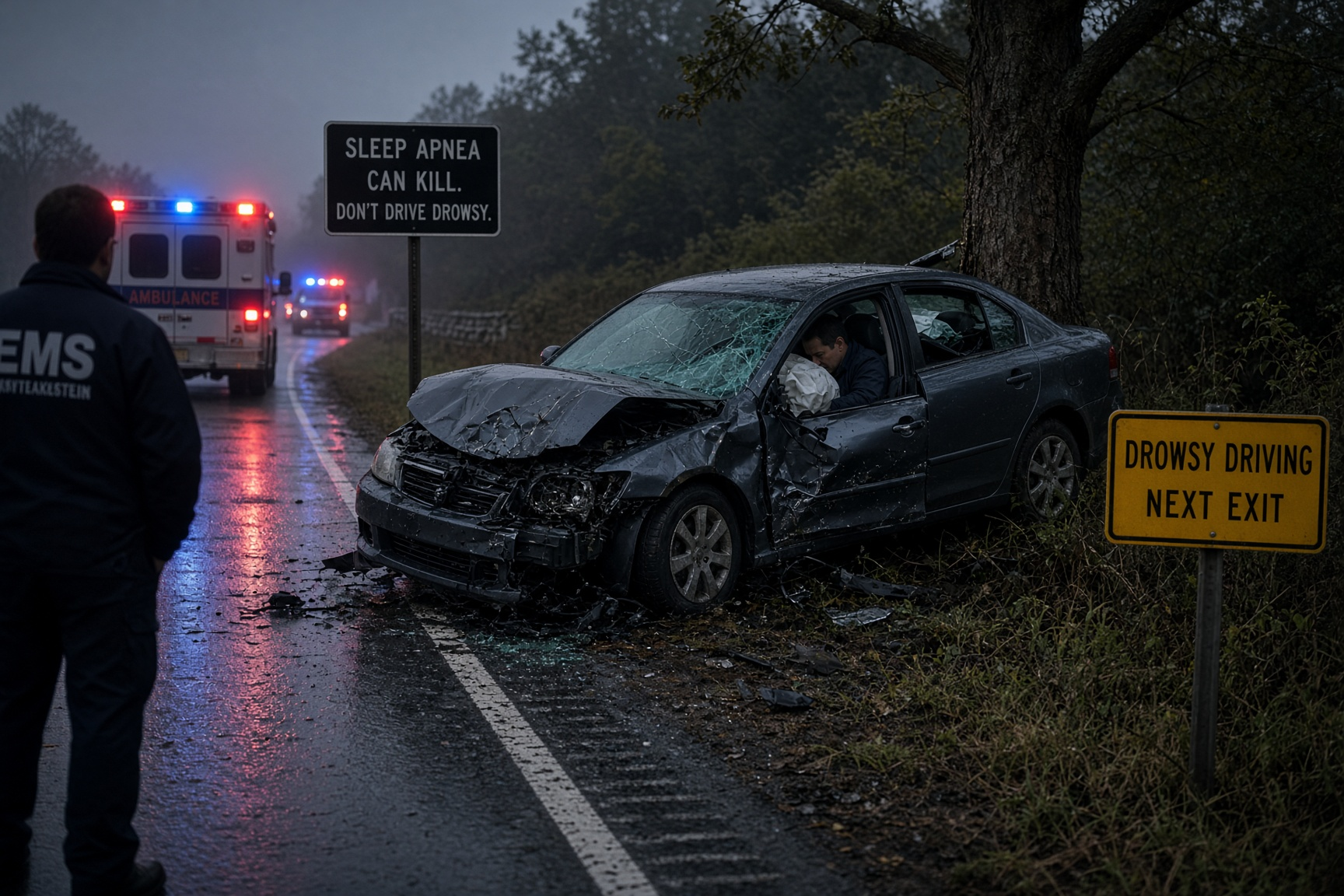
Drunk driving has decades of public awareness campaigns, sobriety checkpoints, and a number everyone recognizes: 0.08. Drowsy driving has none of that infrastructure, despite research showing that being awake for 18 hours straight produces impairment comparable to a blood alcohol concentration around 0.05, and 24 hours awake can rival or exceed the legal limit. There's no roadside test for it, no checkpoint, and often no acknowledgment after a crash that fatigue was ever a factor.
Untreated obstructive sleep apnea is one of the most common, and most overlooked, medical contributors to that risk. It doesn't just make people sleepy in the way a bad night's sleep does. It produces the kind of chronic, unrecognized impairment that leads directly to crashes, often among drivers who would be shocked to hear their sleep was the problem.
What the Research Shows
Multiple studies using different methods, driving simulators, on-road studies, and analyses of real-world crash records, have consistently found that drivers with untreated obstructive sleep apnea have a meaningfully elevated crash risk compared to drivers without the condition. Estimates of the size of that increase vary across studies depending on apnea severity and how crashes were measured, but the direction is remarkably consistent: more severe, untreated apnea is associated with a higher likelihood of being involved in a motor vehicle crash.
This isn't limited to falling fully asleep at the wheel, though that does happen. Much of the risk comes from a more insidious mechanism.
Why Apnea Is Uniquely Dangerous Behind the Wheel
Microsleeps. These are brief, involuntary lapses into sleep lasting a few seconds, sometimes with the eyes still open, and the person experiencing one is frequently unaware it happened. At highway speed, even a two- or three-second microsleep covers a significant distance with zero driver input. Sleep-deprived and apnea-affected brains are considerably more prone to these episodes, especially during monotonous driving: long highway stretches, night driving, or the early afternoon dip when circadian sleepiness naturally peaks.
Impaired judgment about your own impairment. This is the part most people underestimate. Chronically sleep-deprived individuals consistently misjudge how capable they are of driving safely. Someone with severe, longstanding apnea has often adapted to feeling exhausted as their baseline, they don't recognize it as dangerous because they've never known anything else. Compare that to alcohol, where most people can tell, at least roughly, that they've had too much to drink. Sleep-related impairment doesn't announce itself the same way.
Reaction time and attention degrade even without falling asleep. You don't need to nod off for apnea-related sleep deprivation to affect your driving. Slowed reaction time, reduced vigilance, and impaired hazard perception all show up on driving simulator testing in people with untreated apnea, well before anyone would describe them as visibly drowsy.
The timing compounds the risk. Apnea-related sleepiness peaks during exactly the hours drowsy-driving crashes cluster: late night into early morning, and the mid-afternoon circadian dip. A driver with undiagnosed apnea commuting home after a night shift, or driving in the early afternoon after a poor night's sleep, is stacking multiple risk factors at once.
Who's Most at Risk
Several groups carry compounded risk that's worth understanding specifically.
Commercial drivers face this at scale, given the number of hours spent on the road and the direct link between alertness and safety for everyone else sharing the highway. This is exactly why sleep apnea screening is built into the DOT medical certification process; our guide on sleep apnea and commercial driving covers what that screening involves and how diagnosis affects certification.
Shift workers, whose schedules already fight their circadian rhythm, face a doubled burden when apnea is also present, since both factors independently increase sleepiness at the wheel.
Anyone with undiagnosed, moderate to severe apnea, which describes a substantial share of adults with the condition. Sleep apnea remains widely underdiagnosed, and driving risk doesn't wait for a diagnosis to accumulate.
People who've already had a "close call", drifting out of a lane, missing an exit because they briefly lost focus, or being told by a passenger that they seemed to nod off, even briefly. These are not near-misses to shrug off. They're warning signs.
The Numbers Behind the Broader Problem
Drowsy driving is difficult to measure precisely because, unlike alcohol, there's no simple test administered after a crash to confirm it was a factor. Investigators typically rely on circumstantial evidence: no skid marks before a collision, a single-vehicle crash on a straight road, a driver who ran off the road without any evasive maneuver, or self-reported sleepiness. Because of this, drowsy driving is widely believed to be significantly underreported in official crash statistics, meaning its true contribution to crashes, injuries, and fatalities is likely higher than official figures suggest.
Federal safety agencies and traffic safety researchers have long flagged drowsy driving as a serious and underappreciated contributor to crashes, comparable in some analyses to the scale of alcohol-related crashes, yet it receives a fraction of the public attention, enforcement infrastructure, and funding.
The Encouraging Part: Treatment Measurably Reduces Risk
This is where the story turns actionable rather than just alarming. Unlike many crash-risk factors, this one is directly treatable, and the evidence for improvement is genuinely strong.
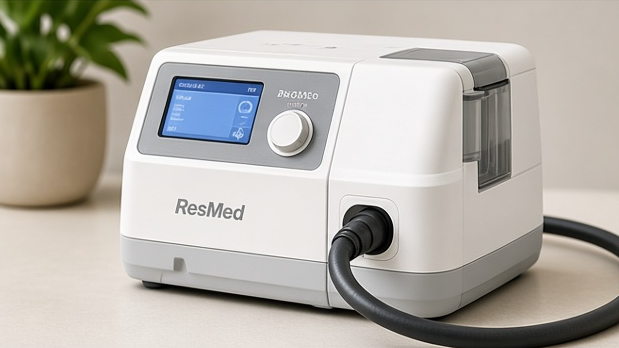
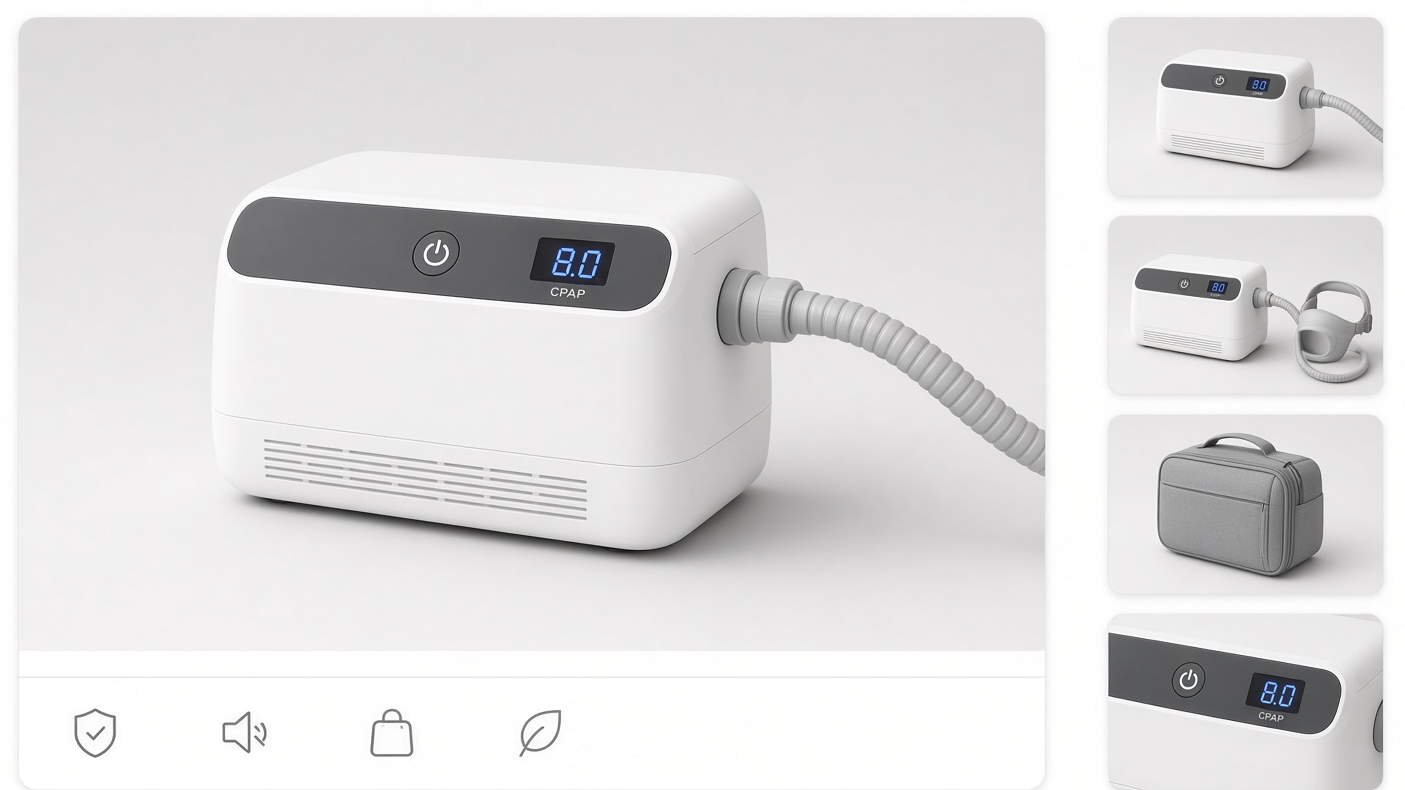
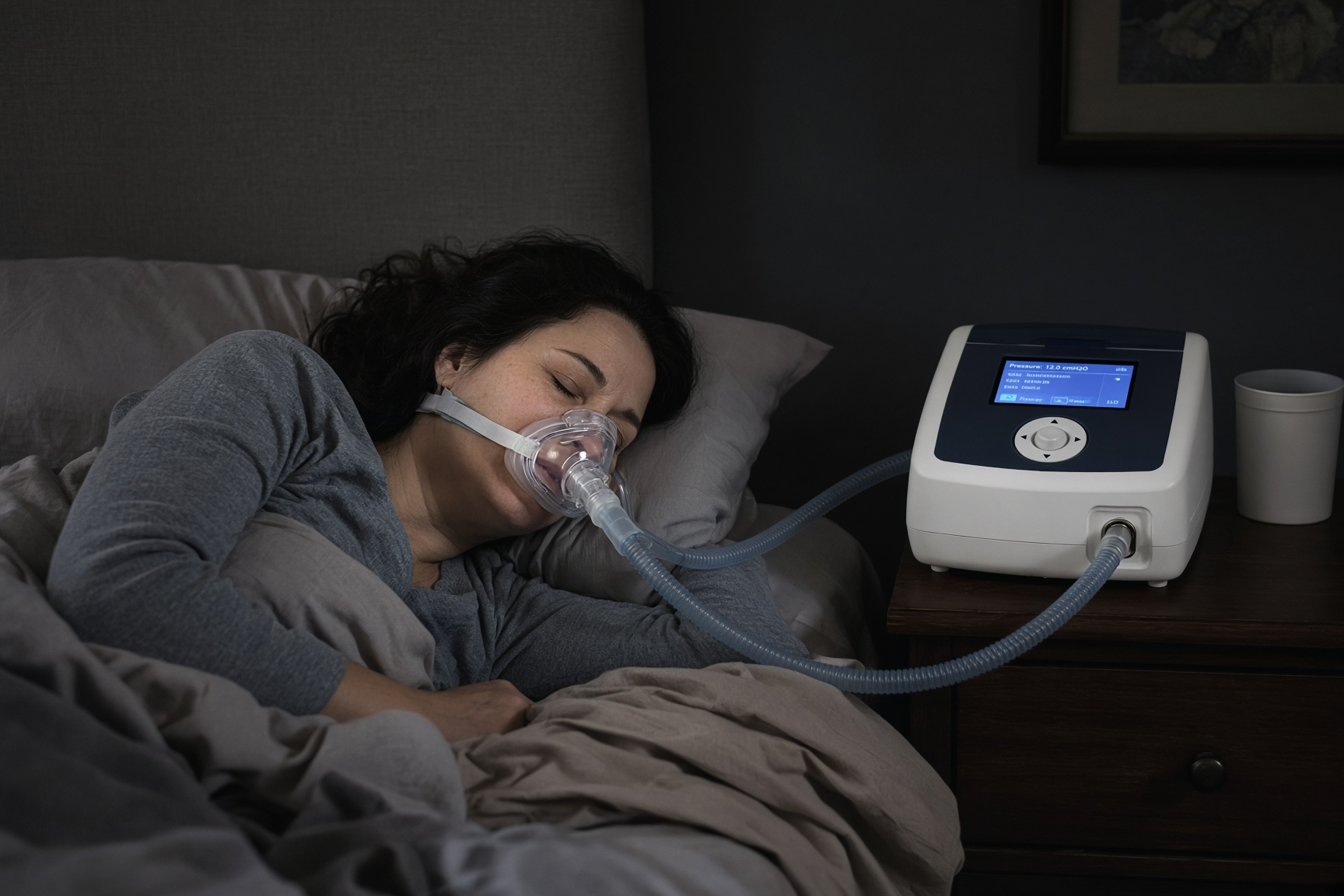
Multiple studies examining drivers before and after starting CPAP therapy have found significant reductions in crash rates following treatment, along with improvements in driving simulator performance, reaction time, and sustained attention. Some research has found that treated apnea patients' crash risk approaches that of the general population, a striking reversal for a modifiable medical condition.
As with most CPAP outcomes, consistency matters. The benefit tracks with actual, regular use of the treatment, not simply having been prescribed it. A machine used a few nights a week, or for only part of the night, provides only partial protection.
Recognizing the Warning Signs Before a Crash
Beyond an existing apnea diagnosis, a few signs specifically point toward driving risk worth taking seriously:
- Difficulty keeping your eyes open or your head up while driving
- Drifting from your lane, or missing an exit or turn because your attention lapsed
- Not remembering the last few minutes of driving
- Feeling like you need to fight to stay awake, especially on familiar or monotonous routes
- A passenger telling you that you seemed to nod off, even briefly
- Excessive daytime sleepiness generally, covered in depth in our guide on excessive daytime sleepiness, which explains the difference between ordinary tiredness and the kind of involuntary sleep intrusion that makes driving dangerous
If any of these describe you, the responsible immediate step is straightforward: stop driving until you've addressed it, whether that means pulling over for a genuine rest, arranging alternate transportation, or, for a recurring pattern, getting a proper sleep evaluation.
What to Do If This Sounds Like You
Don't wait for a close call to become something worse. If you recognize the pattern above, especially alongside snoring, witnessed breathing pauses, or morning headaches (see our guides on sleep apnea symptoms and morning headaches and sleep apnea), this is worth a sleep evaluation, not just a stronger cup of coffee.
In the short term, before you're evaluated: avoid driving when you're most vulnerable, late night, early morning, and the mid-afternoon dip, take the drowsiness seriously enough to pull over rather than push through, and don't rely on rolling down the window or turning up the radio; these don't meaningfully reduce microsleep risk.
Get properly diagnosed. Sleep apnea requires a sleep study to confirm, either a home test or an in-lab study depending on your situation. Our guide on home tests versus in-lab studies explains how that decision is typically made.
If diagnosed, use your treatment consistently. This is the step that actually moves your crash risk, not simply having a machine at home.
The Bottom Line
Drowsy driving doesn't get the attention drunk driving does, despite research suggesting the impairment can be comparable and the underlying scale of the problem may be larger than official statistics capture. Untreated obstructive sleep apnea is one of the most common, and most fixable, medical contributors to that risk, through microsleeps, degraded reaction time, and a chronically impaired ability to judge your own alertness.
If you've had a close call, or you recognize the warning signs above, that's not something to push past. It's a reason to get evaluated, and for the many people who do, treatment provides one of the more concrete safety improvements available in sleep medicine.
Concerned your sleep might be putting you at risk on the road? Use our sleep clinic directory to find an accredited sleep center near you and get evaluated for sleep apnea.
Is your weight affecting your sleep?
As this article covers, the relationship between weight and sleep runs in both directions, and excess weight is one of the most common risk factors for sleep apnea specifically. HealSend offers doctor-prescribed GLP-1 weight loss treatment, with clinician-led care delivered to your door. Talk to your sleep doctor about whether weight loss could be part of your treatment plan.
See if you qualifyAdvertising disclosure: this is a paid partnership. We may earn a commission if you sign up through this link, at no extra cost to you.
Written by
Daniel Marin
Sharing insights on sleep health and wellness to help you achieve better rest and improved quality of life.