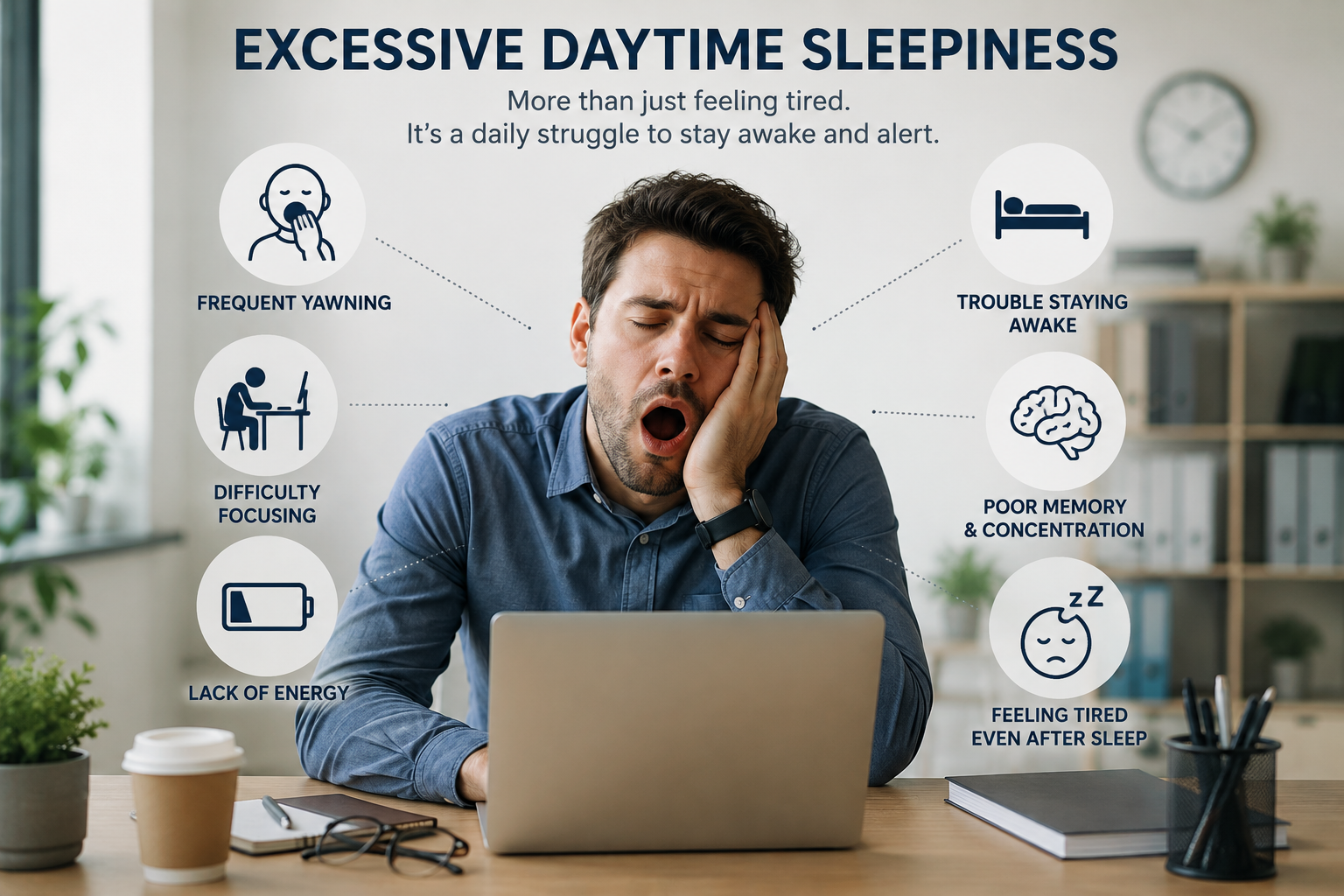
There's a difference between feeling tired and actually falling asleep. Tired is wanting to sit down and rest. Excessive daytime sleepiness (EDS) is nodding off in a meeting, losing time behind the wheel, or catching yourself mid-sentence with your eyes closed. It's not a mood or a low-energy feeling, it's your brain involuntarily slipping toward sleep during situations where you need to be awake.
That distinction matters clinically. Fatigue is common, vague, and has dozens of possible explanations. EDS is a more specific symptom with a shorter, better-defined list of causes, several of which are serious and all of which are worth identifying properly, because the fix depends entirely on which one applies to you.
What Makes This Different From "Being Tired"
Fatigue is a subjective sense of low energy, physical or mental depletion, or reduced motivation. You can be fatigued and still be perfectly capable of staying awake through a movie or a work call.
EDS is the tendency to actually fall asleep, or come close to it, in situations that call for wakefulness: reading, watching television, sitting in traffic at a red light, attending a meeting, or driving. Sleep specialists sometimes describe it as an inappropriate, involuntary intrusion of sleep into waking life.
The two frequently coexist, and plenty of conditions cause both. But treating them as interchangeable is a mistake, because a workup for "I'm tired all the time" (covered in our broader guide on why you might always be tired) casts a wide net across sleep, endocrine, mood, and metabolic causes. A workup for genuine EDS, someone who is actually falling asleep at inappropriate times, points much more specifically toward sleep-disordered breathing or a small number of specific sleep disorders.
How Doctors Measure It
Sleep specialists commonly use the Epworth Sleepiness Scale, a short questionnaire asking how likely you are to doze off in eight everyday situations, including sitting and reading, watching TV, sitting inactive in a public place, as a passenger in a car, lying down to rest in the afternoon, sitting and talking with someone, sitting quietly after lunch without alcohol, and stopped in traffic for a few minutes.
Each situation is scored 0 to 3, for a maximum of 24. A score above 10 generally suggests clinically significant sleepiness worth investigating further, and higher scores correlate, imperfectly but usefully, with greater severity of underlying sleep disorders.
For a more objective, lab-based measurement, physicians use the Multiple Sleep Latency Test (MSLT), performed the day after an overnight sleep study. It offers you several scheduled nap opportunities throughout the day and measures exactly how quickly you fall asleep, and whether you enter REM sleep abnormally fast. This is the definitive test used to diagnose narcolepsy and idiopathic hypersomnia, covered further below.
The Most Common Cause: Obstructive Sleep Apnea
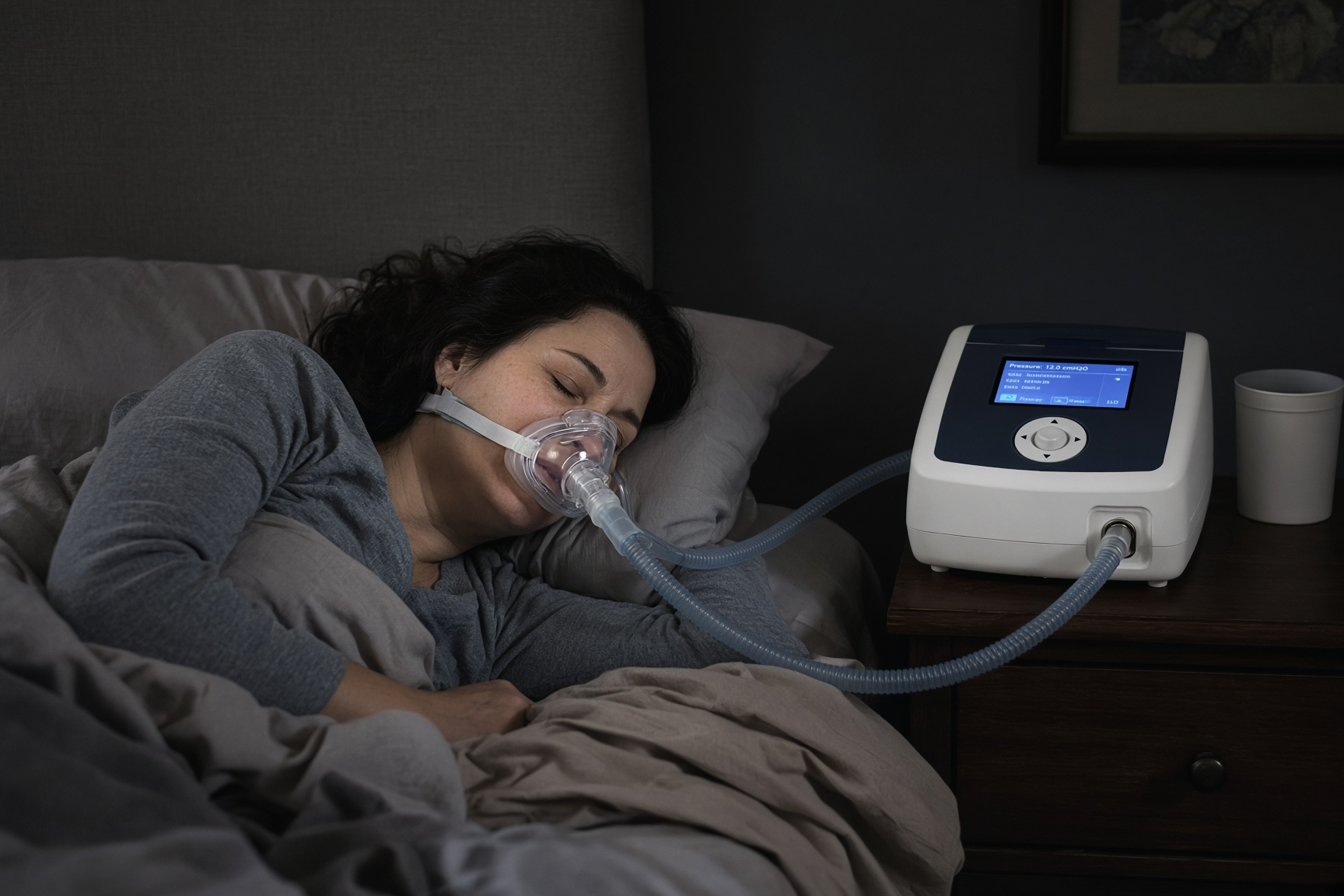
By a wide margin, undiagnosed obstructive sleep apnea is the most common medical cause of excessive daytime sleepiness. Apnea fragments sleep architecture dozens or hundreds of times a night through repeated breathing interruptions, and most people have no conscious memory of any of it. They believe they slept a full eight hours, because they did spend eight hours in bed, while their brain never got the sustained deep and REM sleep it needed.
Clues pointing toward apnea specifically: loud or irregular snoring, witnessed breathing pauses or gasping, waking with a dry mouth or headache, waking to urinate multiple times a night, and sleepiness that's disproportionate to how much time you actually spent in bed. Our guides on sleep apnea symptoms and snoring versus sleep apnea cover the full picture, and sleep apnea in women is frequently underdiagnosed, so don't rule it out if you don't fit the classic profile.
Insufficient Sleep Syndrome
This is the least dramatic and most common explanation of all: simply not allotting enough time for sleep, night after night, whether from a demanding schedule, poor time management, or genuinely not realizing how much sleep you need. Our guide on how much sleep you actually need by age covers the evidence-based ranges, most adults need 7 to 9 hours, and chronic insufficient sleep accumulates as sleep debt that doesn't fully resolve with an occasional long weekend.
Clues it's this: you sleep noticeably longer on vacations or days off, and your sleepiness improves substantially, though not always immediately, once you consistently extend your sleep opportunity.
Narcolepsy
Far less common than apnea, but frequently misdiagnosed for years because its presentation, overwhelming, sometimes irresistible daytime sleep attacks, doesn't match what most people picture. Unlike ordinary sleepiness, narcolepsy involves sleep intruding at unpredictable moments, sometimes mid-activity, and unlike apnea, brief naps in narcolepsy often feel genuinely refreshing, at least temporarily.
Clues it's this: irresistible sleep attacks regardless of how well-rested you should be, sudden brief muscle weakness triggered by laughter or strong emotion (cataplexy), vivid hallucinations at the edge of sleep, and sleep paralysis. Our complete guide to narcolepsy covers the full symptom picture and the specific overnight-plus-MSLT testing required to diagnose it.
Idiopathic Hypersomnia
A less common, less well-known cousin of narcolepsy: persistent, severe daytime sleepiness without cataplexy, often accompanied by long, unrefreshing naps and significant difficulty waking up, sometimes described as "sleep drunkenness." It's diagnosed similarly to narcolepsy, through overnight polysomnography followed by an MSLT, once other causes have been ruled out.
Restless Legs Syndrome and Periodic Limb Movement Disorder
Both fragment sleep, sometimes without any conscious awareness on the part of the sleeper, producing daytime sleepiness that looks similar to apnea's pattern. Our guide to restless legs syndrome covers the specific symptoms and the strong, frequently overlooked connection to iron deficiency.
Medications
A long list of common medications lists sedation or drowsiness as a side effect, including many antihistamines, certain blood pressure medications, some antidepressants, muscle relaxants, and anti-anxiety medications. This is easy to miss because the sleepiness can develop gradually or the medication may have been started for an unrelated reason well before the symptom became noticeable. Review your medication list with your doctor or pharmacist if the timing lines up.
Depression and Circadian Misalignment
Depression can present with hypersomnia (sleeping excessively) alongside daytime sleepiness, particularly in certain subtypes. Shift work and irregular schedules misalign your sleep timing with your circadian rhythm, producing sleepiness during required waking hours even when total sleep time looks adequate on paper.
Medical Conditions
Hypothyroidism, anemia, and poorly controlled diabetes can all produce genuine daytime sleepiness alongside general fatigue, usually as part of a broader symptom picture rather than as the dominant complaint. These are typically identified through basic blood work as part of a comprehensive evaluation.
Red Flags: When Sleepiness Is Genuinely Dangerous
Some presentations of EDS warrant urgent attention rather than a routine, unhurried workup.
Falling asleep while driving, or coming close to it, is not a symptom to monitor. It's a safety emergency. If you've caught yourself drifting, missed an exit because you dozed, or a passenger has had to wake you, stop driving until you've been evaluated. Drowsy driving causes a substantial number of crashes every year, and the risk with untreated sleep apnea and other EDS-causing conditions is well documented.
Sudden muscle weakness triggered by emotion (cataplexy) is a specific, recognizable symptom of narcolepsy and warrants prompt evaluation.
Sleepiness that's rapidly worsening, especially alongside other new neurological symptoms, should be evaluated without delay rather than waiting to see if it resolves on its own.
Falling asleep during activities that would normally be impossible to sleep through (an important conversation, a meal, actively operating machinery) indicates a level of sleep pressure that needs prompt attention.
When to Get Tested
A sleep evaluation is worth pursuing if you have any of the following:
- An Epworth Sleepiness Scale score above 10
- Falling asleep, or nearly doing so, during passive daytime activities despite adequate time in bed
- Any of the driving-related red flags above
- Loud snoring or witnessed breathing pauses, alongside sleepiness
- Sleep attacks that feel sudden or irresistible, or possible cataplexy
- Sleepiness that hasn't improved despite genuinely adequate, consistent sleep opportunity for several weeks
What Evaluation Actually Involves
A sleep specialist will typically start with a detailed history, your sleep schedule, symptom pattern, medications, and a sleepiness questionnaire, before deciding what testing is appropriate.
If sleep apnea is the leading suspicion, testing may start with a home sleep apnea test or an in-lab study depending on your situation; our guide on home tests versus in-lab studies explains how that decision is typically made, and what to expect during a sleep study walks through the process itself.
If narcolepsy, idiopathic hypersomnia, or another cause of true sleep-onset intrusion is suspected, evaluation requires an overnight polysomnogram followed by a same-day MSLT, since a home test cannot measure brain activity or stage sleep.
The Bottom Line
Feeling tired and actually falling asleep at inappropriate moments are different problems, and treating EDS as a specific, measurable symptom rather than vague tiredness makes it much easier to identify the cause. Obstructive sleep apnea explains the largest share of cases by far, but insufficient sleep, narcolepsy, restless legs syndrome, medication side effects, and several other conditions can all produce the same experience through very different mechanisms.
If sleepiness is affecting your safety, especially behind the wheel, or hasn't responded to genuinely adequate sleep, it's worth a proper evaluation rather than pushing through indefinitely.
Struggling to stay awake during the day? Use our sleep clinic directory to find an accredited sleep center near you and get properly evaluated.
Written by
Daniel Marin
Sharing insights on sleep health and wellness to help you achieve better rest and improved quality of life.