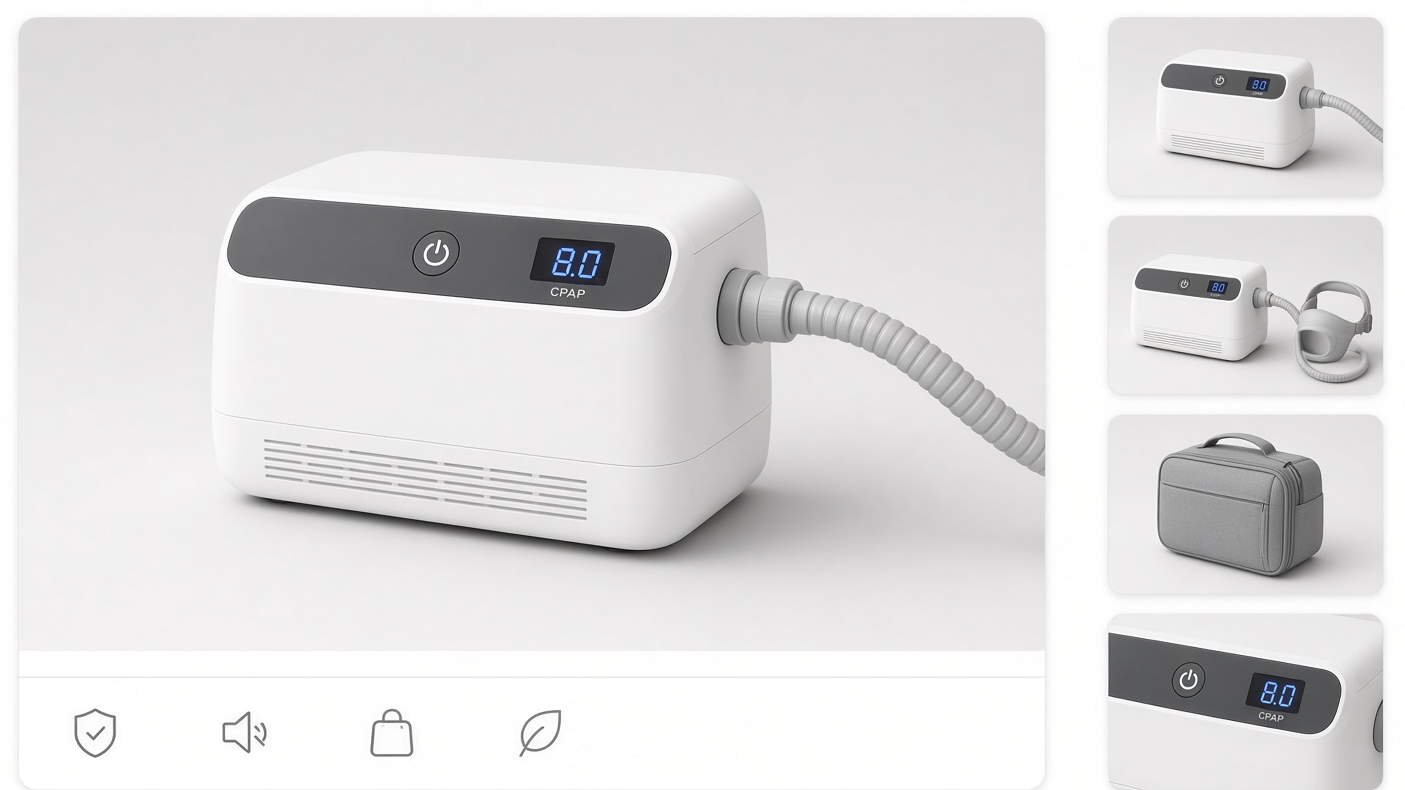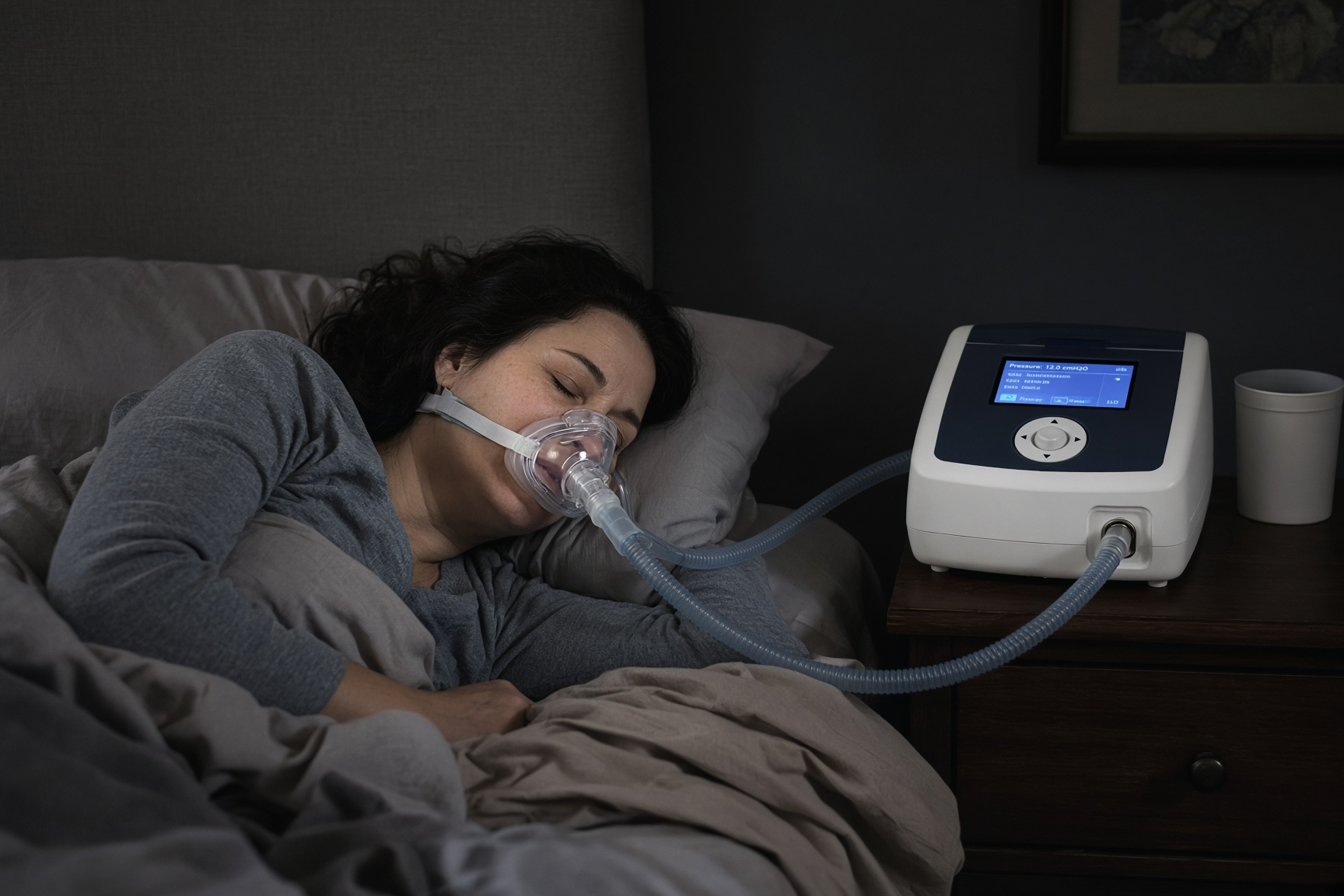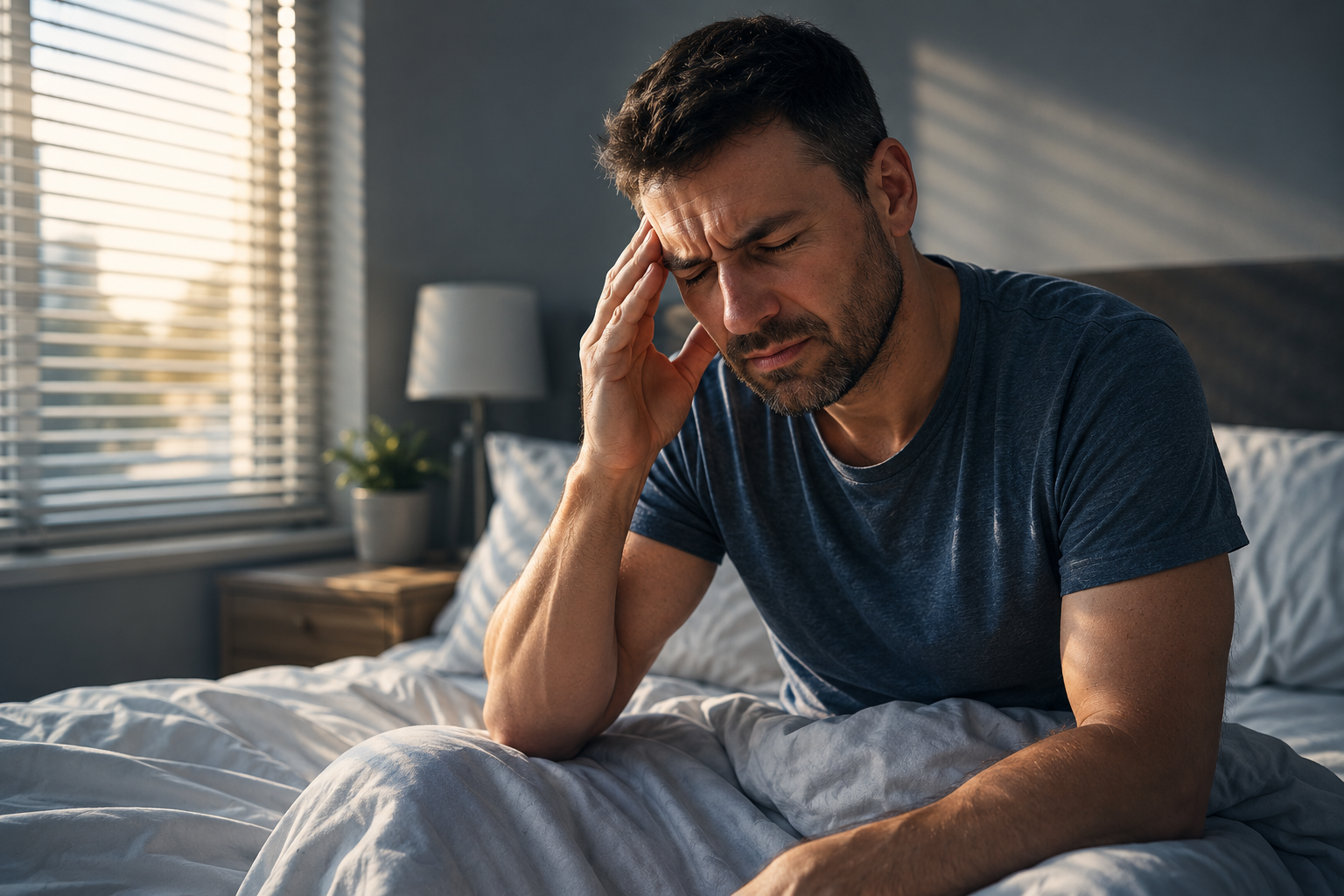
You wake up with a dull, pressing headache across both sides of your forehead. It's there before you've done anything to cause it: no alcohol the night before, no skipped meals, no obvious trigger. You take something for it, and within an hour or two it fades on its own anyway. Then it happens again a few days later.
Morning headaches are easy to write off. They're rarely severe enough to interrupt your day, and because they resolve quickly, most people never mention them to a doctor. But waking with a headache on a regular basis is a recognized clinical symptom, and one of the more common causes is a condition most people wouldn't connect to head pain at all: obstructive sleep apnea.
Here's how the connection works, how to tell a sleep apnea headache from other kinds, and when it's worth getting checked.
The Connection Between Sleep Apnea and Morning Headaches
Morning headache is listed among the recognized symptoms of obstructive sleep apnea, and studies have consistently found that people with sleep apnea report them at meaningfully higher rates than the general population. Estimates vary by study and definition, but a substantial minority of people with untreated apnea experience them regularly.
The mechanisms are reasonably well understood.
Carbon Dioxide Retention and Blood Vessel Dilation
This is the leading explanation. During apnea events, breathing stops or becomes severely reduced, so you're not clearing carbon dioxide efficiently. CO2 accumulates in the blood over the course of the night.
Elevated CO2 is a potent vasodilator in the brain: it causes cerebral blood vessels to widen, which increases intracranial pressure. That pressure change is a well-established headache mechanism. Because CO2 builds gradually through the night and clears once you're awake and breathing normally, the headache is present on waking and typically resolves within a few hours, which is exactly the pattern people describe.
Intermittent Oxygen Drops
Each apnea event causes oxygen levels to fall, sometimes substantially. Repeated cycles of falling and recovering oxygen (intermittent hypoxia) produce oxidative stress and inflammation, both of which are implicated in headache generation.
Fragmented, Nonrestorative Sleep
Apnea repeatedly pulls you out of deeper sleep stages without waking you consciously. Poor sleep quality is independently associated with headache, and disrupted sleep architecture appears to lower the threshold at which headaches occur. Our guide to the four stages of sleep covers how apnea dismantles that structure.
Blood Pressure Surges
Each apnea event triggers a sympathetic nervous system response with a corresponding spike in blood pressure. Over a night with dozens or hundreds of these, the cardiovascular stress is considerable, and sleep apnea is strongly associated with hypertension, itself a contributor to morning headache.
Bruxism
Teeth grinding and jaw clenching during sleep are associated with sleep apnea, and can produce morning headaches through a completely separate route: muscular tension in the jaw, temples, and temporomandibular joint. If you wake with jaw soreness or facial tension alongside the headache, this may be part of the picture.
What a Sleep Apnea Headache Feels Like
Headaches attributed to sleep apnea tend to share a recognizable profile, and it's fairly distinct from other common headache types.
Typical characteristics:
- Present on waking, or developing within the first hour or so
- Bilateral, affecting both sides of the head rather than one
- Pressing or squeezing in quality, not throbbing or pulsating
- Mild to moderate in intensity, rarely disabling
- Resolves within about 30 minutes to 4 hours of waking, often without medication
- Recurrent, occurring on multiple days per week
- Not accompanied by nausea, vomiting, or sensitivity to light and sound
That last point is a useful discriminator. The absence of migraine features is part of what distinguishes this pattern.
How It Compares to Other Morning Headaches
| Feature | Sleep Apnea Headache | Migraine | Tension Headache | Cluster Headache |
|---|---|---|---|---|
| Location | Both sides, forehead/temples | Usually one side | Both sides, band-like | One side, around the eye |
| Quality | Pressing, dull | Throbbing, pulsating | Tightening, pressing | Severe, boring, piercing |
| Intensity | Mild to moderate | Moderate to severe | Mild to moderate | Very severe |
| Timing | On waking, resolves in hours | Any time, lasts 4-72 hours | Any time, variable | Often wakes from sleep, 15-180 min |
| Nausea or light sensitivity | Absent | Common | Absent or mild | Usually absent |
| Other night symptoms | Snoring, gasping, dry mouth | Not specifically | Not specifically | Restlessness, tearing, nasal congestion |
Worth noting: sleep apnea and migraine are not mutually exclusive, and poor sleep is a well-documented migraine trigger. Some people have both conditions, with untreated apnea worsening migraine frequency.
Other Causes of Morning Headaches Worth Considering
Sleep apnea is a common cause, but not the only one. A thorough evaluation considers:
Bruxism (teeth grinding), which can occur with or without apnea and produces jaw and temple pain.
Medication overuse headache, a genuinely common and counterintuitive cause. Regular use of pain relievers (more than about 10 to 15 days per month, depending on the drug) can produce rebound headaches that are often worst in the morning after the overnight gap in dosing.
Alcohol, which disrupts sleep architecture, causes dehydration, and produces headache through several routes.
Caffeine withdrawal, where the overnight gap since your last dose is long enough to trigger withdrawal by morning.
Poorly controlled hypertension, classically associated with morning occipital headache, though this is less common than often assumed.
Depression and anxiety, both associated with morning headache independent of sleep disordered breathing.
Nocturnal hypoglycemia, particularly relevant in people with diabetes on insulin or certain oral medications.
Sleeping position and pillow support, producing cervicogenic headache originating from the neck.
Sinus disease or nasal congestion, which can also worsen apnea, so the two sometimes travel together.
Rarely, more serious causes. Headaches that are new and severe, progressively worsening, wake you from sleep in a new pattern, or come with neurological symptoms (vision changes, weakness, confusion, seizures) require prompt medical evaluation rather than watchful waiting.
The Clues That Point Toward Sleep Apnea
Morning headache on its own doesn't diagnose anything. What makes sleep apnea likely is the company it keeps. Consider the possibility seriously if the headaches occur alongside:
- Loud snoring, particularly if it's irregular with pauses
- Witnessed breathing pauses, gasping, or choking during sleep
- Excessive daytime sleepiness that doesn't match your time in bed
- Dry mouth or sore throat on waking
- Waking to urinate more than once a night
- High blood pressure, especially if difficult to control
- Unrefreshing sleep despite adequate duration
- Difficulty concentrating or memory problems
Our guides on sleep apnea symptoms and snoring versus sleep apnea cover the full symptom picture and how to tell ordinary snoring from the kind that signals a problem.
Risk factors that raise the likelihood further include excess weight, larger neck circumference, age over 40, family history, and anatomical factors like large tonsils or a recessed jaw. It's also worth knowing that apnea in women is frequently missed partly because symptoms like headache, fatigue, and insomnia are more prominent than the classic loud snoring presentation, and get attributed to other causes.
Why Treating the Cause Matters More Than Treating the Headache
The pragmatic response to a mild headache that resolves on its own is to ignore it, or take something and move on. There are two problems with that approach here.
First, pain relievers don't address the mechanism. If CO2 retention overnight is producing the headache, analgesics treat the symptom while the underlying breathing disruption continues. And regular use risks medication overuse headache, which layers a second problem on top of the first.
Second, and more importantly, the headache is the least consequential part. Untreated obstructive sleep apnea is associated with hypertension, cardiovascular disease, stroke, type 2 diabetes, cognitive impairment, and increased accident risk. Our guide on what untreated sleep apnea does to your brain, heart, and metabolism covers the evidence.
A recurring morning headache is a low-cost signal about a condition whose other consequences are considerably higher-cost. That makes it worth acting on.
The encouraging part: when sleep apnea is the cause, treating it often resolves the headaches. Studies of CPAP therapy have found that morning headaches frequently improve or disappear with effective treatment, sometimes within weeks. That response is also diagnostically informative in itself.
What Evaluation Looks Like
If your morning headaches are recurrent and any of the associated symptoms above apply, the path forward is straightforward.
Track the pattern first. For two weeks, note when headaches occur, their location and quality, how long they last, what you did the previous evening (alcohol, caffeine, medication), and any nighttime symptoms your partner observes. This is genuinely useful clinical information and speeds up the process considerably.
See a doctor and mention both. Report the headaches and the sleep symptoms together. Headaches presented in isolation frequently get worked up as a primary headache disorder, while the sleep connection goes unexplored.
Expect a sleep study if apnea is suspected. Sleep apnea cannot be diagnosed from symptoms alone. Depending on your circumstances, this may be a home sleep apnea test or an in-lab study, and our guide on home tests versus in-lab studies explains how that decision is made. If you're anxious about what the night involves, what to expect during a sleep study walks through it step by step.
The Bottom Line
Waking with a headache several times a week is not something to absorb as normal. When it's caused by sleep apnea, the mechanism is concrete: carbon dioxide accumulating overnight, oxygen levels repeatedly dropping, and sleep architecture being dismantled, all producing a dull bilateral headache that's present on waking and fades within a few hours.
The headache itself is mild. What it may be pointing at isn't. If yours comes with snoring, witnessed breathing pauses, daytime sleepiness, or a dry mouth in the morning, that combination is worth an evaluation rather than another dose of ibuprofen.
Waking with headaches most mornings? Use our sleep clinic directory to find an accredited sleep center near you and find out whether sleep apnea is behind them.
Is your weight affecting your sleep?
As this article covers, the relationship between weight and sleep runs in both directions, and excess weight is one of the most common risk factors for sleep apnea specifically. HealSend offers doctor-prescribed GLP-1 weight loss treatment, with clinician-led care delivered to your door. Talk to your sleep doctor about whether weight loss could be part of your treatment plan.
See if you qualifyAdvertising disclosure: this is a paid partnership. We may earn a commission if you sign up through this link, at no extra cost to you.
Written by
Daniel Marin
Sharing insights on sleep health and wellness to help you achieve better rest and improved quality of life.