Advertising disclosure: this article contains a sponsored link to CPAP.com, a retailer we have an affiliate relationship with. If you buy through it we may earn a commission, at no extra cost to you. The most important conclusion below is that bilevel machines are a prescription decision, not an upgrade you shop for.
Most "best CPAP machine" advice is written for the average prescription. If yours came back high, that advice can mislead you in two opposite directions. You may assume you need a special, expensive machine when a standard one covers you. Or you may assume the standard machine will feel fine, when the real problem at high pressure is comfort, and that is solved by the mask, the humidity and the settings far more than by the model on your nightstand.
This guide answers the specific questions a high-pressure prescription raises: where the ceiling on a standard machine is, which machines go beyond it, what actually makes high pressure hard to live with, and when a clinician moves someone from CPAP to bilevel.
Prices and specifications were checked on CPAP.com on October 6, 2026. This is a specification and decision guide, not a hands-on test of any machine.
The short answer
If your prescribed pressure is 20 cm H2O or below, a standard auto machine covers it. Every mainstream one we compare tops out at 20. Put your money and attention into the mask and humidification, not into a different machine.
If your prescription is above 20, or you cannot tolerate your current pressure, the conversation is about bilevel therapy, which delivers a higher pressure when you breathe in and a lower one when you breathe out. That is a clinician's decision, and the machines start around $1,549.
If you are thinking of switching to bilevel on your own because CPAP feels like too much, talk to your clinician first. For sleep apnea, Medicare covers a standard bilevel machine only after CPAP has been tried and proven ineffective despite proper mask fitting and appropriate pressure settings, and the settings are not interchangeable.
What "high pressure" actually means
There is no official definition, and clinics use different cutoffs. The practical line is the one set by the machines: standard CPAP and auto-CPAP machines run from 4 to 20 cm H2O. A prescription near the top of that range is where comfort can start to become a real issue, and one above it needs a different category of machine.
You can see why with the machines CPAP.com lists today:
| Machine | Type | Pressure range | Price | Warranty |
|---|---|---|---|---|
| ResMed AirSense 11 AutoSet | Auto CPAP | 4-20 cm H2O | $1,004 | 2 years |
| ResMed AirSense 10 AutoSet | Auto CPAP | 4-20 cm H2O | $960 | 2 years |
| React Health G3 X Auto | Auto CPAP | 4-20 cm H2O | $873 | 5 years |
| ResMed AirCurve 10 VAuto | Bilevel | 4-25 cm H2O | $1,776 | 2 years |
| ResMed AirCurve 11 VAuto | Bilevel | Up to 25 cm H2O* | $1,796 | 2 years |
| React Health Luna G3 BPAP 25A | Bilevel | 4-25 cm H2O | $1,549 | 2 years |
*The CPAP.com listing for the AirCurve 11 does not state its range in the page text. Retailer specification sheets for the machine give 25 cm H2O, so confirm the figure on the listing before you buy.
The bilevel machines also run in CPAP mode, which is why people sometimes buy one as a general upgrade. That is the wrong reason, and the next sections explain why.
What changes when pressure is high
Higher pressure does not make CPAP less effective, but it changes what is hard about it.
Exhaling feels harder. The American Association of Sleep Technologists notes that exhaling can be challenging for some people using CPAP at higher pressures, and that patients needing high CPAP pressure are often more comfortable on bilevel. This is the single most common reason for a switch.
Air leaks are harder to control. More pressure behind the seal makes a marginal mask fit show up as a leak, and leaks bring dry eyes, noise and red marks. Mask size and style matter more, not less, as pressure rises.
The air tends to dry you out. More airflow means more moisture carried away. Built-in heated humidification and a heated hose become comfort features rather than extras.
Some people swallow air. Bloating and burping can accompany higher pressures. If it persists, tell your clinic, because it can sometimes be addressed with settings or mask changes.
None of these is solved by buying a more expensive machine of the same type. They are solved by fit, humidity, and, where appropriate, pressure relief or bilevel.
What to look for in a machine at high pressure
1. A pressure ceiling that clears your prescription, with room to spare. If your prescribed pressure or auto range sits close to 20, a standard machine works but leaves no margin. If your clinician expects your needs to change, say with weight changes, ask whether to buy for the range you may need rather than the one you have today.
2. Exhale pressure relief, used carefully. On ResMed machines this is EPR, which lowers pressure by up to 3 cm H2O while you breathe out, at settings of 1, 2 or 3. It can make high pressure easier to breathe against. CPAP.com's own guide to EPR cautions, however, that for some people it can raise residual events and recommends clinician supervision. Treat it as a setting your clinician chooses and checks, not one to turn up on your own.
3. Heated humidification and a heated hose. At CPAP.com, the React Health G3 X and the AirSense 10 include a heated hose in the box. The AirSense 11 does not: its climate control needs the separately sold ClimateLineAir 11 hose, $46 on sale ($66 list), so budget for it.
4. Remote data your clinician can use. The AirSense 11 has built-in cellular connectivity and works with ResMed's AirView, and the G3 X has built-in 4G with provider messaging. At high pressure, your clinician is more likely to want to look at your leak and residual-event data and adjust settings, and a machine that reports on its own makes that easier.
5. A realistic view of noise. Manufacturers publish decibel figures measured under standard test conditions. The G3 X listing states its 28 dBA figure at 10 cm H2O, so a machine running near 20 will generally be louder than its label. Do not expect the number on the box at high pressure.
When bilevel enters the picture
Bilevel (often called BiPAP) uses two pressures: a higher inhale pressure and a lower exhale pressure. That matches the main complaint at high CPAP pressures, and it is why clinicians reach for it when CPAP is not tolerated.
It is also used for other clinical reasons, including some neuromuscular conditions and some heart and lung diseases, which is a reason it is prescribed rather than chosen. CPAP.com notes the AirCurve 11 VAuto is built to treat central as well as obstructive sleep apnea, and the machines' modes and settings are different from CPAP's. A bilevel prescription includes separate inhale and exhale pressures and sometimes a pressure support value, none of which a retailer can set for you.
Insurance reflects that. Medicare's coverage policy for PAP devices (LCD L33718) covers a bilevel device without a backup rate only if a CPAP device "has been tried and proven ineffective based on a therapeutic trial," defined as a documented failure to meet therapeutic goals on CPAP "despite optimal therapy (i.e., proper mask selection and fitting and appropriate pressure settings)." It also states that a bilevel device with a backup rate is not reasonable and necessary when the primary diagnosis is obstructive sleep apnea, and claims billed that way will be denied.
Ask your supplier which billing code your machine falls under, because it affects coverage. Most commercial plans follow similar logic.
Cost. At CPAP.com's current prices a bilevel machine runs roughly $550 to $900 more than a standard auto machine. If a standard machine will do the job, that is a large amount to pay for features you will not use.
Before you conclude you need more machine
Most people who struggle at high pressure are one adjustment away from comfort. Check these first:
- Mask style and size. A full face mask or a different cushion size can change a leaky night completely. Our starter guide walks through the three mask types and how to choose.
- Whether the pressure is still right. Weight, congestion and sleep position all change how much pressure you need. An auto machine's data shows where it actually spends the night, which can reveal that a high ceiling is rarely reached.
- Humidity and tubing. Dryness drives mask removal at night, and it is fixable.
- Exhale relief, discussed above, with your clinician.
- Combination approaches. An oral appliance can sometimes allow a lower, more comfortable CPAP pressure, and weight loss can reduce the pressure required. We cover these in our guide to CPAP alternatives.
If events persist, or new central events appear in your data, despite high pressure, that is a clinical question rather than an equipment one. Our explainers on central versus obstructive sleep apnea and complex, treatment-emergent sleep apnea cover why.
If you are buying one
- Bring the exact prescription. For CPAP that is a pressure or range. For bilevel it includes inhale and exhale pressures, and every US retailer will ask you to upload it.
- Match the machine to the prescription, not the other way round. Buying a machine whose range does not clear your prescription is the one mistake you cannot fix with settings.
- Know the return terms. At CPAP.com a machine carries a one-time 60 night risk-free return from the ship date, in original packaging and free of heavy wear, with return shipping at your cost. Other retailers differ.
- Budget for the mask and a heated hose, which the AirSense 11 does not include. At high pressure these decide comfort more than the machine does.
- Expect sale pricing to move. CPAP.com has been running sitewide sale banners recently, so checkout prices may differ from those above.
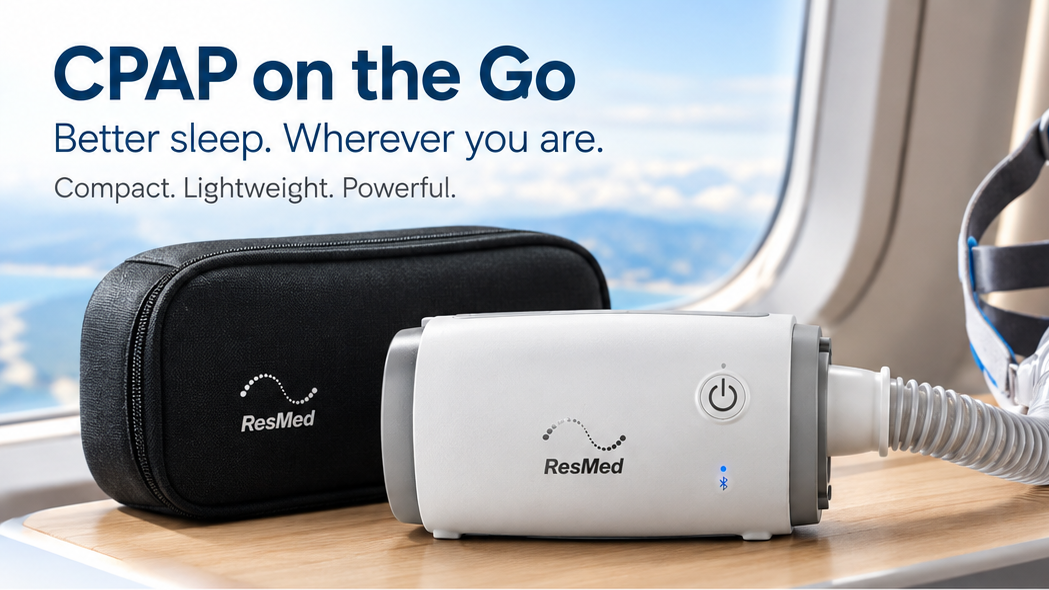
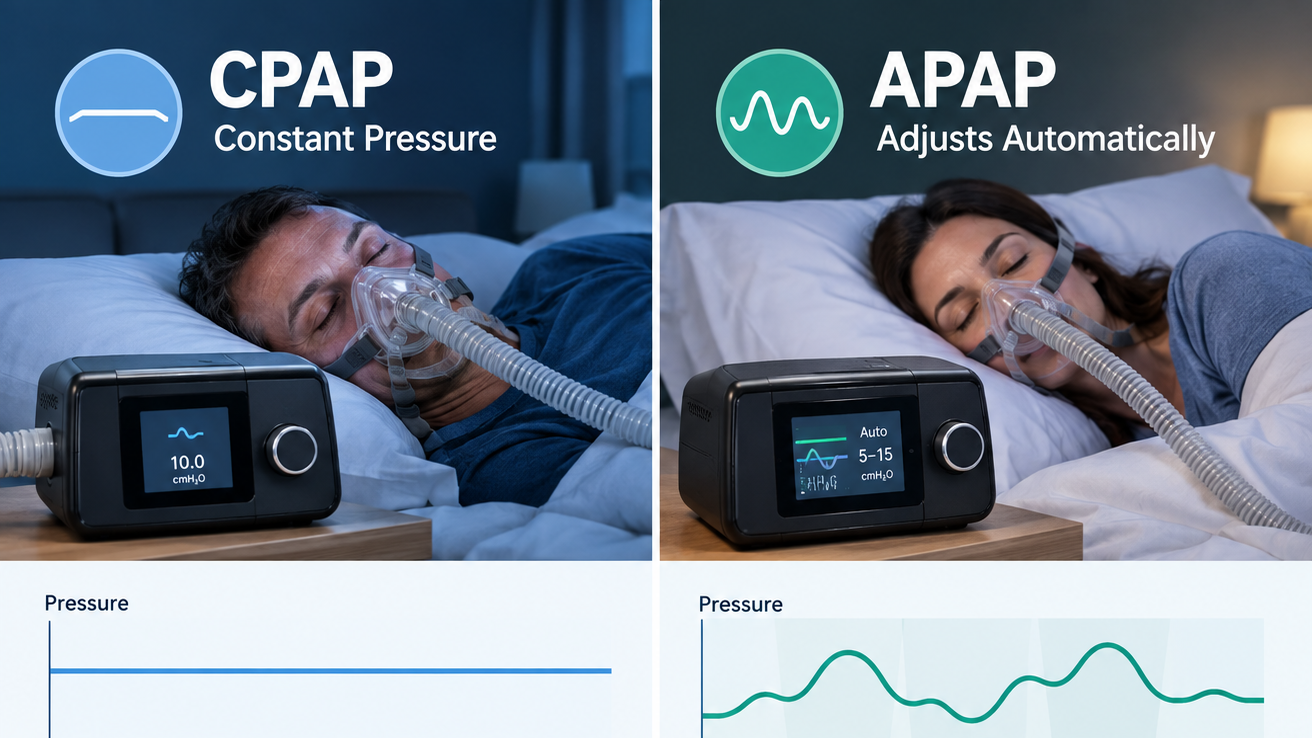
For the wider market, including travel models, see our 2026 CPAP machine comparison, and for what the two modes do, CPAP vs APAP.
What to ask your clinician
- What is my prescribed pressure or range, and how close is it to 20?
- Where does my machine actually spend the night, and what is my leak and residual data?
- Would exhale pressure relief help, and would you check my data after enabling it?
- If CPAP stays uncomfortable, would you consider a bilevel trial, and what would it need to show?
- Are there changes to my mask, humidity or weight that would let my pressure come down?
If you do not have a sleep clinic yet, find an accredited sleep clinic.
The bottom line
For a prescription up to 20 cm H2O, a standard auto machine is the right tool and the React Health G3 X ($873, five year warranty, heated tube included) or the ResMed AirSense 11 ($1,004 plus a $46 to $66 heated hose, strongest onboarding support) are the sensible choices. Spend the difference between those and a bilevel machine on a mask that seals and good humidification.
For a prescription above 20, or genuine intolerance of high pressure, bilevel is a clinician-led step, and the machines in the table above are what is available. It is a prescription you fill, not an upgrade you pick.
In both cases the machine is the smaller decision. At high pressure, fit, humidity and settings decide whether you are still using it in six months.
Sources
- American Association of Sleep Technologists, BiPAP or CPAP Therapy?
- CMS Local Coverage Determination L33718, Positive Airway Pressure (PAP) Devices for the Treatment of Obstructive Sleep Apnea
- CPAP.com product listings and pricing for the machines above, its EPR guide, and its published return policy, checked October 6, 2026
- Retailer specification sheets for the ResMed AirCurve 11 VAuto pressure range
This article is general information, not medical advice. CPAP and bilevel settings are prescribed, and changing your own pressure or switching machine type can make therapy less effective or unsafe. Talk to your sleep physician before changing your treatment.
Shop CPAP masks, machines, and supplies
CPAP.com carries a wide range of machines, masks, cushions, filters, and cleaning supplies, with guidance to help you find the right fit for your therapy.
Shop CPAP.comAdvertising disclosure: this is a paid partnership. We may earn a commission if you sign up through this link, at no extra cost to you.
Written by
Daniel Marin
Sharing insights on sleep health and wellness to help you achieve better rest and improved quality of life.