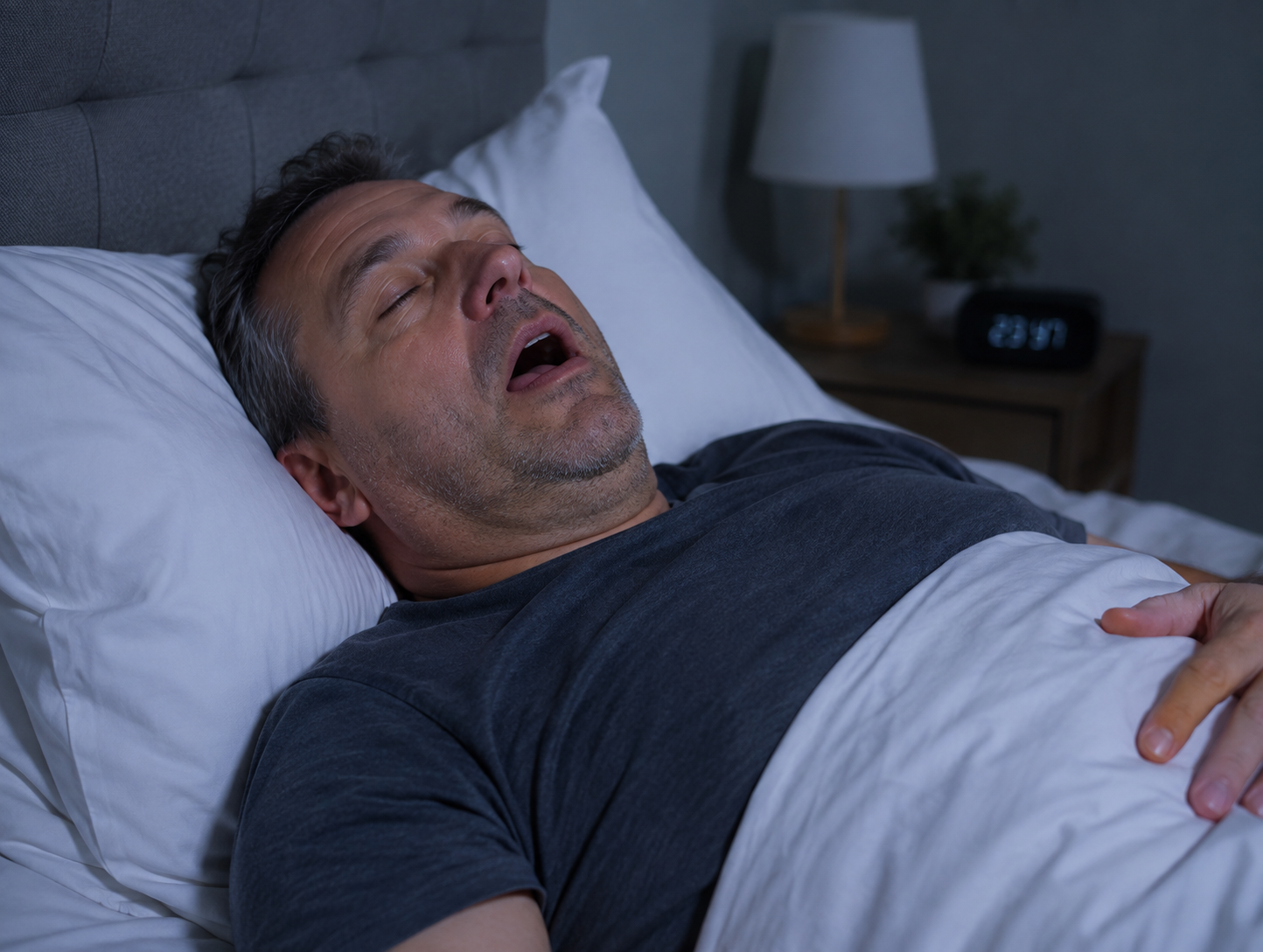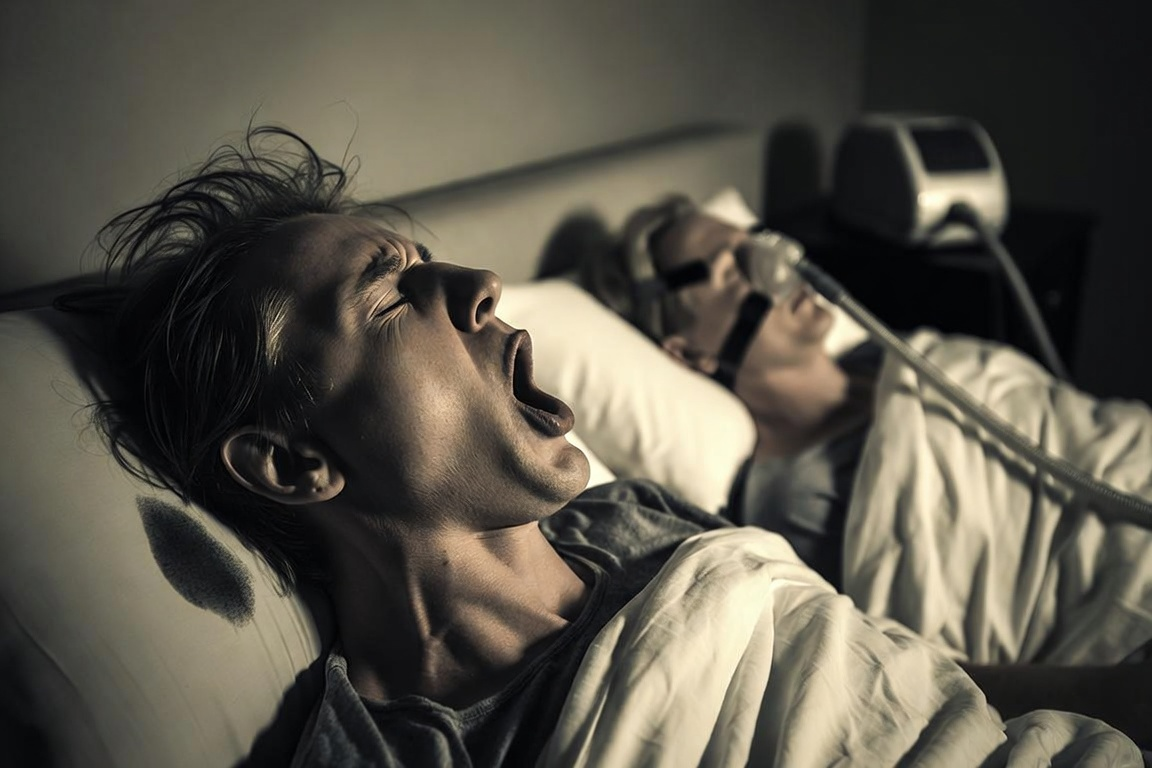
Snoring gets treated as a punchline. Separate bedrooms, earplugs, elbow jabs in the middle of the night, it's the stuff of sitcoms and long-married-couple jokes. And for a lot of people, that's genuinely all it is: harmless noise that bothers a partner more than it affects the snorer.
But snoring isn't always harmless. In a meaningful share of cases, it's the most audible symptom of obstructive sleep apnea, a condition linked to high blood pressure, heart disease, stroke, and a long list of other health consequences if left untreated. The tricky part is that simple snoring and apnea-related snoring can sound remarkably similar from across the room. The difference often isn't in the noise itself, it's in the pattern around it.
Here's how to actually tell them apart, and when it's worth taking snoring seriously enough to get checked out.
Why People Snore in the First Place
Snoring happens when airflow causes the soft tissues of your throat, the soft palate, uvula, and surrounding structures, to vibrate as you breathe. The narrower your airway, the more that tissue vibrates, and the louder the snore.
Several factors narrow the airway enough to cause snoring:
- Sleeping position. Lying on your back lets gravity pull the tongue and soft tissue backward, narrowing the airway. This is why so many people snore only when on their back.
- Nasal congestion. A cold, allergies, or a deviated septum forces you to breathe through your mouth, which increases airway turbulence.
- Alcohol and sedatives. These relax throat muscles, making the airway more prone to collapse and vibration.
- Weight and anatomy. Extra tissue around the neck, large tonsils, or a naturally narrow airway all reduce the space available for air to pass through quietly.
- Age. Throat muscle tone naturally decreases with age, which is part of why snoring becomes more common later in life.
- Simple fatigue. Being overtired relaxes muscles throughout the body, including the throat, more than usual.
Any of these can cause snoring on their own, without any breathing actually stopping. This is often called primary snoring or simple snoring, and by itself, it isn't classified as a medical disorder.
Where Sleep Apnea Comes In
Obstructive sleep apnea (OSA) is a step beyond simple snoring. Instead of the airway just narrowing and vibrating, it periodically collapses completely, stopping airflow entirely for 10 seconds or longer, sometimes for a minute or more, sometimes dozens or hundreds of times a night.
Snoring in sleep apnea isn't incidental, it's produced by the same narrowed airway that's on the verge of full collapse. That's why loud, frequent snoring is one of the most reliable red flags for OSA. But the presence of snoring alone doesn't confirm apnea; what matters is the specific pattern.
The Key Differences: A Side-by-Side Look
| Feature | Simple Snoring | Sleep Apnea-Related Snoring | |---------|-----------------|------------------------------| | Pattern | Steady, continuous | Loud snoring interrupted by silence, then a gasp or snort | | Breathing pauses | None | Present, sometimes witnessed by a partner | | Volume | Can be loud but consistent | Often escalates before a pause, then abruptly stops | | Daytime sleepiness | Usually absent | Common, sometimes severe | | Morning headaches | Uncommon | Fairly common | | Waking gasping or choking | No | Sometimes | | Dry mouth or sore throat on waking | Occasional | Common | | Frequent nighttime urination | Uncommon | Common | | High blood pressure | Not specifically linked | Strongly associated | | Improves with position change or weight loss | Often | May improve but frequently persists |
The single most telling difference is the pause-gasp pattern. Simple snoring is repetitive but continuous, a steady buzz or rattle. Apnea-related snoring has a distinctive rhythm: loud snoring that builds, then abruptly stops as breathing is obstructed, followed by silence, and then a loud snort, gasp, or choking sound as breathing resumes and the airway reopens. If you have a bed partner, this pattern is often obvious to them even if you're completely unaware of it happening.
Why You Might Not Know Which One You Have
This is the central challenge with self-diagnosing snoring: you're asleep for the part that matters most. You can't watch yourself sleep, so the choppy stop-start pattern that distinguishes apnea from simple snoring is something only a bed partner, a roommate, or a recording is likely to catch.
This is part of why sleep apnea is so widely underdiagnosed. Studies estimate that a large share of people with moderate to severe obstructive sleep apnea have never been diagnosed, in part because snoring gets written off as a nuisance rather than investigated as a symptom.
If You Sleep Alone
Without a partner to observe you, a few tools can help:
- Smartphone recording apps designed to detect snoring patterns can capture the audio of a full night and let you review it, or flag pauses automatically.
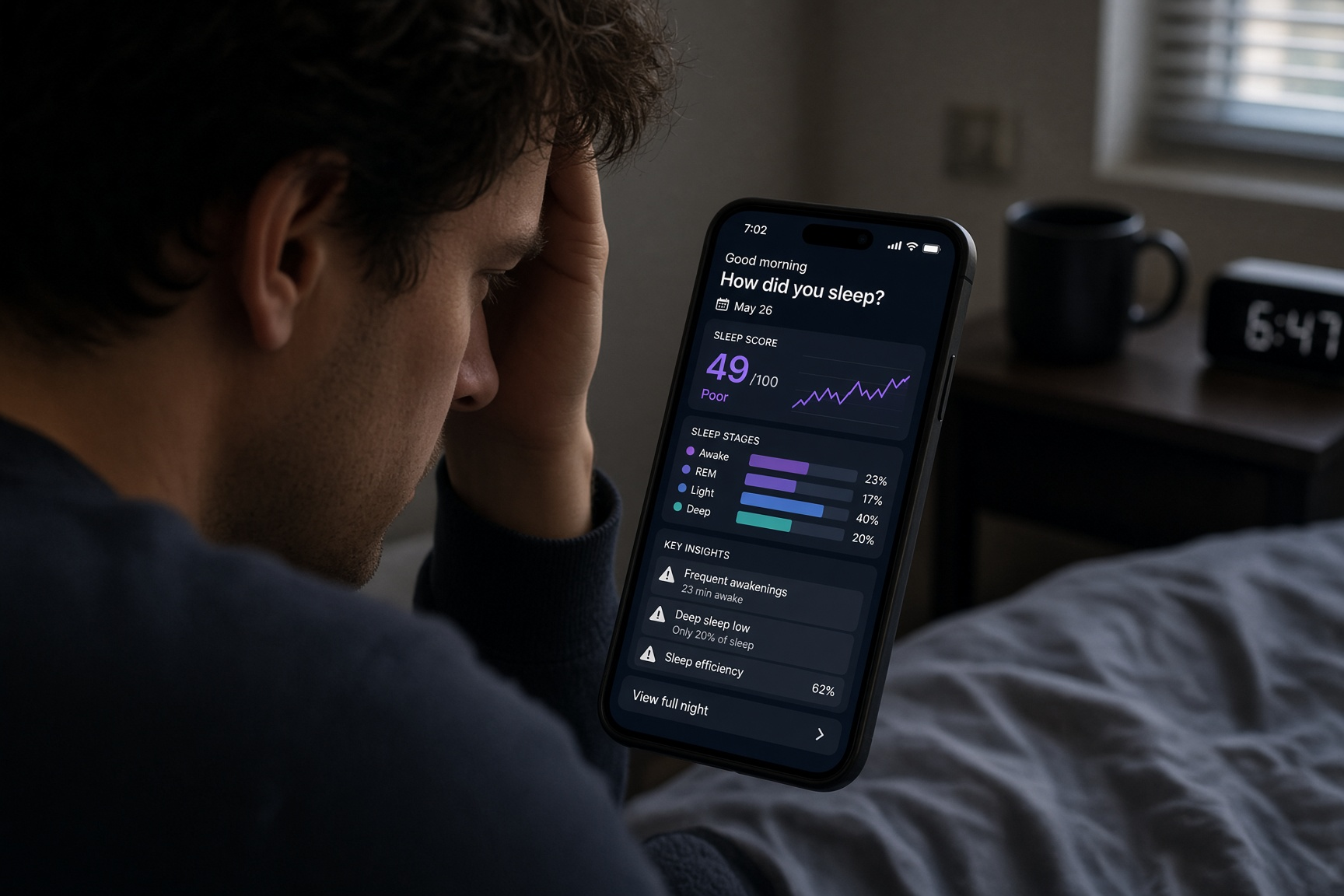
- Wearable sleep trackers, while not diagnostic, can sometimes flag irregular breathing patterns or unusual drops in blood oxygen (if the device has a pulse oximeter feature) worth discussing with a doctor.
- Daytime symptoms become your best evidence: how you feel when you wake up and throughout the day matters as much as what happens overnight.
None of these substitute for a proper evaluation, but they can help you decide whether it's worth pursuing one.
The Daytime Clues That Matter Most
Because you can't observe your own breathing patterns overnight, how you feel during the day is one of the most useful signals available to you. Ask yourself:
- Do you wake up feeling unrefreshed even after 7 to 8 hours in bed?
- Do you have a dry mouth, sore throat, or headache most mornings?
- Do you feel excessively sleepy during passive activities, watching TV, reading, sitting in a meeting, even after a full night's sleep?
- Have you ever caught yourself nodding off while driving?
- Do you wake up multiple times a night to urinate?
- Has anyone ever told you that you seem to stop breathing, gasp, or choke in your sleep?
Answering yes to several of these, particularly alongside loud or irregular snoring, is a stronger signal for sleep apnea than the loudness of the snoring itself.
Risk Factors That Raise the Odds Snoring Is More Than Snoring
Certain factors make it more likely that snoring reflects underlying obstructive sleep apnea rather than a harmless quirk:
- Excess weight, particularly extra tissue around the neck and throat
- Neck circumference greater than 17 inches in men or 16 inches in women
- Age over 40, though sleep apnea occurs at any age
- Family history of sleep apnea
- Large tonsils, a recessed jaw, or other airway-narrowing anatomy
- High blood pressure, especially if it's difficult to control with medication
- Male sex, though the risk in women rises significantly after menopause, a pattern our guide on sleep apnea in women covers in more depth, since apnea is frequently missed in women whose symptoms don't fit the "classic" profile
- Regular alcohol use before bed, which relaxes the airway further
The more of these that apply to you alongside loud, irregular snoring, the stronger the case for getting evaluated rather than assuming it's harmless.
When to See a Doctor
Consider scheduling an evaluation if:
- Your partner describes snoring with pauses, gasping, or choking sounds
- You feel excessively sleepy during the day despite adequate time in bed
- You wake up with headaches, a dry mouth, or a sore throat most mornings
- You have high blood pressure that's difficult to control
- You've been told you stop breathing during sleep, even once
- Your snoring has gotten noticeably worse or louder over time
- You have other risk factors (excess weight, large neck circumference, family history)
None of these guarantee you have sleep apnea, only a sleep study can confirm that, but they're reasons to bring it up with your doctor rather than continuing to treat it as background noise.
What Happens If You Get Evaluated
A doctor will typically start with a symptom history and a few standardized questions (similar to the Epworth Sleepiness Scale, which measures how likely you are to doze off in different situations). If your symptoms suggest possible obstructive sleep apnea, the next step is usually a sleep study, either an at-home test or an overnight lab-based study, depending on your specific situation. Our guide on home sleep tests vs. in-lab studies walks through exactly how that decision gets made and what each option involves.
The test measures how often your breathing is disrupted overnight (your AHI, or apnea-hypopnea index) and how much your oxygen levels drop, which together determine whether you have sleep apnea and how severe it is.
What If It Really Is Just Simple Snoring?
Not every snorer has sleep apnea, and if a sleep study comes back clear, that's genuinely good news. Simple snoring can often still be improved with straightforward measures:
- Sleeping on your side instead of your back
- Treating nasal congestion with saline rinses, allergy treatment, or addressing a deviated septum if needed
- Limiting alcohol in the hours before bed
- Losing weight, if applicable, even a modest amount can reduce airway narrowing
- Establishing a consistent sleep schedule to avoid the extra muscle relaxation that comes with being overtired
If these measures don't help, or if snoring returns despite them, it's worth revisiting the possibility of sleep apnea rather than assuming the door is permanently closed.
The Bottom Line
Most snoring is exactly what it appears to be: harmless noise caused by relaxed throat tissue during sleep. But snoring is also the most common visible symptom of obstructive sleep apnea, a condition with real, cumulative health consequences if it goes untreated for years.
The distinguishing signs aren't subtle once you know what to look for: a choppy, pause-and-gasp pattern rather than steady noise, daytime sleepiness despite adequate sleep, morning headaches, and risk factors like excess weight or high blood pressure. If any of that sounds familiar, don't let the fact that snoring is often treated as a joke stop you from taking it seriously.
Ready to find out for sure? Use our sleep clinic directory to find an accredited sleep center near you and get a proper evaluation, for your sleep, and for your health.
Written by
Daniel Marin
Sharing insights on sleep health and wellness to help you achieve better rest and improved quality of life.