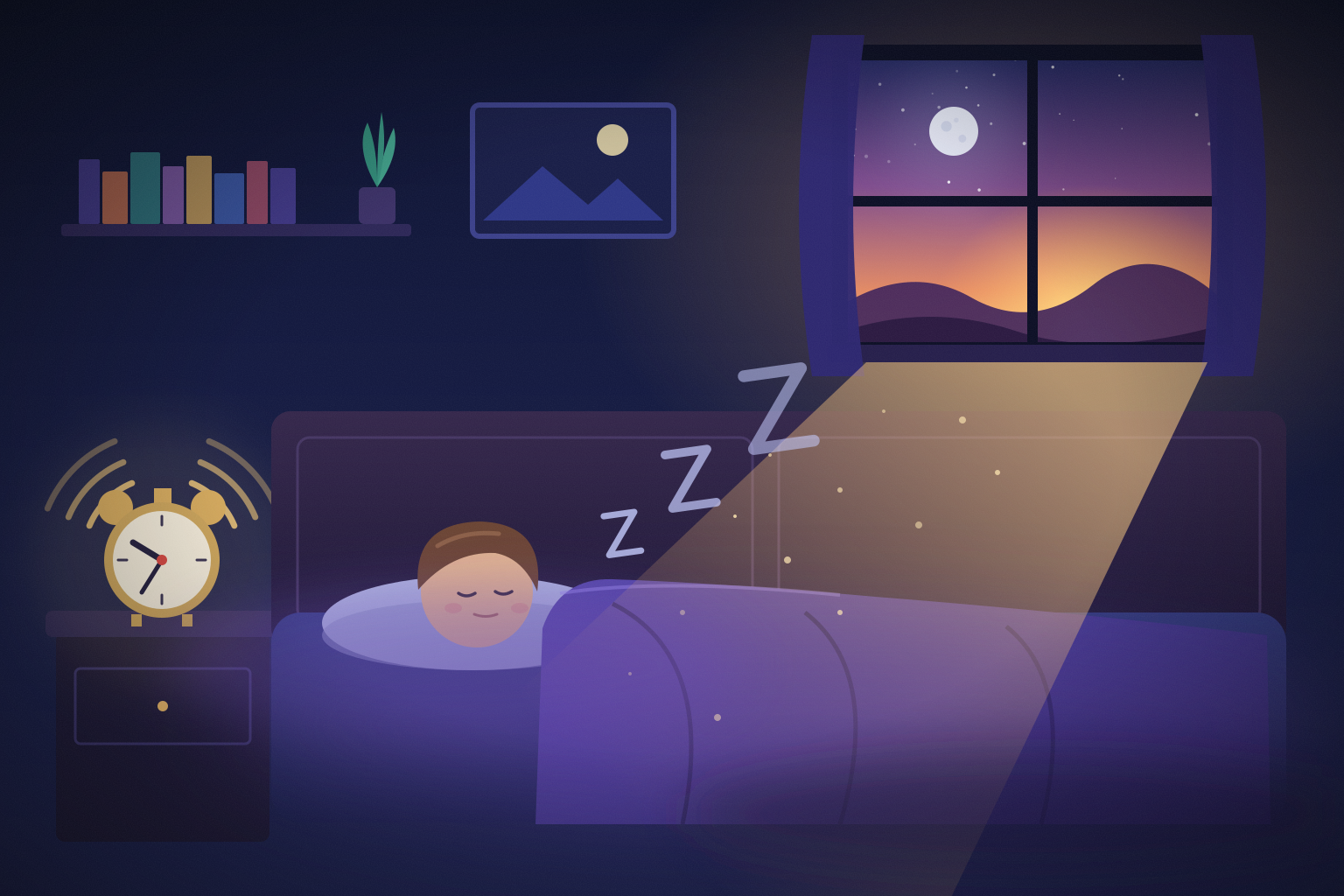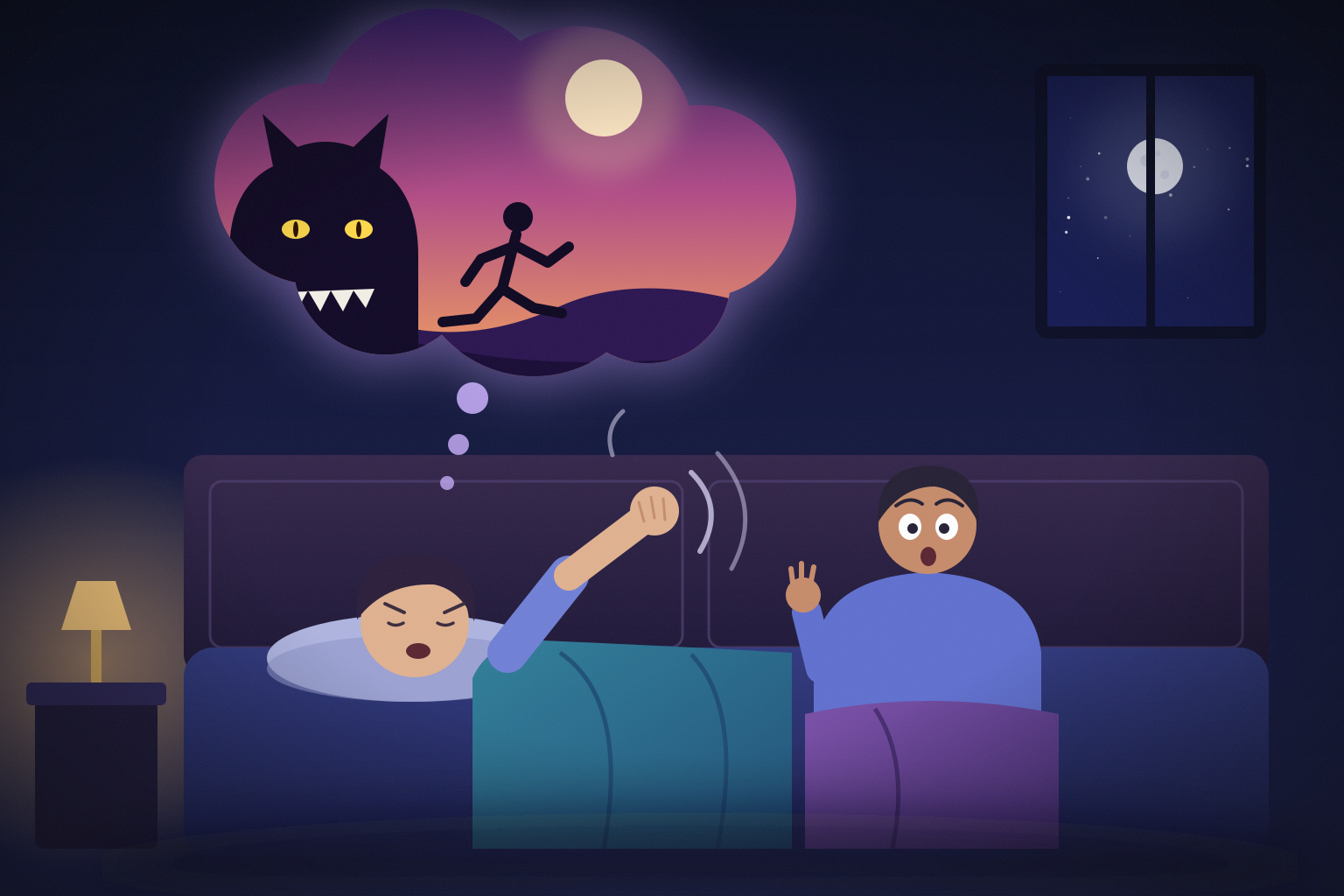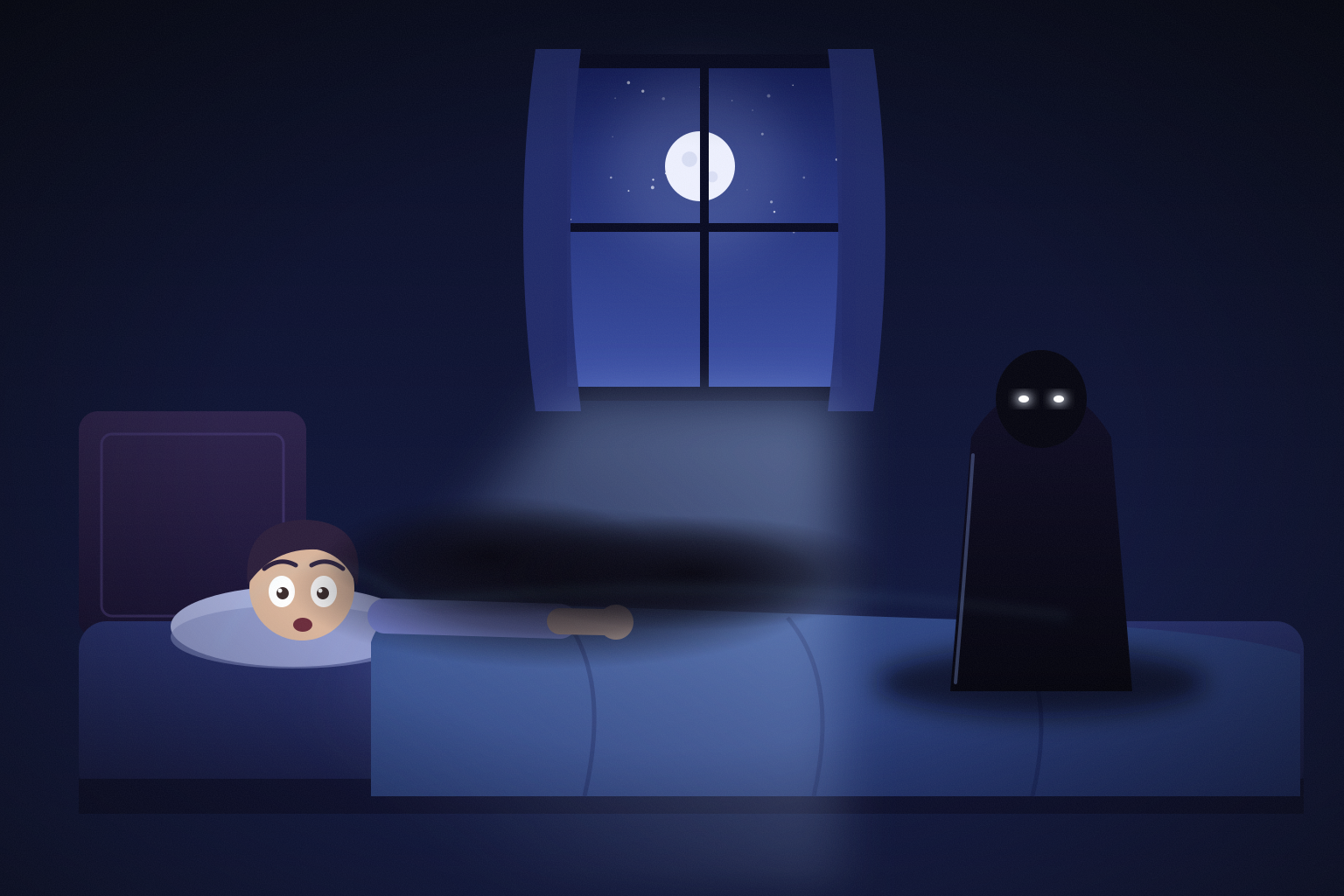
It's 11 PM, you've just gotten to sleep, and a scream pulls you out of bed. Your child is sitting upright, eyes wide open, face frozen in terror, sweating and breathing hard. You rush in, call their name, try to hug them, and they don't seem to see you. They might push you away. They might scream louder. Then, after a few minutes, they lie back down and fall asleep. In the morning they remember nothing at all.
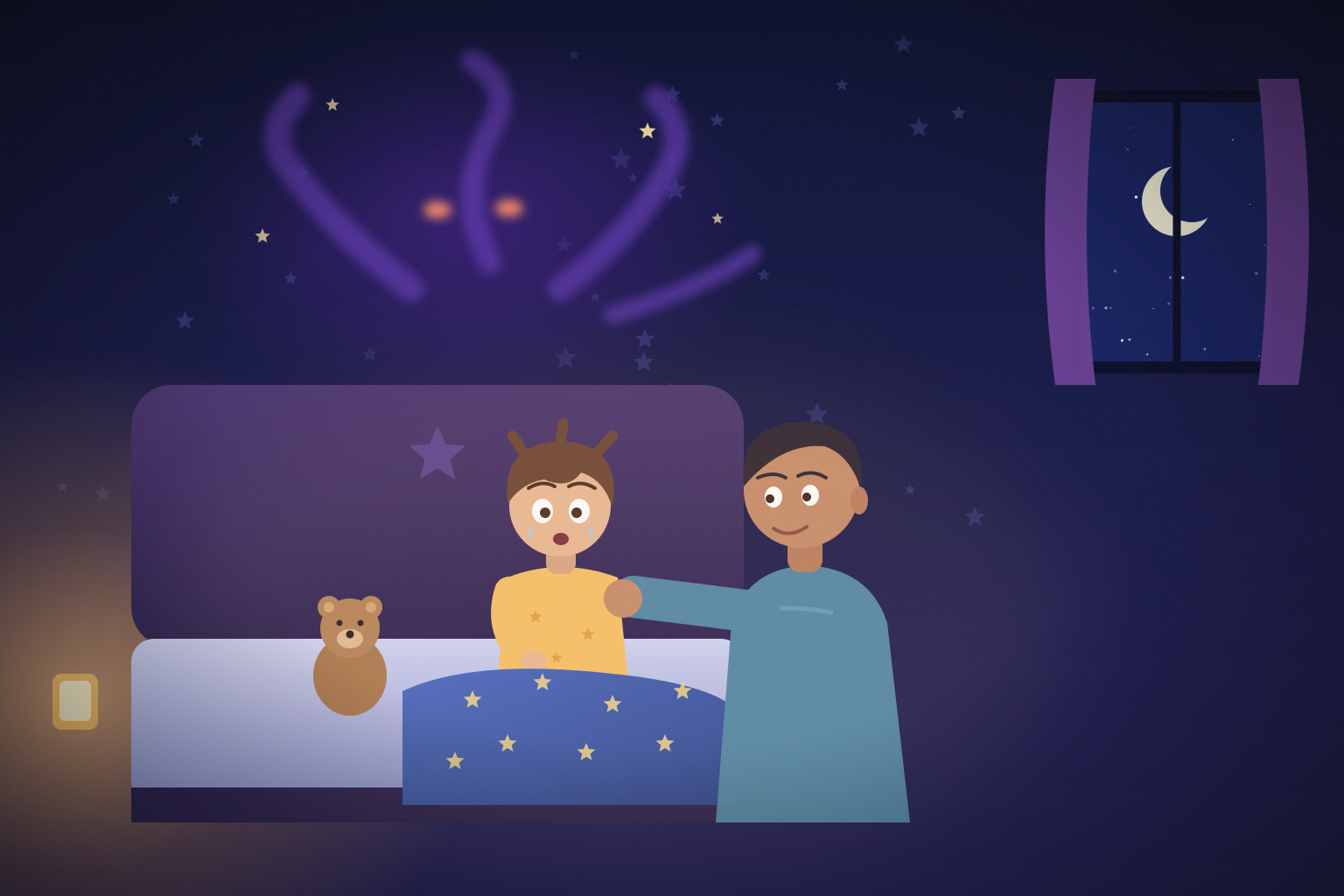
Or: it's 4 AM, and your child wakes up crying, clings to you, and tells you in detail about the monster that was chasing them. They can't stop shaking, and they don't want to go back to sleep.
Both are frightening for a parent, and both involve a scared child in the night. But they're different events, with different causes, and the right response to one can be the wrong response to the other. Knowing which you're dealing with takes much of the fear out of it.
The Core Difference: When and Where in Sleep It Happens
The simplest way to understand the difference is to know which part of sleep each one comes from. Our guide to the four stages of sleep explains the stages in detail.
Night terrors (also called sleep terrors) arise from deep non-REM sleep, the stage that dominates the first third of the night. They are a type of partial awakening, in which the brain is stuck between deep sleep and waking. The child appears awake but isn't.
Nightmares arise from REM sleep, the stage of vivid dreaming, which dominates the second half of the night. They are bad dreams, and the child wakes up fully from them.
That one distinction explains almost every other difference between them.
Night Terrors: What They Look Like
Night terrors typically occur one to three hours after falling asleep. During an episode, a child may:
- Suddenly sit up, scream, or cry out
- Have wide-open, staring eyes
- Look terrified, and sweat, breathe fast, and have a racing heart
- Thrash, kick, or try to get out of bed
- Not respond to you, or not seem to recognize you
- Resist comfort, and sometimes become more agitated when held
- Be nearly impossible to wake
Episodes usually last from a few minutes to ten or fifteen minutes, occasionally longer, and then the child calms and falls back into ordinary sleep.
The detail that most reassures parents: the child has no memory of it. Because they were never truly awake, they won't recall the episode the next morning, and they're typically unharmed by it emotionally. The distress is largely the parent's.
Nightmares: What They Look Like
Nightmares usually occur in the second half of the night or the early morning. During and after one, a child typically:
- Wakes up fully, frightened and upset
- Is alert and aware of where they are
- Can tell you what the dream was about, sometimes in vivid detail
- Seeks comfort, and is soothed by it
- May have trouble falling back asleep, because they're afraid the dream will return
Unlike a night terror, a nightmare is remembered, and the fear is real to the child.
Side by Side
| Feature | Night Terror | Nightmare |
|---|---|---|
| Sleep stage | Deep non-REM sleep | REM sleep |
| Time of night | First third (1-3 hours after bedtime) | Second half, early morning |
| Is the child awake? | No, appears awake but isn't | Yes, fully awake afterward |
| Eyes | Often open, staring | Open after waking |
| Response to comfort | Doesn't respond; may push away | Seeks and accepts comfort |
| Can you wake them? | Very difficult | Wakes easily |
| Memory in the morning | None | Remembers the dream |
| Duration | A few minutes to 15 minutes | Fades as they settle |
| Typical ages | Most common ages 3 to 8 | Most common ages 3 to 6, and beyond |
| Who is more upset? | Usually the parent | The child |
How Common Are They?
Night terrors affect an estimated 1 to 6 percent of children depending on the study and age group, most commonly between the ages of 3 and 8. Most children outgrow them by adolescence. They run in families, and children who have night terrors are often also sleepwalkers, since both are disorders of arousal from deep sleep. Our guide on sleepwalking in adults covers the closely related adult condition.
Nightmares are far more common. Nearly all children have occasional bad dreams, and they peak in the preschool and early school years. Frequent or persistent nightmares affect a smaller share.
What Causes Night Terrors
Night terrors arise from the combination of an inherited tendency and something that makes deep sleep more disrupted or more intense. Common contributors include:
- Sleep deprivation or overtiredness, which increases deep sleep and the chance of partial arousals. Our guide on how much sleep your child needs covers age-appropriate ranges
- Irregular bedtimes and routines
- Fever or illness
- Stress or big changes, such as starting school, a move, or a new sibling
- A full bladder
- Noise or a disrupted sleep environment
- Sleep-disordered breathing, such as snoring or sleep apnea, where breathing disruptions cause arousals
- Restless legs syndrome or periodic limb movements
- Certain medications
- A family history of sleepwalking or night terrors
What Causes Nightmares
Nightmares are a normal part of development, and occasional ones need no explanation. Frequent ones are often linked to:
- Stress, anxiety, or fear
- Frightening books, shows, games, or news, especially close to bedtime
- Major life events or changes
- Trauma, which can cause recurring nightmares that need professional attention
- Illness or fever
- Some medications
- Inconsistent routines or poor sleep
What to Do During a Night Terror
The instinct to rush in, wake your child, and hold them is understandable, and for night terrors it usually backfires.
Do:
- Stay calm. Remind yourself that it looks worse than it is, and that your child isn't suffering
- Stay nearby and keep them safe. Make sure they won't fall, hit furniture, or hurt themselves while thrashing
- Speak softly and calmly, without expecting a response
- Gently guide them back to bed if they've gotten up
- Wait it out. The episode will end on its own
Don't:
- Don't try to wake them. Waking a child mid-terror can prolong the episode, increase confusion and agitation, and make it harder for them to settle
- Don't hold them tightly or restrain them unless it's needed for safety, since this can make them more distressed
- Don't ask them what's wrong. They won't know
- Don't discuss it in a frightening way the next morning. They have no memory, and describing it dramatically can create anxiety about sleep
What to Do After a Nightmare
Nightmares call for the opposite approach: a fully awake, frightened child needs your comfort.
- Go to them quickly and comfort them. Reassurance that it was only a dream, and that they are safe, is what matters most
- Let them talk about it if they want to, without pushing
- Offer a favorite stuffed animal, a night light, or a drink of water
- Stay until they settle, then help them return to sleep, perhaps with a calm routine such as quiet talking, gentle music, or a story
- Talk about the dream in the morning, when it's less frightening, and let your child draw it or even "change the ending" to something less scary
For older children with recurring nightmares, therapists sometimes use a technique called imagery rehearsal, in which the child practices a new, less frightening ending to the dream while awake. It can be remarkably effective.
How to Prevent Both
Many of the same habits help with both types of nighttime fear.
Protect sleep. Make sure your child gets enough sleep for their age, and avoid letting them become overtired. A consistent bedtime and wake time help enormously. Overtiredness is one of the most common triggers of night terrors.
Build a calm bedtime routine. A predictable, soothing wind-down, such as a bath, a book, and quiet time, helps the brain move more smoothly into sleep. Our guide on evidence-based sleep hygiene covers the habits that work, much of which applies to children as well.
Limit scary content. Screens, shows, and stories with frightening material can fuel nightmares, particularly close to bedtime.
Treat illness and fever promptly, and avoid sleeping in a noisy or very warm room.
Have your child use the bathroom before bed, since a full bladder can trigger partial arousals.
Address snoring. Loud or habitual snoring, mouth breathing, or restless sleep in a child can signal sleep-disordered breathing, which is a recognized trigger for night terrors and is worth raising with a pediatrician.
Consider scheduled awakenings for frequent night terrors. If episodes happen at a predictable time each night, gently waking your child about 15 to 30 minutes before the usual time, for a couple of weeks, can interrupt the pattern in some children. Discuss this approach with your pediatrician first.
When to See a Doctor
Most night terrors and nightmares are normal and don't need treatment. Consider talking to your pediatrician or a pediatric sleep specialist if:
- Night terrors are frequent, happening several times a week
- Episodes cause injury or are dangerous
- Night terrors begin after age 8-10, or persist into the teenage years
- Your child snores loudly, has breathing pauses, gasps, or breathes through the mouth during sleep
- Your child seems very sleepy or irritable during the day, or has behavior or attention problems
- Episodes happen at unusual times, several times a night, or involve stiffening, jerking, or tongue-biting, which could indicate seizures
- Nightmares are frequent, cause real distress, or lead your child to avoid sleep
- Nightmares began after a frightening or traumatic event
- You're worried about your child's anxiety or mood
Our guide on signs your child may have a sleep disorder covers the wider range of warning signs, and our symptom checklist by category can help you organize what you're seeing before an appointment. A pediatric sleep specialist can evaluate for sleep apnea and other contributors, sometimes with an overnight study. Our guide on what to expect during a sleep study walks through the process.
The Bottom Line
Night terrors and nightmares can look alike from a distance, but they come from different parts of sleep and call for different responses. A night terror is a partial awakening from deep sleep: the child isn't truly awake, won't remember it, and is best left alone, safely, until it passes. A nightmare is a bad dream from REM sleep: the child wakes up scared, remembers it, and needs your comfort.
Both are common, usually harmless, and typically outgrown. Protecting your child's sleep, keeping routines consistent, and watching for the signs that warrant a closer look will handle most cases.
Worried about your child's sleep? Use our sleep clinic directory to find an accredited sleep center near you, including those that evaluate children.
Written by
Daniel Marin
Sharing insights on sleep health and wellness to help you achieve better rest and improved quality of life.