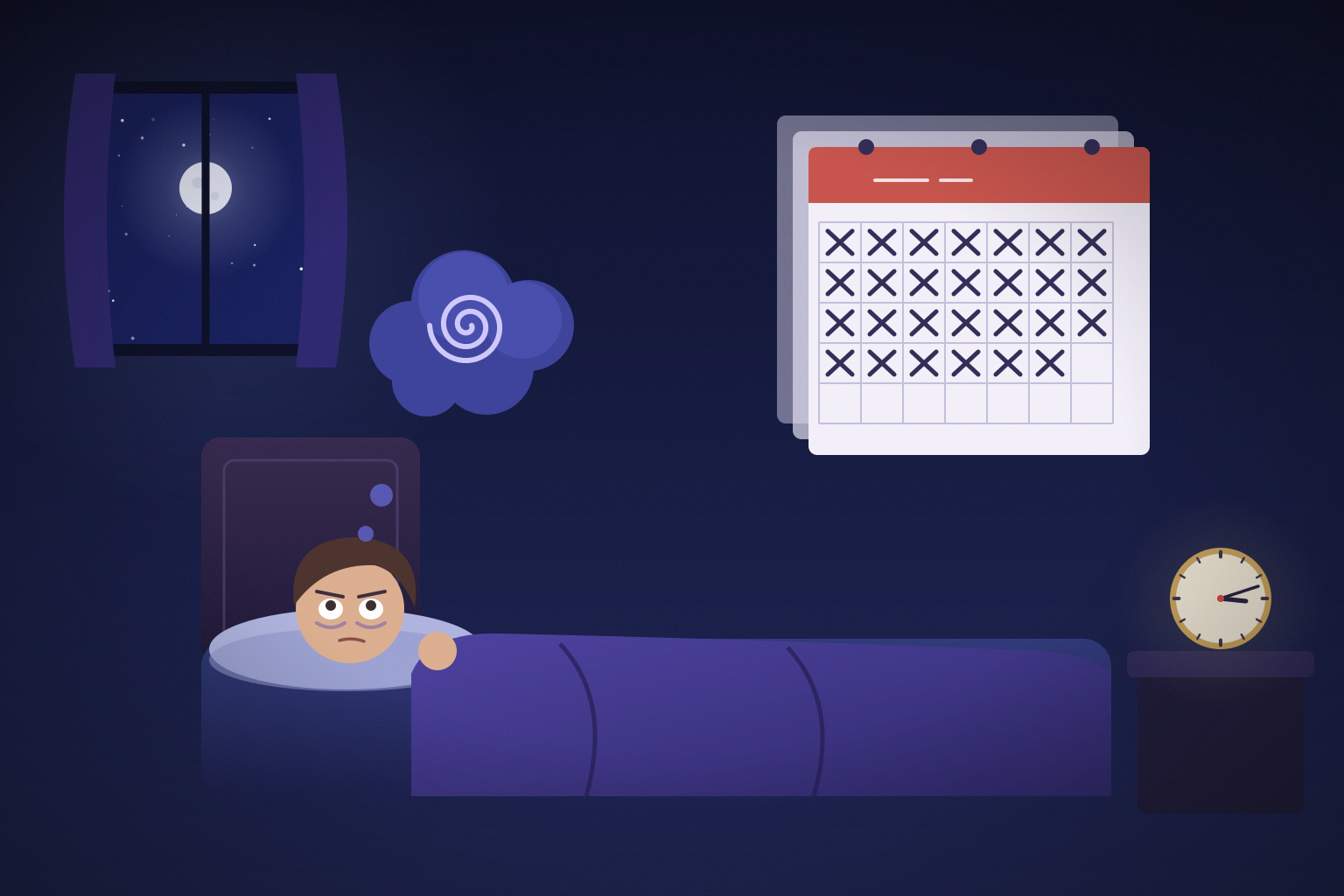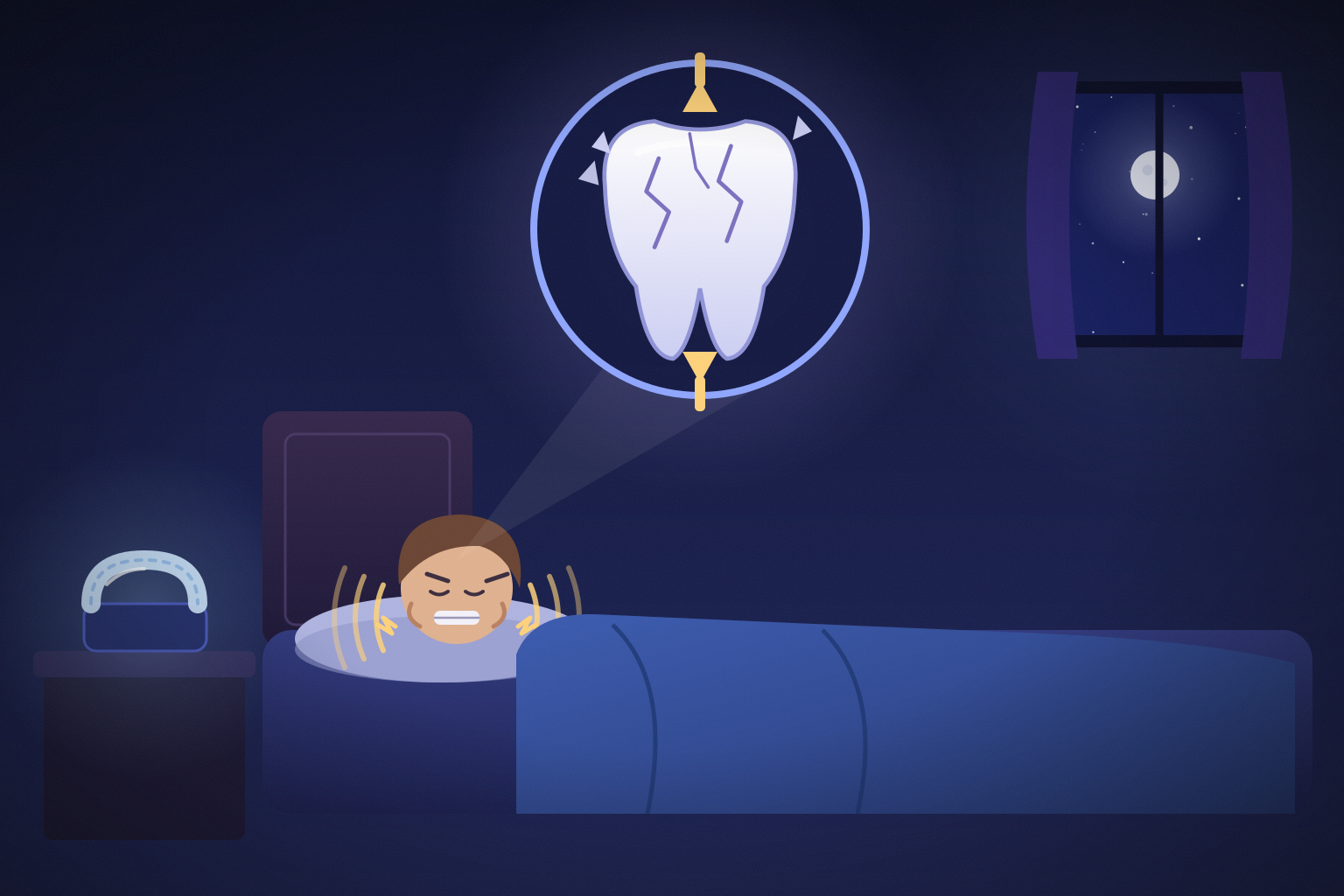
Your partner has heard it from across the bed: a slow, grating sound like gravel being rolled between two stones. Your dentist has noticed that your back teeth are worn flat. You wake most mornings with a tight jaw and a dull ache at your temples, and you've been told you grind your teeth in your sleep.
The usual next step is a night guard from the dentist, and for many people that's a sensible start. But grinding can be a clue about something beyond the teeth. In some people it travels with sleep apnea, a condition a mouthguard does nothing to treat. Understanding how the two relate, and where the research is still unsettled, helps you decide what to ask your dentist and your doctor.
What Bruxism Is
Bruxism is repetitive jaw muscle activity: grinding the teeth, clenching them, or bracing and thrusting the jaw. It comes in two forms:
- Awake bruxism, which happens during the day, usually as clenching, often without the person noticing
- Sleep bruxism, which happens during sleep, as rhythmic grinding or sustained clenching
Sleep bruxism occurs mostly in the lighter stages of sleep. Episodes often cluster around brief arousals, the short surges of brain and heart activity that punctuate every night. Our guide to the four stages of sleep explains how those lighter stages and arousals fit into a normal night.
Many dental and sleep researchers now treat bruxism as a behavior rather than a disease in itself: in some people it is harmless, and in others it causes real damage. It becomes a clinical problem when it produces consequences such as tooth wear, jaw pain, or disrupted sleep for you or a partner.
Sleep bruxism is thought to affect roughly 1 in 10 adults, and it's more common in children, where it often fades with age. Estimates vary with how it's measured, and many people with bruxism don't know they do it.
Signs You May Be Grinding or Clenching
- A sore, tired, or tight jaw on waking
- Dull headaches at the temples, most often in the morning (see our guide to morning headaches and sleep apnea)
- Flattened, chipped, or worn teeth, or increased tooth sensitivity
- Cracked fillings or restorations
- A scalloped edge along the tongue, or a ridge along the inside of the cheek
- Jaw clicking, locking, or pain near the ear (temporomandibular joint symptoms)
- A partner who hears grinding at night
Not everyone grinds audibly. Clenching is silent, and it can be just as hard on the teeth and muscles.
The Link to Sleep Apnea: What the Research Shows
Bruxism and obstructive sleep apnea overlap more often than chance alone would predict, but the relationship is more complicated than "apnea causes grinding."
The association is real. In a large polysomnography study of adults with sleep apnea, nearly half also had sleep bruxism. Clinicians who treat both conditions see the combination regularly.
The causal story is unresolved. Systematic reviews have reached cautious conclusions. A 2025 review noted that a possible association has been suggested while the causal relationship remains unclear, and an earlier review found no consistent association in adult populations, largely because studies differ in design and in how they define each condition. In that same large study, grinding episodes were closely timed with arousals from sleep but did not line up directly with breathing events.
Three explanations are being weighed:
- A micro-arousal hypothesis. Each apnea ends with an arousal and a surge in nervous system activity. Jaw movement during that surge might be a reflex that helps reopen the airway, which would make grinding a consequence of disordered breathing.
- Shared risk factors. Stress, alcohol, caffeine, smoking, and fragmented sleep can promote both conditions without either one causing the other.
- Unstable, fragmented sleep in general. Both may be symptoms of a sleep system that is repeatedly being interrupted.
What this means in practice: grinding is a reason to ask about apnea, not proof that you have it. Plenty of people grind without any breathing problem, and plenty of people with apnea never grind.
Related Conditions Worth Knowing About
Upper airway resistance syndrome. Bruxism is among the symptoms associated with UARS, a form of sleep-disordered breathing that fragments sleep without producing classic apnea events. Our guide on UARS explains why it's so often missed.
Children. Grinding in a child is common and usually benign. But when it comes with snoring, mouth breathing, restless sleep, or daytime behavior problems, it deserves a conversation with a pediatrician, since enlarged tonsils and adenoids are a leading cause of sleep apnea in children. See our guide on signs your child may have a sleep disorder.
Other Causes and Triggers of Sleep Bruxism
If your grinding has an explanation other than apnea, it's often one of these:
- Stress and anxiety, which tend to increase both awake clenching and nighttime grinding
- Caffeine, alcohol, and tobacco
- Certain medications, notably several antidepressants (SSRIs and related drugs) and some stimulants. Never stop a prescribed medication on your own, but do mention grinding to the prescriber
- Acid reflux, which has been associated with bruxism in some studies
- Family history, since sleep bruxism tends to run in families
- Other sleep disorders, including those that fragment sleep
Who Should Ask About Sleep Apnea
Grinding on its own doesn't call for a sleep study. Grinding alongside any of the following does:
- Loud or irregular snoring, or witnessed pauses in breathing
- Waking with a dry mouth, or gasping or choking
- Unrefreshing sleep or daytime sleepiness despite a full night in bed
- Morning headaches
- High blood pressure, especially if hard to control
- Excess weight, a larger neck, or a family history of sleep apnea
Our guides on sleep apnea symptoms and snoring versus sleep apnea cover the warning signs in detail.
Why a Night Guard Alone Isn't Enough
A custom night guard (an occlusal splint) is a good tool for what it does: it protects teeth from wear and can ease strain on the jaw. It does not stop the muscles from working, and it does not treat apnea.
Two points are worth keeping in mind:
- A guard can mask a bigger problem. If grinding is a signal of disordered breathing, a mouthguard treats the visible damage while the cause continues
- Some clinicians caution about fitting a guard in people who have untreated apnea, because in some people an appliance that holds the jaw in a particular position can make breathing worse. The evidence here is limited, but it's a reason dentists who see grinding together with red flags for apnea should consider a sleep evaluation first
This is where dental sleep medicine comes in. Dentists with additional training in sleep-related breathing disorders can recognize the signs, coordinate with a sleep physician, and, once apnea is diagnosed, fit oral appliances designed to treat it. Those are different devices from a standard night guard. Our guide on oral appliance therapy versus CPAP explains who tends to benefit, and our guide to CPAP alternatives covers the wider range of options.
Whether treating sleep apnea reduces grinding is still being studied. Some people notice less grinding once their breathing is controlled, and others see no change.
Treatment and Self-Care
Protect your teeth. A custom night guard is the standard approach, ideally fitted after apnea has been considered.
Reduce the triggers. Cut back on caffeine, alcohol, and nicotine, especially in the evening. Build a calm wind-down routine, and manage stress through exercise, relaxation techniques, or therapy. Our guide to evidence-based sleep hygiene covers habits that hold up in research.
Ease the jaw. Warm compresses, gentle stretching, and avoiding gum and very chewy foods can help sore muscles. Pain relievers should be used under a doctor's or dentist's guidance.
Catch daytime clenching. If you clench while awake, a simple cue helps: lips together, teeth apart, jaw relaxed.
Review medications. If grinding began after starting a new drug, say so.
Consider specialist options for severe cases. Dentists and physicians sometimes use botulinum toxin injections into the jaw muscles for severe, painful bruxism that hasn't responded to other measures. The evidence is limited and it's used selectively.
Treat sleep apnea if present. This matters for far more than the teeth. Our guide on what untreated sleep apnea does to your brain, heart, and metabolism covers why.
How a Sleep Study Can Help
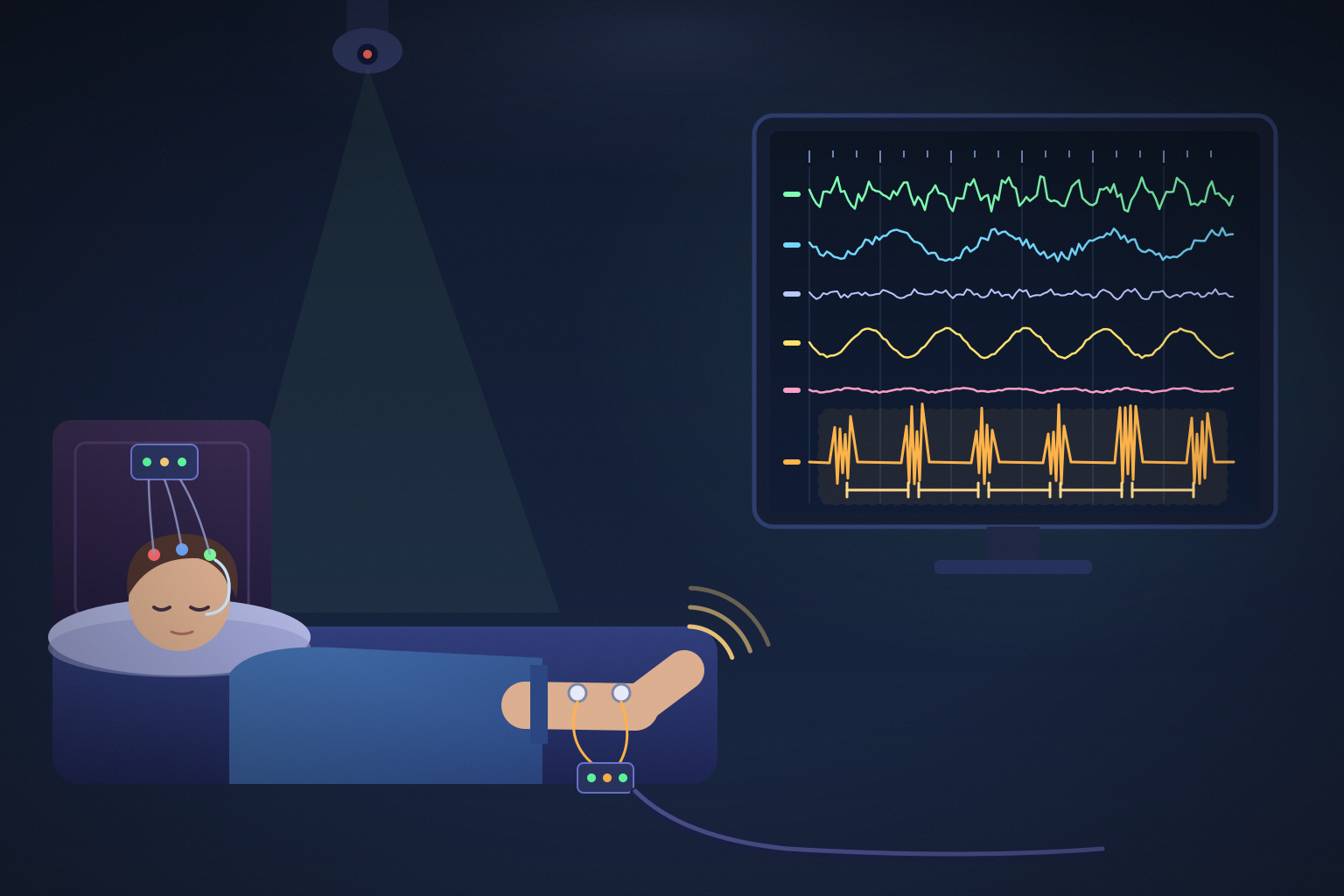
A full in-lab sleep study can check for sleep apnea and, because it records muscle activity and often includes audio and video, can capture grinding episodes and show how they relate to arousals. A home sleep apnea test can screen for apnea but can't see the grinding or the arousals. Our guides on home tests versus in-lab studies and what to expect during a sleep study explain the difference.
Who to See
- A dentist, for tooth wear, jaw pain, and a night guard. Ask whether they have training in dental sleep medicine
- A sleep specialist, if you have signs of apnea or unrefreshing sleep. Our guides on choosing a sleep clinic and board-certified sleep physicians explain what to look for
- Your physician, for persistent headaches, jaw problems, or medication questions
The Bottom Line
Teeth grinding is common and often harmless, but it can damage teeth, strain the jaw, and cause morning headaches. It overlaps with sleep apnea more often than chance would explain, though the research does not show that one reliably causes the other. The practical lesson is simple: if you grind your teeth and also snore, wake unrefreshed, or feel sleepy during the day, ask for a sleep evaluation rather than stopping at a mouthguard.
Grinding your teeth and waking up tired? Use our sleep clinic directory to find an accredited sleep center near you and ask whether a sleep study makes sense.
Written by
Daniel Marin
Sharing insights on sleep health and wellness to help you achieve better rest and improved quality of life.