Advertising disclosure: this article contains a sponsored link to CPAP.com, a retailer we have an affiliate relationship with. If you buy through it we may earn a commission, at no extra cost to you. It does not change the prices below, and it did not decide which machines are covered here.
Most "best CPAP machine" lists are written as though the choice is yours alone. It isn't. A CPAP machine is a prescription device, your sleep physician sets the mode and the pressure, and a large share of what people dislike about CPAP comes from the mask rather than the machine. That narrows the real decision considerably, which is good news: there are fewer than a dozen machines a typical US patient will choose between in 2026, and they differ on a handful of things you can actually evaluate.
This guide compares them on verified specifications and current prices, explains which differences matter at 2am and which are marketing, and is honest about what it is not: we have not run these machines on a bench or slept on them for 30 nights. Where that kind of evidence matters, we say so, and we point you at the questions to ask your sleep clinic instead.
Prices below were checked on CPAP.com on September 20, 2026. Treat them as a snapshot, not a quote.
Why the 2026 lineup looks so short
If you researched CPAP machines five years ago and are coming back to it now, the market has changed in one very large way.
In June 2021, Philips Respironics recalled millions of ventilators, CPAP and BiPAP machines over degrading sound-abatement foam. In April 2024, a consent decree with the US government was entered in federal court, and Philips has stated that Respironics cannot sell new respiratory care devices in the US until it satisfies the decree's requirements and the FDA issues written notice. That situation has not been resolved as of this writing.
The practical effect for a patient shopping in 2026: DreamStation and DreamStation 2 are not machines you can buy new in the US right now, and a large part of the market that used to be Philips has been absorbed by ResMed and by smaller manufacturers. It also explains why "foam-free" has become a selling point rather than an engineering footnote.
What your prescription decides before you shop
Read your prescription before you read any review. It settles most of the choice.
CPAP or APAP. A prescription for fixed CPAP means one constant pressure all night. An auto-adjusting (APAP) prescription gives a range, and the machine moves inside it breath by breath. Nearly every machine below is an auto model that can also run in fixed mode, but the mode must match what you were prescribed.
Your pressure. Standard machines cover 4 to 20 cm H2O. If your titration landed near the top of that range, or if you were prescribed bilevel therapy, you are in a different and more expensive category (see below).
Bilevel or not. Bilevel (BiPAP) machines deliver a separate inhale and exhale pressure. They are prescribed for people who cannot tolerate high single pressures, and for certain central and hypoventilation diagnoses. You cannot substitute one for the other on your own.
Federal law requires a valid prescription before any of these ship, and every US retailer will ask you to upload one. If you have not been diagnosed with a sleep study, that is the step that comes first. Find an accredited sleep clinic and read our guide to home sleep tests versus in-lab studies before you shop for hardware.
How this comparison was put together
- Specifications and prices come from the manufacturer and from CPAP.com product listings, checked on the date above.
- Machines included are the standard home and travel models a newly diagnosed adult with obstructive sleep apnea would realistically be choosing between in the US in 2026.
- We did not bench test noise, measure flow, or run adherence trials. Where a number is a manufacturer specification, it is labeled as such. Manufacturer decibel figures are measured under standardized conditions and rarely match a bedroom.
- No manufacturer paid for placement in this article. The CPAP.com link at the end is an affiliate link and is labeled.
The standard home machines
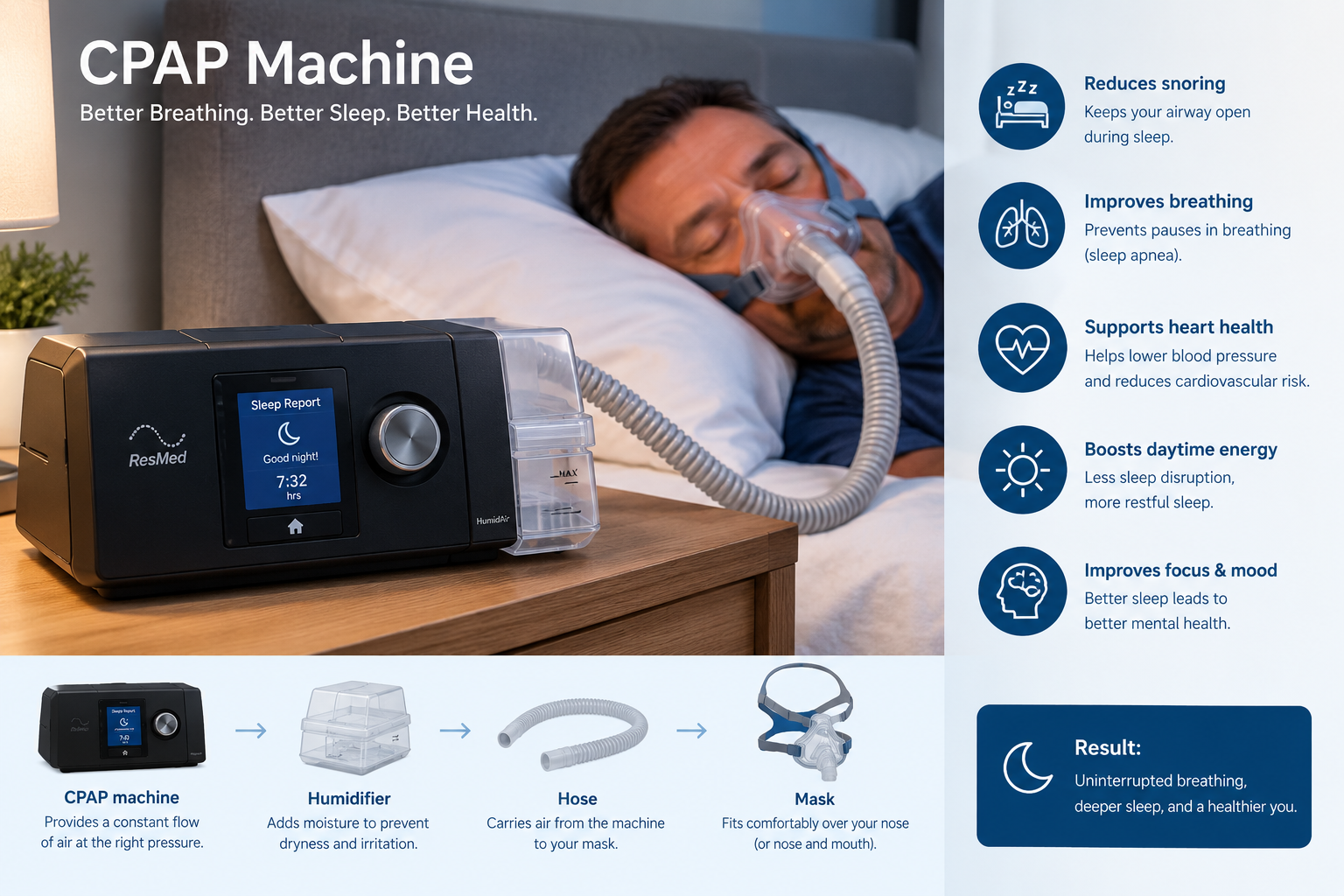
ResMed AirSense 11 AutoSet, $1,004
The default recommendation for most newly diagnosed adults, and the machine most US sleep clinics will hand you as a starting point.
- Pressure range 4 to 20 cm H2O
- 2.5 lbs
- Built-in heated humidifier; climate control requires the separately sold ClimateLineAir heated hose
- 27 dBA manufacturer specification
- 2 year limited manufacturer warranty
- myAir app, AutoRamp, Expiratory Pressure Relief, a "For Her" algorithm option, plus onboarding features ResMed calls Personal Therapy Assistant, TestDrive and Care Check-In
Who it suits: first-time users, and anyone who wants the onboarding coaching. The setup guidance and nightly scoring in myAir are the clearest reason to pay the premium over the AirSense 10, and early adherence is the single strongest predictor of whether CPAP works for you long term.
The catch: the heated hose is an extra purchase, and the touchscreen interface is a preference, not an upgrade. Several long-term users prefer the AirSense 10's physical dial.
ResMed AirSense 10 AutoSet, $960
The previous generation, still sold, still excellent, and quieter on paper than its successor.
- Pressure range 4 to 20 cm H2O
- 2.75 lbs
- Built-in HumidAir heated humidifier
- 26.6 dBA manufacturer specification
- 2 year limited manufacturer warranty
- Bluetooth with myAir, with an airplane mode to disable wireless
Who it suits: people who want the ResMed algorithm and the enormous accessory ecosystem without the AirSense 11 price, and people who actively prefer a dial to a touchscreen. It is also the machine most DME suppliers and clinics have the deepest experience troubleshooting.
The catch: at a $44 difference, the case for saving money is thin. Buy this one because you prefer it, not to economize. Note that AirSense 10 units exist in several variants, including card-to-cloud versions with different data handling, so confirm which one a listing is actually selling.
React Health G3 X Auto, $873
The most interesting machine on this list, and the one most people have not heard of. If you have been searching for the "Luna G3," this is the line it belongs to: React Health has moved the Luna G3 family forward into the G3 X, so search results for the older name will often land you here.
- Pressure range 4 to 20 cm H2O
- Foam-free construction, marketed as the first standard-size foam-free PAP sold in the US, using a honeycomb sound-damping design instead
- Under 28 dBA at 10 cm H2O, manufacturer specification
- Integrated humidification with five levels plus auto, and a heated tube included in the box
- Built-in 4G cellular modem, cloud therapy data, provider messaging
- 5 year warranty on the device
- Model G4600
Who it suits: two groups. People for whom the Philips foam recall is the reason they are nervous about CPAP at all, and value shoppers who want the longest warranty on this list plus an included heated hose, which is a $30 to $100 accessory on the ResMed side.
The catch: a smaller ecosystem and a smaller community. If something behaves oddly at 3am, there are fewer forum posts about it, and fewer clinicians who know the interface by heart. The cellular modem also means the machine reports therapy data by default, which some people want and some people do not.
The travel machines
Travel machines are a second machine, not a first one. They trade humidification and comfort for size, and the ones below are designed for weeks per year, not every night.
ResMed AirMini AutoSet, $919
- 0.66 lbs, roughly the size of a soda can
- Waterless HumidX humidification, sold separately, which recycles moisture from your own breath
- FAA approved for in-flight use in airplane mode
- myAir compatible
- 2 year warranty
- Mask, hose and bedside mount sold separately
The catch that matters most: the AirMini uses its own connector system and works only with specific ResMed masks. Your existing mask most likely will not fit. Budget for a compatible mask when you compare it against the Transcend, or the price gap closes fast.
Transcend Micro 510, $829
- 0.48 lbs, 3.6 x 3.6 x 2.4 inches, the smallest machine here
- AirMist HME waterless humidification
- Works with the cordless PowerAway battery, rated up to 17.5 hours, which is not included and not built in
- Sold at CPAP.com as a standalone unit, an Essentials bundle at $988.90, and a Power bundle at $1,338.85
Who it suits: campers, van travelers, and anyone who needs off-grid nights. The battery ecosystem is the reason to choose it over the AirMini.
The catch: the standalone price is the beginning of the cost, not the end. Compare bundles, not base prices.
If you were prescribed bilevel
Bilevel is a different price tier. At the time of writing CPAP.com listed the ResMed AirCurve 11 VAuto at $1,796, the AirCurve 10 VAuto at $1,776, and the React Health Luna G3 BPAP 25A at $1,549.
Do not treat these as upgrades. Bilevel therapy is prescribed for specific reasons, and buying one without the prescription to match means you will not be able to get it configured correctly. If high pressure is making CPAP intolerable, that is a conversation with your sleep physician about whether bilevel, or a pressure relief setting you are not using, is the right answer. Our guide to CPAP alternatives covers the options beyond changing machines.
Side by side
| Machine | Price | Weight | Pressure | Humidification | Noise (mfr) | Warranty |
|---|---|---|---|---|---|---|
| ResMed AirSense 11 AutoSet | $1,004 | 2.5 lbs | 4-20 cm H2O | Built in, heated hose extra | 27 dBA | 2 years |
| ResMed AirSense 10 AutoSet | $960 | 2.75 lbs | 4-20 cm H2O | Built in, heated hose extra | 26.6 dBA | 2 years |
| React Health G3 X Auto | $873 | Not published | 4-20 cm H2O | Built in, heated tube included | Under 28 dBA at 10 cm | 5 years |
| ResMed AirMini AutoSet | $919 | 0.66 lbs | Auto | Waterless HumidX, sold separately | Not published | 2 years |
| Transcend Micro 510 | $829 | 0.48 lbs | Auto | Waterless AirMist HME | Not published | Check listing |
The AirMini requires a compatible ResMed mask, and the Transcend battery is sold separately. Noise figures are manufacturer specifications measured under standardized conditions and are not directly comparable to each other or to your bedroom.
What actually changes your night
Three honest observations about where the differences live.
The mask matters more than the machine. Leaks, pressure sores, dry mouth and claustrophobia are mask problems. Every machine here delivers the prescribed pressure competently. If you are choosing between spending $130 more on a machine or spending it on getting the mask right, spend it on the mask.
Humidification is the comfort feature people underrate. Dry mouth and nasal irritation are among the most common reasons people abandon therapy in the first month. Built-in heated humidification plus a heated hose is the configuration that solves it. On the ResMed machines the heated hose is a separate purchase; on the G3 X it is in the box.
The onboarding software is worth something, and less than it looks. App-based nightly scores genuinely help some people through the first weeks. They also become wallpaper by month three. If you already know you will not open an app, do not pay for one.
What this really costs
Buying outright. The cash prices above are the full cost of the device before a mask, hose, filters and a prescription. Budget $150 to $300 more for a mask and starter supplies.
Through insurance. Most US plans, including Medicare, do not simply buy you a machine. Medicare's coverage policy for PAP devices (LCD L33718) runs a 13 month capped rental, with an initial trial period during which you must document adherence, commonly applied as at least 4 hours per night on 70% of nights in a consecutive 30 day window within the first three months. Miss it and coverage can be withdrawn, leaving you responsible for the equipment. Many commercial plans mirror this structure.
Why people buy outright anyway. If you have a high deductible, the cash price can beat coinsurance across a 13 month rental. Buying also removes the adherence-reporting requirement from the equation, though it does not remove the reason behind it: the therapy only helps if you use it. Run both numbers with your actual plan before deciding. Our guides to sleep study costs and insurance coverage for sleep studies cover the diagnostic side of the same math.
The recurring cost nobody quotes. Cushions, filters, hoses and water chambers are consumables on a replacement schedule. Over five years, supplies typically cost more than the machine did.
Buying online without getting burned
- Upload a current prescription. No legitimate US retailer will ship a machine without one. A site that offers to skip it is telling you something about the rest of its operation.
- Confirm the return window for the machine specifically. CPAP.com's widely advertised 60 night guarantee is a mask fit guarantee. Machine returns follow different terms. Ask before you buy, whichever retailer you use.
- Check what is in the box. Heated hose, humidifier chamber, filters and carry case are included on some models and extra on others. That is where an apparent bargain usually disappears.
- Register the warranty and keep the receipt. Two years on the ResMed machines, five on the G3 X, and the paperwork is what makes the difference real.
- Watch for promotional pricing. A sitewide sale was running when these prices were checked, so what you see at checkout may differ in either direction.
Who should not buy a machine yet
- You have not had a sleep study and do not have a diagnosis or a prescription.
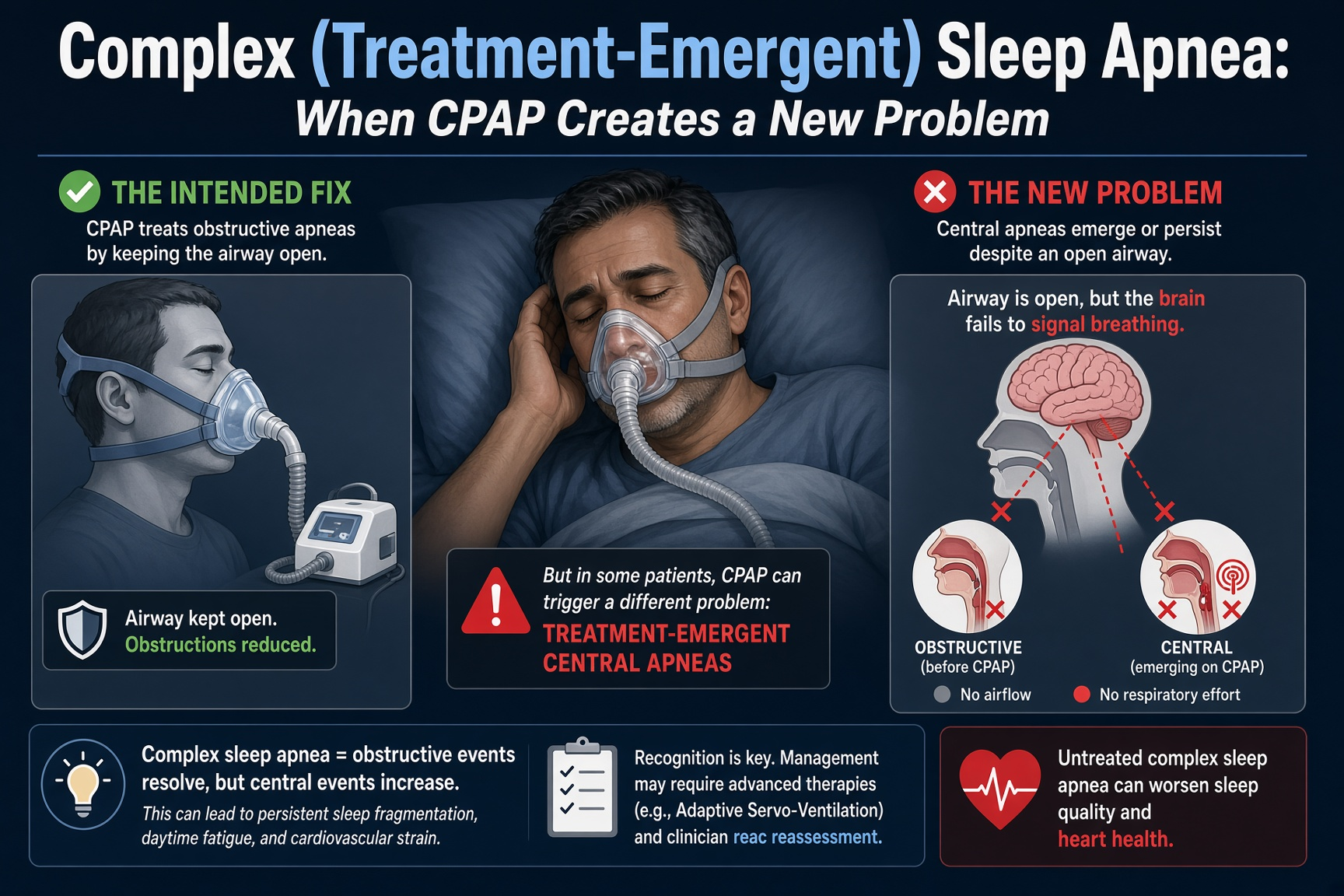
- Your diagnosis is central sleep apnea rather than obstructive. The machine categories are different, and the standard auto CPAP on this list is not the right device. See our explainer on central versus obstructive sleep apnea.
- You are replacing a machine because therapy is not working. A machine that does not fit your needs is rarely the cause, and a pressure or mask adjustment is free. Talk to your clinic first.
- You are buying for someone else who has not been evaluated.
The bottom line
- Most newly diagnosed adults: ResMed AirSense 11 AutoSet, $1,004, for the onboarding support during the weeks that decide whether therapy sticks.
- You know what you are doing and prefer a dial: ResMed AirSense 10 AutoSet, $960.
- Best value, longest warranty, foam-free: React Health G3 X Auto, $873, with the heated tube included.
- Travel, ResMed ecosystem: AirMini AutoSet, $919, plus a compatible mask.
- Travel, off grid: Transcend Micro 510, from $829, with the battery bundle.
- Prescribed bilevel: buy what was prescribed, and expect $1,549 and up.
The machine you will still be using in a year is the one that is comfortable, quiet enough for your partner, and humidified properly. Every machine on this list can deliver your prescribed pressure. Spend your decision-making energy on the mask, the humidification setup, and the first four weeks of support.
Sources
- CPAP.com product listings and pricing, checked September 20, 2026
- React Health G3 X product specifications
- ResMed AirSense 11, AirSense 10 and AirMini product specifications
- Transcend Micro 510 product specifications
- Philips, "Explained: Philips Respironics consent decree"
- FDA, "Recalled Philips Ventilators, BiPAP Machines, and CPAP Machines"
- CMS Local Coverage Determination L33718, Positive Airway Pressure (PAP) Devices for the Treatment of Obstructive Sleep Apnea
This article is general information, not medical advice. CPAP machines are prescription devices. Talk to your sleep physician about which machine and settings are right for your diagnosis.
Shop CPAP masks, machines, and supplies
CPAP.com carries a wide range of machines, masks, cushions, filters, and cleaning supplies, with guidance to help you find the right fit for your therapy.
Shop CPAP.comAdvertising disclosure: this is a paid partnership. We may earn a commission if you sign up through this link, at no extra cost to you.
Written by
Daniel Marin
Sharing insights on sleep health and wellness to help you achieve better rest and improved quality of life.