Advertising disclosure: this article contains a sponsored link to CPAP.com, a retailer we have an affiliate relationship with. If you buy through it we may earn a commission, at no extra cost to you. Most of the advice below is about when not to buy a new machine.
Almost nobody replaces a CPAP machine at the right time. Some people keep a failing one for years, sleeping on weaker air and blaming themselves. Many more replace a perfectly good machine because therapy feels uncomfortable, then discover the new one leaks in exactly the same place, because the problem was the mask.
So the useful question is not "how old is my machine?" It is "is the machine actually the problem, and if it is, who pays for the next one?" This guide covers both. It lists seven signs that point at the machine itself, the look-alike symptoms that do not, and what Medicare and most insurers will cover after five years.
Prices were checked on CPAP.com on October 2, 2026. This is a guide to the decision, not a hands-on test of any machine.
The short answer
Replace your machine when it is showing faults that survive a restart, it has changed in sound or airflow in a way a new filter and hose do not fix, it is subject to a safety recall, or it is past five years old and your coverage will pay for a new one.
Do not replace it because a newer model exists. The AirSense 11 and AirSense 10 run the same algorithm over the same pressure range, and we compare them directly in AirSense 11 vs AirSense 10. A working machine is rarely improved by a newer screen.
Do not replace it because therapy is uncomfortable. Leaks, dry mouth, pressure sores and the feeling of exhaling against a wall are mask, humidity and settings problems. A new machine delivers the same air through the same mask.
How long a CPAP machine lasts
There is no honest single number. Figures quoted by retailers and clinics range from about three to seven years, with five as the usual benchmark, and a well-maintained machine can run longer. Treat that as a rule of thumb, not a guarantee, because motor wear depends on pressure, hours of use, humidity, dust and how often the filter is changed.
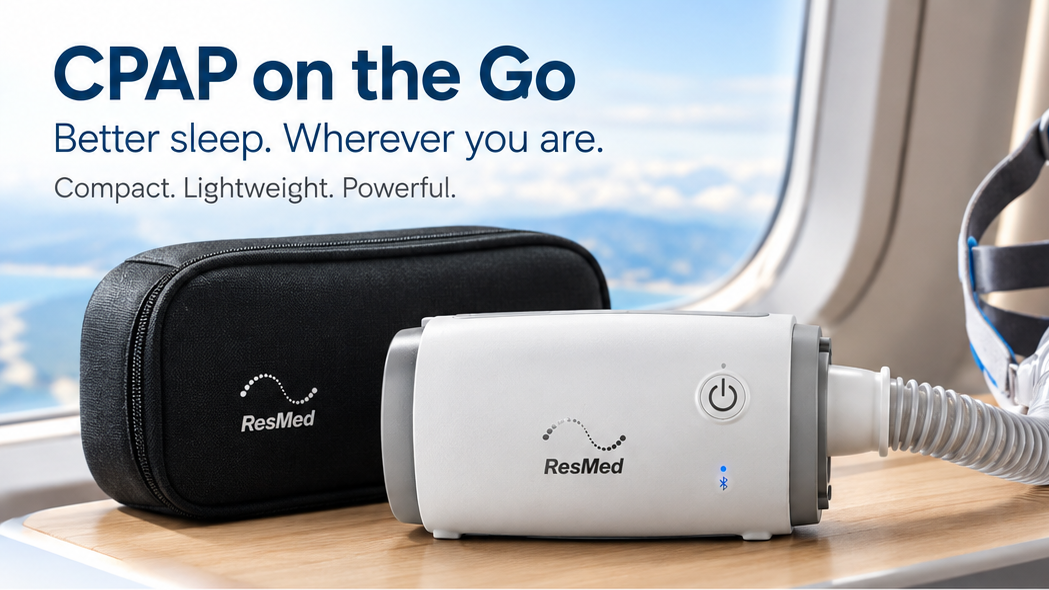
Manufacturer warranties are shorter and more precise: two years on the ResMed AirSense 11, AirSense 10 and AirMini, three years on the Transcend Micro 510, and five on the React Health G3 X, per CPAP.com's listings.
The number that matters most for your wallet is not engineering at all. It is the insurance clock, covered below.
Before you blame the machine
A failing machine and a failing accessory feel alike at 3am. These cost far less than a new machine to rule out, so do them first:
- Replace the filter. A clogged filter makes airflow feel weak and the motor louder.
- Inspect the hose for splits, especially near the ends, and make sure it is fully seated at both ends.
- Check the mask cushion. Cushions wear out fastest of anything in the system, and a worn one produces leaks, whistling and red marks.
- Look at the humidifier chamber for cracks, warped seals or mineral buildup.
- Try a different power supply connection and a different outlet.
- Confirm nothing changed in your settings, including after a firmware update.
Our starter guide covers mask fit and the first 30 nights in detail, and most of the problems people attribute to the machine live there.
7 signs it is time to replace your CPAP machine
1. It is past five years and your coverage will pay for a new one
This is the calendar sign, and it is a good moment to act even if nothing is broken.
For Medicare, the regulation on replacing durable equipment says the reasonable useful lifetime "in no case can it be less than 5 years," and the lifetime applied to PAP devices is five years. Replacement inside that window is limited to a machine being lost, stolen or irreparably damaged by a specific incident, so ordinary wear generally means repair under warranty or covered servicing rather than a new machine.
After five years, Medicare's coverage policy for PAP devices (LCD L33718) requires an in-person evaluation by your treating practitioner documenting that you continue to use and benefit from the device. It states there is no requirement for a new sleep test or trial period. Book that visit early rather than waiting for the machine to die.
Many commercial plans use a similar five-year schedule, but they vary, so confirm yours before you buy. Age alone is not a defect, and a six-year-old machine that works perfectly is not an emergency.
2. It shows a fault or service message that comes back after a restart
Machines log faults, and a one-off message after a power cut or a rushed setup is not alarming. A message that returns after you unplug the machine, wait a minute and restart it is telling you something a new filter will not fix.
Look up the exact wording in your manual, because fault messages differ by model, and call your supplier or the manufacturer. If the machine is under warranty, this is the call to make before anything else. Do not keep sleeping on a machine that is repeatedly reporting a problem with its own motor or sensors.
3. The noise has changed
Every machine has a baseline sound, so a gradual change is what you are listening for: grinding, a rising whine, rattling or clicking that was not there before.
A simple test separates machine noise from mask noise. In a quiet room, run the machine with the hose attached and the mask off. Mask whistles and leaks disappear. If the blower itself sounds rough, loud or uneven, the motor is the suspect. A loose filter cover or a dirty filter can mimic this, so check those first.
4. Airflow is weak or inconsistent, and everything downstream checks out
If the filter is new, the hose is intact and the mask seals well but the air still feels weak, surges unpredictably, or the machine shuts itself off, the machine is no longer delivering reliably.
Be careful here about one trap. Do not use the machine's own numbers as the verdict. Studies comparing machine-reported residual AHI against sleep testing have found that it can underestimate the real number of events, particularly when there is mask leak. So "my machine says my AHI is fine" does not prove therapy is working, and a bad number does not prove the machine is at fault. Judge by how the air actually feels and behaves, and bring symptoms to your clinician.
5. The humidifier or heater has failed in a way cleaning does not fix
Water chambers are replaceable parts, so a cracked or scaled chamber is a cheap fix. These are not:
- No warmth from the heated humidifier even though the setting is on
- A heater plate that is corroded or cracked
- Water that has run back into the machine itself
If water has gotten into the blower, stop using the machine, unplug it and contact your supplier, because water and electronics do not mix and the manual will have specific instructions for your model. A machine that has taken in water is a replacement candidate, not a cleaning job.
6. It is subject to a recall or safety notice
This is the sign with the clearest right answer. In June 2021, Philips recalled certain CPAP, BiPAP and ventilator devices because the polyester-based polyurethane foam used to reduce sound and vibration can break down, and black pieces or certain chemicals could be breathed in or swallowed. The FDA noted the risk rises in hot, humid conditions and with improper cleaning methods such as ozone cleaners.
If you own a Philips machine, check it on Philips' recall lookup using the serial number, and talk to your health care provider before changing anything about your therapy, which is what the FDA advises. Philips also cannot currently sell new respiratory devices in the US under the consent decree entered in April 2024, so a machine you buy new today will come from another manufacturer.
For any brand, you can check recalls through the FDA's recall pages.
7. Your needs changed, or you cannot get parts for it
Replace a working machine when it genuinely cannot do the job any more:
- Your prescription changed to something the machine cannot deliver, such as bilevel therapy or a pressure range beyond a standard machine's
- Your supplier can no longer source the water chamber, heated hose or filters for your model
- You now travel regularly and want a second machine, which is a different purchase covered in our travel CPAP comparison
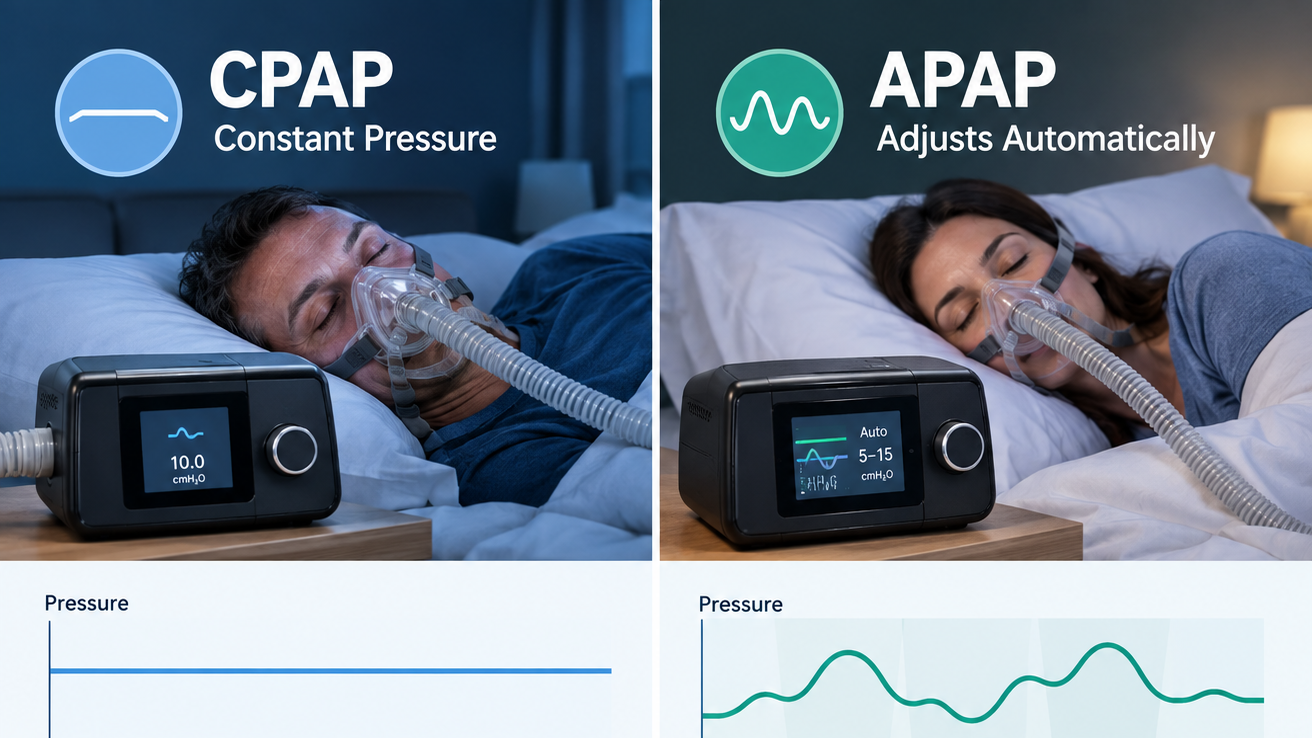
If your prescription changed, your clinician should tell you what the new machine needs to do before you shop. Our CPAP vs APAP guide explains why the mode itself is rarely a purchase decision.
Symptoms that look like a machine problem but usually are not
| What you notice | Usual cause | First thing to try |
|---|---|---|
| Whistling or hissing | Worn cushion or poor mask seal | Re-seat the mask, then replace the cushion |
| Dry mouth or nose | Humidity too low, or mouth leak | Raise humidity, check for mouth breathing |
| Water in the hose | Rainout from cold air and warm humidity | Heated hose, or lower the humidity |
| Airflow feels weaker | Dirty filter or kinked hose | New filter, check the hose |
| Snoring or tiredness returns | Mask leak, weight change, or changed pressure needs | See your clinician for a review |
| Bloating or swallowing air | Pressure feels too high | Ask your clinician about exhale pressure relief |
| Feels worse than your old machine | Different comfort settings or mask | Compare settings, not hardware |
If snoring and daytime sleepiness return while the machine seems fine, that deserves a clinical review rather than a shopping trip. Weight changes and shifting pressure needs are common reasons, and they are the kind of thing an auto-adjusting machine absorbs and a fixed setting may not.
Repair or replace
Under warranty, contact your supplier or the manufacturer first. A fault covered by warranty costs you nothing.
Out of warranty and Medicare-covered, the rules help you. Once you have paid rental for 13 continuous months, the supplier must transfer title to you, and Medicare then pays for reasonable and necessary maintenance and servicing of the equipment, meaning parts and labor not covered by a warranty.
Paying yourself, ask for a written repair quote and set it against the price of a replacement. A repair that costs a large share of a new machine, on a machine already past five years, rarely makes sense. A small repair on a machine that is otherwise healthy usually does.
What a replacement costs
At CPAP.com on October 2, 2026: the ResMed AirSense 11 AutoSet at $1,004, the AirSense 10 AutoSet at $960 and the React Health G3 X Auto at $873. A sitewide sale banner was showing, so what you see at checkout may differ. Our 2026 machine comparison compares these and the travel models.
A replacement requires a valid prescription like any machine, so bring your current one or ask your clinic for a fresh copy. CPAP.com gives machines a one-time 60 night risk-free return from the ship date, in original packaging and free of heavy wear, with return shipping at your cost. Check the terms of whichever retailer you use.
If you are moving from an AirSense 10 to an AirSense 11, budget for accessories, because the water chamber, heated hose, filters and power supply do not carry over, as we detail in the comparison linked above.
When you replace one, do it carefully
- Write down your settings first: mode, pressure or range, ramp and exhale relief. You may not be able to read them off a machine that has failed.
- Do not let your therapy lapse. Keep the old machine until the new one is set up and working, if it is safe to.
- Keep your mask, headgear and hose if they are in good condition and compatible. They are the part of the system you have already tuned.
- Tell your clinic. They can confirm the new device is configured correctly, and some use your data to follow your treatment.
When to call your clinic first
Skip the shopping and call if you are using the machine regularly and still very sleepy after a month of good fit, if the pressure feels wrong or you feel short of breath, or if you have chest pain or severe morning headaches. If you do not have a clinic, find an accredited sleep clinic.
The bottom line
Replace a CPAP machine when it is showing faults, noise or airflow problems that survive the cheap checks, when it has taken in water or is covered by a recall, when your prescription outgrows it, or when it has passed five years and your coverage will pay for a new one.
Do not replace one because a newer model exists or because therapy is uncomfortable. In those cases the better spend is a mask that fits, a new filter and cushion, and a conversation with your clinician, and the machine you already own is almost certainly fine.
Sources
- 42 CFR 414.210, Payment for durable medical equipment, including replacement and maintenance and servicing of beneficiary-owned equipment
- 42 CFR 414.229, Capped rental items, including transfer of title after the 13th continuous month
- CMS Local Coverage Determination L33718, Positive Airway Pressure (PAP) Devices for the Treatment of Obstructive Sleep Apnea, including replacement after the reasonable useful lifetime
- FDA, Recalled Philips Ventilators, BiPAP Machines, and CPAP Machines
- Accuracy of residual apnea-hypopnea index obtained using the CPAP device, PubMed
- Residual apnoea-hypopnoea index measurement from PAP devices versus home polygraphy, PMC
- CPAP.com product listings, warranty terms and return policy, checked October 2, 2026
This article is general information, not medical advice. CPAP machines are prescription devices, and pressure settings should only be changed by your sleep physician. If your machine smells of burning, smokes, sparks, or has taken in water, stop using it and unplug it right away. For any other concern, including a recall, talk to your health care provider before changing your therapy.
Shop CPAP masks, machines, and supplies
CPAP.com carries a wide range of machines, masks, cushions, filters, and cleaning supplies, with guidance to help you find the right fit for your therapy.
Shop CPAP.comAdvertising disclosure: this is a paid partnership. We may earn a commission if you sign up through this link, at no extra cost to you.
Written by
Daniel Marin
Sharing insights on sleep health and wellness to help you achieve better rest and improved quality of life.