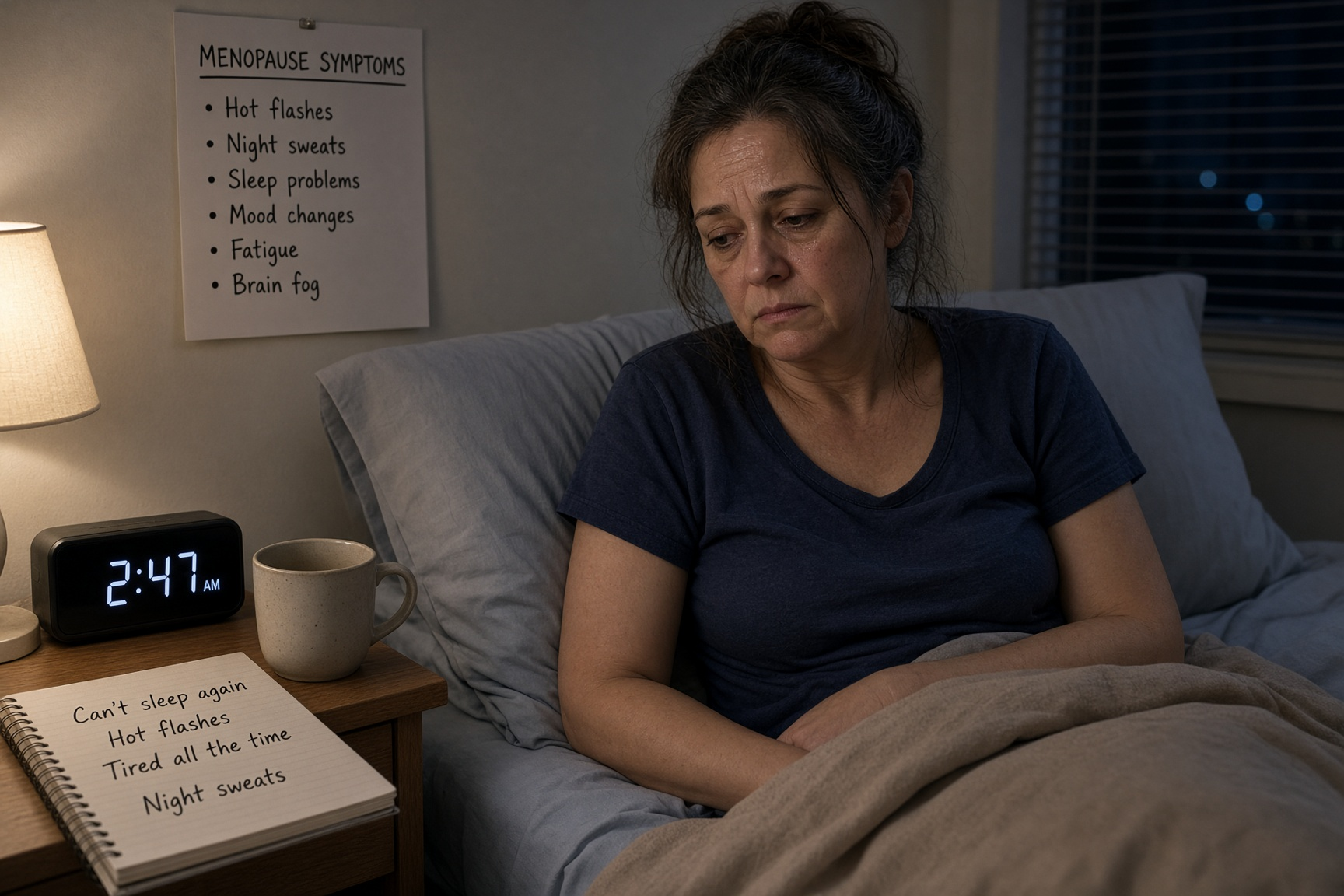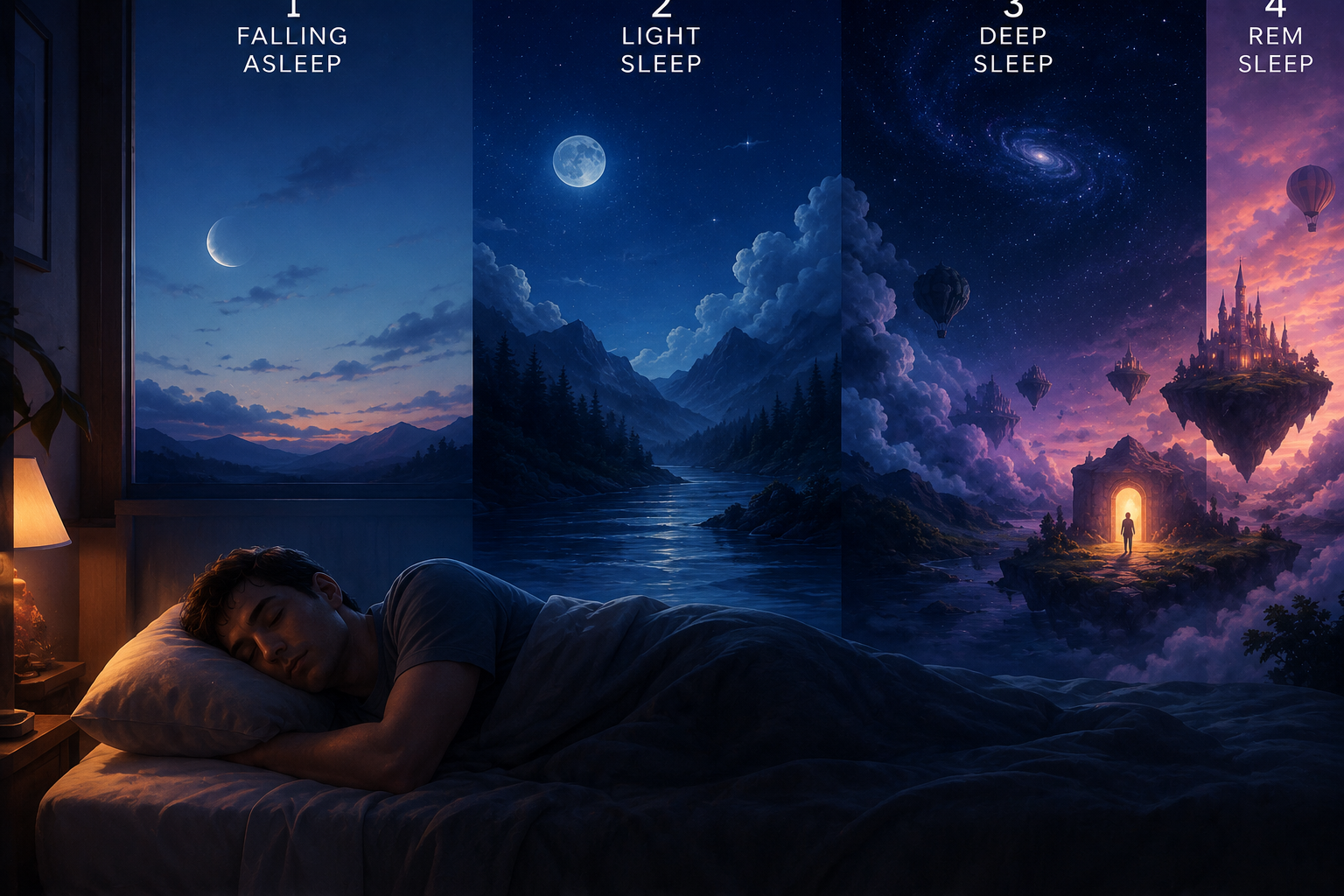
Most people picture sleep as a switch: you're awake, then you're not, and eight hours later you're awake again. What actually happens is far more structured. Over the course of a night your brain moves through four distinct stages in a repeating, predictable pattern, and each stage performs work the others can't.
This structure has a name in sleep medicine: sleep architecture. It matters because plenty of sleep problems aren't about duration at all. You can spend a full eight hours asleep and still wake up wrecked if the architecture underneath is broken, which is exactly what happens in conditions like obstructive sleep apnea.
Understanding the four stages is the foundation for understanding nearly everything else about sleep.
First, a Note on the Naming
If you've read about this before, you may have encountered "five stages of sleep." Both numbers are correct, they just reflect different eras of terminology.
Older literature divided sleep into Stages 1, 2, 3, and 4 (all non-REM), plus REM sleep, for five total. In 2007 the American Academy of Sleep Medicine consolidated the old Stages 3 and 4 into a single stage, since the distinction between them had limited clinical value. The current standard is four stages:
- N1 (light sleep, the transition into sleep)
- N2 (the workhorse stage, where you spend the most time)
- N3 (deep sleep, also called slow-wave sleep)
- REM (rapid eye movement sleep, where most vivid dreaming happens)
The first three are grouped together as NREM (non-REM) sleep. So the top-level division is NREM versus REM, and NREM subdivides into three stages.
The Four Stages at a Glance
| Stage | Type | Share of Adult Sleep | Typical Duration | Primary Function | |-------|------|----------------------|------------------|------------------| | N1 | NREM | About 5% | 1-7 minutes | Transition from wake into sleep | | N2 | NREM | About 45-55% | 10-25 minutes per cycle, lengthening overnight | Memory consolidation, sensory gating | | N3 | NREM | About 13-23% | 20-40 minutes, concentrated early in the night | Physical restoration, immune function, brain clearance | | REM | REM | About 20-25% | 10-60 minutes, lengthening toward morning | Emotional processing, memory integration, dreaming |
Stage N1: The Doorway
N1 is the brief transition between wakefulness and sleep. It typically lasts just a few minutes, and it's the lightest stage, easy to be woken from and easy to not even register as sleep at all. People woken from N1 frequently insist they were still awake.
Physiologically, muscles begin to relax, heart rate and breathing slow, and brain activity shifts from the alpha waves of relaxed wakefulness to slower theta waves.
This is also the stage where hypnic jerks happen: that sudden falling sensation and involuntary twitch as you drift off. They're common, generally harmless, and more frequent when you're overtired, stressed, or have had caffeine late.
N1 is mostly a gateway. Its main significance is diagnostic: someone spending an unusual amount of the night in N1 is likely being repeatedly pulled out of deeper sleep, a hallmark of fragmented sleep.
Stage N2: The Workhorse
You spend roughly half your night in N2, more than any other stage. It's often dismissed as "light sleep," which undersells it considerably.
Two distinctive brain wave patterns appear here:
Sleep spindles, short bursts of rapid brain activity, are strongly associated with memory consolidation, particularly the transfer of newly learned motor skills and factual information into longer-term storage. Learn a piece of music or a new procedure at work, and spindle activity that night is part of how it sticks.
K-complexes, large single waves, appear to serve a dual role: helping suppress arousal in response to external stimuli (keeping you asleep despite noise) while also standing ready to trigger a full awakening if a stimulus signals genuine danger.
Body temperature drops during N2 and heart rate continues to slow. It's genuine, restorative sleep, and its sheer proportion of the night means disruptions here have outsized effects.
Stage N3: Deep Sleep
N3 is the deepest, most physically restorative stage, characterized by large, slow delta waves. It's the hardest stage to be woken from, and if someone does wake you out of it, you'll experience pronounced sleep inertia: that thick, disoriented grogginess that can take 15 to 30 minutes to shake.
An unusual amount of essential work happens here:
- Growth hormone release peaks during slow-wave sleep, driving tissue repair, muscle growth, and bone development. This is a large part of why children need so much more sleep, and why sleep matters so much for physical recovery after exertion or injury.
- Immune function is supported, with production of infection-fighting cytokines increasing during deep sleep. The link between short sleep and getting sick more often runs substantially through here.
- Brain clearance. Research on the glymphatic system indicates the brain clears metabolic waste products considerably more efficiently during sleep, with slow-wave sleep appearing particularly important. This is an active research area, but it's one of the more compelling explanations for why sleep is biologically non-negotiable.
- Deep memory consolidation, especially of factual and declarative memory, is thought to depend heavily on slow-wave activity.
N3 is also where the disorders of arousal originate: sleepwalking, night terrors, and confusional arousals all arise from incomplete awakening out of deep sleep. This is why they typically occur in the first third of the night (when N3 is concentrated) and why the person usually has no memory of them afterward. It's also why night terrors are so common in children, who have far more N3 than adults. Our guide on signs your child may have a sleep disorder covers when these warrant evaluation.
N3 declines substantially with age. This is one of the most reliable changes in sleep across the lifespan, and it's a major reason older adults report lighter, less refreshing sleep even when total duration hasn't changed much.
REM Sleep: The Active Brain
REM is the strangest stage, and in some ways the most fascinating. Your brain becomes highly active, with wave patterns resembling wakefulness. Your eyes dart rapidly beneath closed lids. Heart rate and breathing become irregular. Most vivid, narrative dreaming happens here.
At the same time, your body goes almost completely limp. During REM your brain actively paralyzes most voluntary muscles, a state called REM atonia, sparing only the eyes and the diaphragm. The prevailing explanation is that this prevents you from physically acting out your dreams.
What REM appears to do:
- Emotional processing. REM is heavily implicated in how the brain processes emotionally charged experiences, effectively taking the sharp edge off difficult memories while retaining the information. Sustained REM deprivation is associated with heightened emotional reactivity and irritability.
- Memory integration. Where N3 favors consolidating facts, REM appears more involved in integrating new information with existing knowledge, and in procedural and creative problem-solving.
- Brain development. Newborns spend roughly half their sleep in REM, far more than adults, which points to a significant developmental role.
REM atonia also explains two experiences that frighten a lot of people. Sleep paralysis occurs when you become conscious while REM atonia is still active, so you're awake and aware but unable to move, sometimes with vivid hallucinations layered on. And REM sleep behavior disorder is the opposite failure: atonia doesn't engage, so the person physically acts out dreams, sometimes violently. RBD is clinically significant beyond the injury risk, since it can be an early warning sign of certain neurological conditions and warrants specialist evaluation.
Frequent, intense sleep paralysis alongside excessive daytime sleepiness is also a hallmark of narcolepsy, where REM intrudes into wakefulness inappropriately. Our guide to narcolepsy covers that full symptom picture.
How the Stages Cycle: The Part That Actually Matters
Here's where architecture becomes practically important.
You don't move through the stages once. You cycle through them repeatedly, roughly every 90 minutes (with real variation, about 70 to 120 minutes), completing four to six cycles in a typical night.
A cycle runs roughly N1 into N2 into N3, back up through N2, then into REM, and repeat.
But the cycles are not identical, and this is the key insight:
Deep sleep (N3) is front-loaded. The large majority of your N3 occurs in the first third of the night. By the final cycles before morning, you may get almost none at all.
REM is back-loaded. Your first REM period may last only a few minutes. Each subsequent one gets longer, and the final REM period before waking can run 45 minutes to an hour.
The practical consequence is significant: cutting your sleep short doesn't remove sleep evenly, it removes REM disproportionately. Going to bed at your usual time but waking two hours early cuts primarily into your longest, most REM-dense cycles. Conversely, going to bed two hours late and waking at your usual time costs you deep sleep instead.
This asymmetry is part of why chronic short sleep produces the specific pattern it does: emotional dysregulation, irritability, and impaired learning integration, effects that map closely onto REM loss. It's also why the timing of your sleep matters, not just the total. Our guide on sleep debt covers what accumulates when this happens night after night, and how recovery actually works.
What Breaks Sleep Architecture
A normal night's architecture assumes you're able to move through the cycles undisturbed. Several common things prevent that.
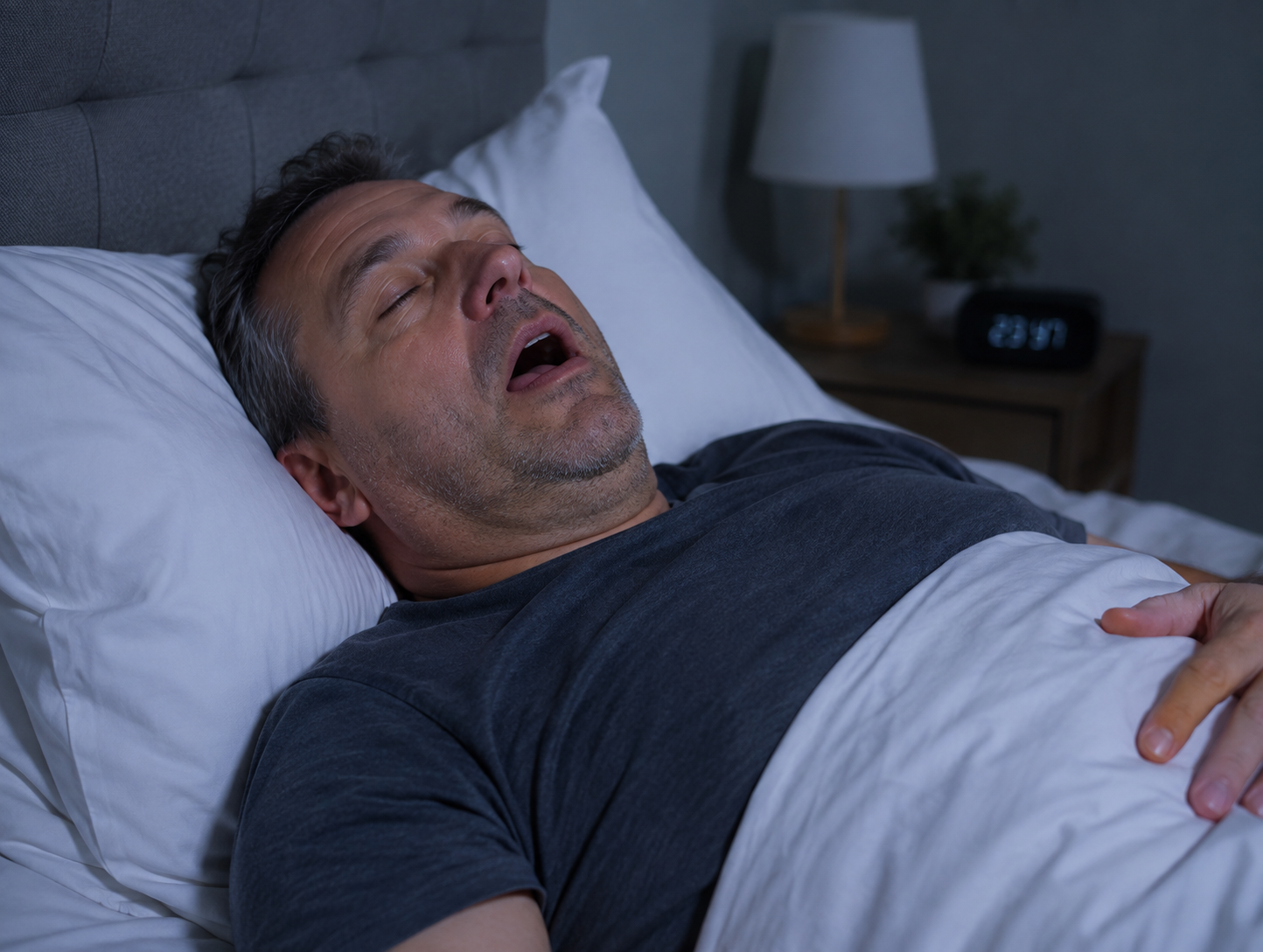
Obstructive sleep apnea is the most consequential. Each breathing interruption triggers a brief arousal that pulls the sleeper up out of deeper stages, often without them ever consciously waking or remembering it. In severe cases this can happen dozens of times per hour, all night. The result is someone who spends eight hours in bed while getting very little N3 or sustained REM. They report sleeping through the night and wake exhausted, because the duration was fine and the architecture was destroyed. This is precisely why "I sleep plenty but I'm always tired" is such a clinically meaningful complaint, covered in our guide on why you might always be tired, and why untreated apnea carries the downstream health consequences it does.
Alcohol is widely misunderstood here. It speeds sleep onset, which is why it feels helpful, but it suppresses REM in the first half of the night and fragments sleep in the second half as it metabolizes. The result is more time asleep and less benefit from it.
Periodic limb movement disorder and restless legs syndrome produce repeated arousals that fragment architecture in a similar way to apnea, often without the person's awareness. See our guide to restless legs syndrome.
Aging reduces N3 substantially and increases nighttime awakenings, though as covered in our guide on how much sleep you need by age, the underlying requirement barely changes.
Irregular schedules and shift work disrupt the circadian timing that governs when each stage is supposed to occur, meaning you can be asleep at the wrong biological time for the stage your body needs.
Some medications, including certain antidepressants, suppress REM sleep as a direct pharmacological effect.
How Sleep Stages Are Actually Measured
You cannot determine your sleep stages from how you feel, and consumer wearables estimate them indirectly, typically from movement and heart rate variability, with meaningful limitations in accuracy.
Genuine sleep staging requires polysomnography, an in-lab sleep study that records brain waves (EEG), eye movements (EOG), and muscle activity (EMG) simultaneously. Those three signals together are what allow a technologist to score each 30-second window of the night into a specific stage and produce a hypnogram, the graph of your architecture across the night.
This is a key distinction between testing types: a home sleep apnea test measures breathing, oxygen, and heart rate, but it does not record brain waves, so it cannot stage your sleep. That's why home tests can confirm sleep apnea but can't diagnose conditions defined by sleep architecture, like narcolepsy or periodic limb movement disorder. Our guides on home sleep tests versus in-lab studies and what to expect during a sleep study cover how that decision gets made and what the night involves.
Signs Your Sleep Architecture May Be Disrupted
You can't observe your own sleep stages, but disrupted architecture tends to announce itself:
- Waking unrefreshed despite adequate time in bed
- Loud snoring, witnessed breathing pauses, or gasping (see snoring versus sleep apnea)
- Excessive daytime sleepiness that doesn't match your sleep duration
- Morning headaches or dry mouth on waking
- Acting out dreams, or a partner reporting frequent kicking or thrashing
- Frequent sleep paralysis or vivid hallucinations at sleep onset
- Waking repeatedly through the night without an obvious cause
Any of these is worth an evaluation, because none of them are solved by simply spending more time in bed.
The Bottom Line
Sleep is not a uniform block of unconsciousness. It's four stages cycling four to six times a night in a specific, purposeful order: N1 as the entry point, N2 doing the bulk of the work, N3 handling physical restoration and clearance early in the night, and REM handling emotional and memory integration in ever-longer periods toward morning.
That structure is why duration alone is an incomplete measure of sleep. Eight fragmented hours that never reach sustained deep or REM sleep will leave you far worse off than seven intact ones. If you're getting enough hours and still waking exhausted, the problem is almost certainly architectural, and that's a medical question rather than a habits question.
For the habits that do protect healthy architecture, our guide to evidence-based sleep hygiene covers what actually holds up in research.
Getting enough hours but still exhausted? Use our sleep clinic directory to find an accredited sleep center near you and get your sleep architecture properly evaluated.
Written by
Daniel Marin
Sharing insights on sleep health and wellness to help you achieve better rest and improved quality of life.