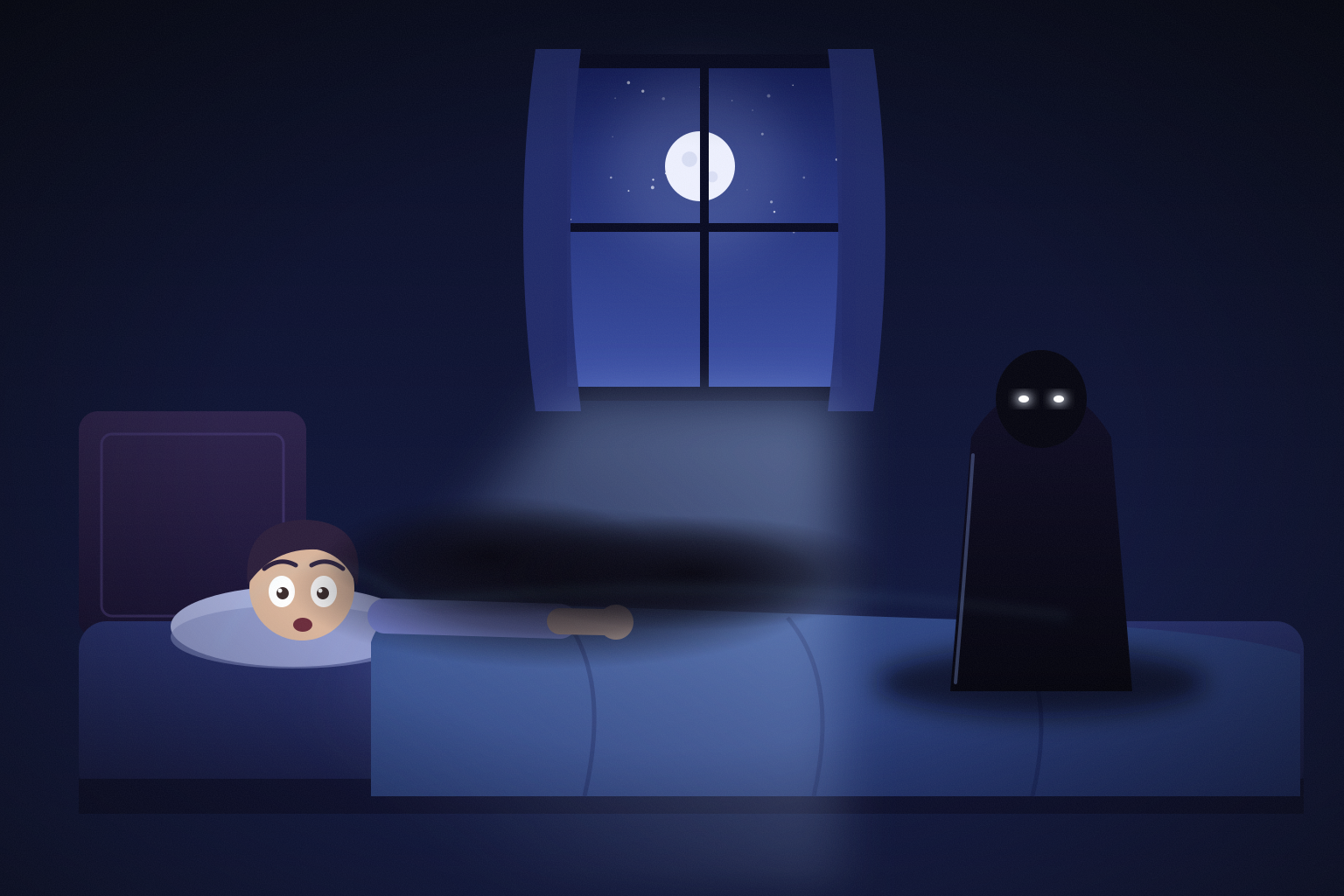
You wake in the dark. You're completely aware, you know where you are, and your eyes may even be open. But you can't move. You can't call out. You try to lift a finger, and nothing happens. Your chest feels heavy, as if something is pressing down on it. And then, often, you sense that you're not alone: a shadow in the corner, footsteps, a figure standing at the end of the bed, a feeling of something watching or moving closer.
It lasts a few seconds, or perhaps a minute or two, though it feels like forever. Then it releases, and you can move again, heart pounding, shaken and unable to say exactly what just happened.
This is sleep paralysis, and it's one of the most frightening and least understood experiences in sleep. It has been described across cultures and centuries and given names that range from the "old hag" to nighttime demons. It feels supernatural. It isn't, and in most cases it's also not dangerous. Understanding what's happening can take away much of its power.
What Sleep Paralysis Is
Sleep paralysis is a temporary inability to move or speak that occurs when you're falling asleep or waking up. You're conscious and aware, but your voluntary muscles are paralyzed.
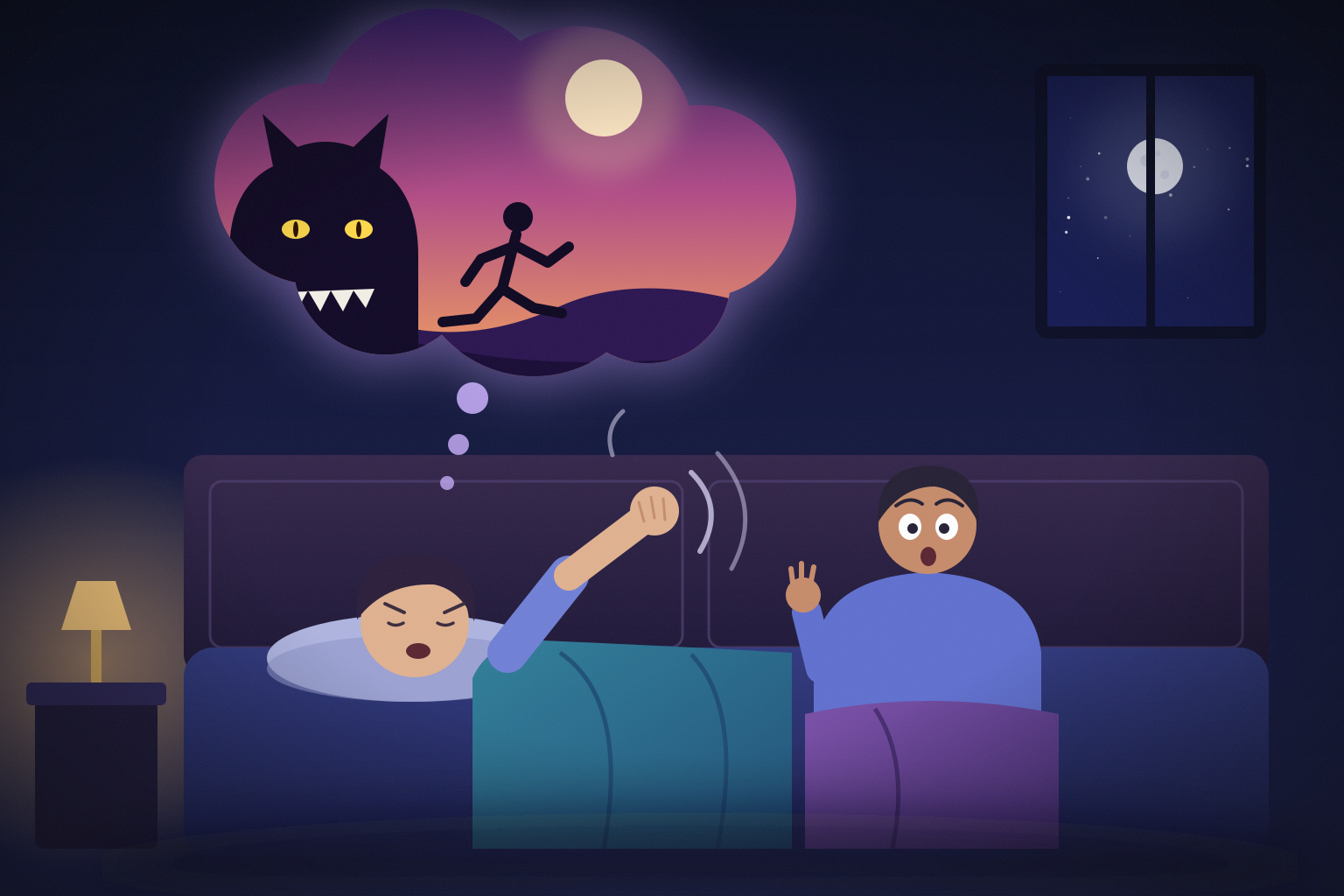
To understand why, it helps to know what happens in normal sleep. During REM sleep, the stage when most vivid dreaming occurs, your brain actively switches off your voluntary muscles, a state called REM atonia. This paralysis protects you by preventing you from physically acting out your dreams. Our guide to the four stages of sleep explains this in more detail.
Normally, you slip into REM sleep unconscious and wake from it with your muscles back online. Sleep paralysis is a timing mismatch. Your mind wakes up, or hasn't yet fully fallen asleep, while the REM paralysis is still in effect. For a short time, you're conscious inside a body that's still in dream mode.
It occurs in two forms:
- Hypnopompic sleep paralysis happens as you wake up, and is the more common form
- Hypnagogic sleep paralysis happens as you fall asleep
What It Feels Like
The experience varies, but typically includes some combination of:
- Complete inability to move or speak, though the eyes can often move
- Full awareness of your surroundings
- Pressure or heaviness on the chest, sometimes with a sense of difficulty breathing
- Intense fear, sometimes terror
- Hallucinations, which fall into several recognizable types:
- A sense of a presence in the room, often a menacing one
- Seeing a figure, shadow, or shape, sometimes at the bedside or doorway
- Hearing footsteps, whispers, buzzing, or humming
- Feeling a touch, pressure, or sensation of being dragged or pushed
- Floating or out-of-body sensations
These episodes usually last from several seconds to a couple of minutes.
On the breathing sensation: it feels as though you can't breathe, but your breathing continues. The muscles that drive breathing, chiefly the diaphragm, aren't paralyzed during REM sleep. The sense of suffocation is part of the experience, not a real danger.
Why the Hallucinations Happen
The hallucinations are the most disturbing part, and also the most readily explained. During sleep paralysis, your brain is in REM, the dreaming state, while you're conscious. In effect, dream content is being generated while you're awake, and it's projected onto your actual surroundings.
At the same time, the brain's threat-detection systems are highly active. Being paralyzed, unable to move or call for help, is itself an alarming state, and the brain interprets that helplessness as danger. The result is a dream-generated sense of a threatening presence layered on the real room around you. That is why the hallucinations so often involve an intruder or a menacing figure, and why they feel so vivid and so real.
This also explains why people across very different cultures describe such similar experiences, and why folklore has built so many supernatural explanations around them.
How Common Is It?
Sleep paralysis is common. Roughly 8 percent of people in the general population experience it at least once in their lives, and the rate is considerably higher in students and in people with certain psychiatric conditions. For many, it's a rare, isolated event, and some people have only a single episode. Others experience it repeatedly.
It can begin at any age, but most often first appears in the teens and twenties.
Why It Happens: Triggers and Risk Factors
Because sleep paralysis is a timing glitch between sleep and waking, anything that disrupts sleep timing or fragments sleep can make it more likely.
Sleep deprivation and irregular sleep schedules. This is among the most consistent triggers. Our guide on sleep debt explains how sleep loss accumulates, and our guide on how much sleep you need by age can help you set a realistic target.
Sleeping on your back. Episodes are reported more often in the supine position, which may relate to airway and arousal factors.
Stress and anxiety. Higher stress levels, panic disorder, and post-traumatic stress are associated with more frequent episodes.
Shift work, jet lag, and disrupted circadian rhythm.
Other sleep disorders. Untreated sleep apnea, which repeatedly disrupts sleep, is a recognized contributor. See our guide on sleep apnea symptoms. Narcolepsy is strongly associated with sleep paralysis, discussed below.
Substances and medications. Alcohol, certain medications, and withdrawal from some drugs can disturb REM sleep and trigger episodes.
Family history. Sleep paralysis seems to run in families, suggesting a genetic component.
When It's Part of Something Else: Narcolepsy
For most people, sleep paralysis is an isolated, benign experience. But it's also one of the classic symptoms of narcolepsy, a neurological disorder in which the boundaries between sleep and wakefulness break down.
Sleep paralysis in narcolepsy tends to be frequent, and it appears alongside other symptoms:
- Excessive daytime sleepiness, with sleep attacks that are hard to resist
- Cataplexy, sudden muscle weakness triggered by strong emotions such as laughter
- Vivid hallucinations at the edge of sleep
- Fragmented nighttime sleep
Our complete guide to narcolepsy covers the full picture. If sleep paralysis comes with significant daytime sleepiness, our guide on excessive daytime sleepiness can help you tell ordinary tiredness from true sleep intrusion.
When to Worry, and When Not To
Occasional, isolated sleep paralysis is generally not a sign of any disease. It's unpleasant, but it's not harmful, it doesn't cause lasting damage, and it doesn't mean something is wrong with your brain. For most people, reassurance and attention to sleep habits are all that's needed.
Consider seeing a doctor or sleep specialist if:
- Episodes are frequent, happening multiple times a week or month
- They cause significant fear or distress, or you've started dreading or avoiding sleep
- You have excessive daytime sleepiness, or fall asleep at inappropriate times
- You experience sudden muscle weakness with laughter, surprise, or other strong emotion
- You have loud snoring, breathing pauses, or gasping during sleep
- You have anxiety, panic attacks, depression, or trauma symptoms that are affecting your life
- The episodes began after starting a medication
- You're experiencing hallucinations when fully awake, as distinct from at the edges of sleep, which warrants a separate evaluation
Our symptom checklist by category lists sleep paralysis and its companions, and can help you decide which concerns to raise.
What to Do During an Episode
When it happens, the single most useful thing is to know what it is.
- Remind yourself it's temporary and harmless. It will pass, usually within a minute or two. Telling yourself "this is sleep paralysis, I am safe" can reduce the terror considerably
- Don't fight it hard. Struggling to move can intensify the panic
- Try small movements. Concentrate on wiggling a finger or toe, or moving your eyes. Sometimes a small movement breaks the paralysis
- Focus on slow, steady breathing. Remember that your breathing is continuing
- Treat the hallucinations as what they are, a dream-state projection and not real. They fade as the paralysis lifts
- A sound or touch from another person can sometimes end an episode quickly, so if you share a bed, it can help to let your partner know what's happening
How to Reduce Episodes
Because the main drivers are sleep disruption and stress, the most effective strategies are about sleep itself.
Keep a consistent sleep schedule, including weekends, and prioritize getting enough total sleep.
Try sleeping on your side rather than your back, particularly if you notice episodes happen when supine.
Wind down before bed. A calm routine reduces the arousal that can fragment sleep. Our guide to evidence-based sleep hygiene covers the habits that work.
Limit alcohol and caffeine, especially later in the day, and avoid heavy meals close to bedtime.
Manage stress and anxiety, through exercise, relaxation techniques, or therapy where appropriate.
Treat underlying sleep disorders. If sleep apnea or insomnia is contributing, treating it often reduces episodes. Our guide on CBT-I covers the leading treatment for chronic insomnia.
For frequent, distressing episodes, a specialist may consider further measures, including a sleep study to look for contributing disorders, a review of medications, and in some cases medication that affects REM sleep. Cognitive-behavioral approaches designed for recurrent sleep paralysis are also being studied and show promise.
How Sleep Paralysis Is Evaluated
Occasional sleep paralysis doesn't require any testing. But if episodes are frequent or accompanied by other symptoms, a sleep specialist may recommend an overnight in-lab sleep study, and, if narcolepsy is suspected, a Multiple Sleep Latency Test the following day. A home sleep test can't evaluate narcolepsy or most other causes, because it doesn't record brain activity. Our guides on home tests versus in-lab studies and what to expect during a sleep study explain how it works.
If you do need evaluation, an accredited sleep center with board-certified sleep physicians is the right place to go. Our guides on choosing a sleep clinic and board-certified sleep physicians explain what to look for.
The Bottom Line
Sleep paralysis happens when your mind wakes up, or hasn't yet fallen asleep, while your body is still in the paralysis of REM sleep. The hallucinations, the pressure on the chest, and the sense of a presence are the dreaming brain running while you're conscious. It's frightening, but it's not dangerous, and it doesn't last.
For most people, understanding it and protecting their sleep is enough. If it's frequent, deeply distressing, or comes with daytime sleepiness, sudden muscle weakness, snoring, or significant anxiety, that's the time to get properly evaluated.
Frequent sleep paralysis, or other symptoms alongside it? Use our sleep clinic directory to find an accredited sleep center near you for a full evaluation.
Written by
Daniel Marin
Sharing insights on sleep health and wellness to help you achieve better rest and improved quality of life.