You're exhausted all the time. You can't concentrate. You've lost interest in things you used to enjoy, you're irritable with people you care about, and you feel flattened in a way that's hard to describe to anyone. You went to a doctor, described all of that, and came away with a diagnosis of depression and a prescription.
For many people that's the correct answer, and treatment helps. But for a meaningful subset, something else is running underneath: a sleep disorder that produces nearly the same symptom list, and which no antidepressant will fix because it isn't a mood disorder at all.
The relationship between sleep apnea and mood is real, well documented, and genuinely bidirectional. It's also one of the most common sources of diagnostic confusion in medicine, because the two conditions share so many symptoms that distinguishing them from the outside is difficult.
Here's what the evidence actually supports.
A note before going further: this article is about a possible contributing medical cause, not a replacement for mental health care. Depression and anxiety are serious conditions that deserve treatment in their own right. If you're currently in treatment, don't change or stop anything based on an article. And if you're having thoughts of harming yourself, please contact the 988 Suicide and Crisis Lifeline (call or text 988 in the US) or your local emergency services now.
The Connection Is Well Established
Depression occurs at substantially higher rates in people with obstructive sleep apnea than in the general population, and the reverse holds too: sleep apnea is more common among people diagnosed with depression than population base rates would predict. Exact figures vary considerably across studies depending on how each condition is defined and measured, but the direction of the association has been consistent across a large body of research.
The relationship with anxiety is similar, though it has been studied less extensively than depression.
What the research has been slower to establish is causation, and it's worth being straightforward about that. Association is easier to demonstrate than direction. What we have is a plausible set of biological mechanisms, strong and repeated associations, and evidence that treating apnea improves mood symptoms in many patients. That's a reasonable basis for taking the connection seriously, without claiming sleep apnea explains most depression.
How Sleep Apnea Could Affect Mood
Several mechanisms plausibly link the two.
Sleep fragmentation. Apnea causes repeated arousals throughout the night, stripping out the deep and REM sleep that mood regulation appears to depend on. REM in particular is heavily implicated in emotional processing, as covered in our guide to the four stages of sleep. Chronic REM disruption is associated with heightened emotional reactivity and impaired regulation.
Intermittent hypoxia. Repeated cycles of oxygen desaturation and recovery produce oxidative stress and affect brain regions involved in mood regulation, including the hippocampus and prefrontal cortex. Imaging studies have found structural and functional differences in these regions in people with untreated apnea.
Systemic inflammation. Sleep apnea is associated with elevated inflammatory markers, and inflammation has been increasingly implicated in the biology of depression.
HPA axis dysregulation. Repeated nighttime stress responses disrupt the hypothalamic-pituitary-adrenal axis and cortisol rhythms, which are closely tied to both mood and anxiety.
Neurotransmitter effects. Sleep disruption affects serotonin, dopamine, and norepinephrine systems, the same systems targeted by most antidepressant medications.
The straightforward daily reality. Beyond the biology: chronic exhaustion erodes patience, motivation, social engagement, and the capacity to do the things that sustain mental health. Being profoundly tired for years is itself depressing, in the ordinary sense of the word.
The Symptom Overlap Problem
This is the practical heart of the issue. Look at how much these conditions share:
| Symptom | Sleep Apnea | Depression |
|---|---|---|
| Fatigue and low energy | Yes | Yes |
| Difficulty concentrating | Yes | Yes |
| Memory problems | Yes | Yes |
| Irritability | Yes | Yes |
| Low mood | Common | Core symptom |
| Loss of interest or motivation | Common | Core symptom |
| Sleep disturbance | Yes | Yes |
| Weight changes | Common | Yes |
| Reduced libido | Common | Yes |
| Psychomotor slowing | Can occur | Yes |
Standard depression screening instruments ask about fatigue, concentration, sleep, appetite, and psychomotor changes. Someone with moderate untreated sleep apnea can score in the depressed range on those questionnaires on the strength of their apnea symptoms alone.
That's not a criticism of the instruments, which do their job well. It's a reason why a mood presentation accompanied by loud snoring, witnessed breathing pauses, or unrefreshing sleep deserves a question about sleep before the workup closes.
The Symptoms That Help Distinguish Them
A few features point more specifically toward one or the other:
More suggestive of sleep apnea: loud snoring, witnessed breathing pauses or gasping, waking with a dry mouth or morning headache, falling asleep easily during passive daytime activities, waking to urinate multiple times, and sleepiness that improves noticeably after an unusually good night.
More suggestive of depression: persistent low mood or anhedonia that dominates the picture, feelings of worthlessness or excessive guilt, hopelessness, thoughts of death or self-harm, and, characteristically, early-morning awakening with an inability to return to sleep (discussed in our guide on waking at 3 AM).
Guilt, worthlessness, and hopelessness are the features least explained by sleep apnea. Their presence points toward a genuine mood disorder, whether or not apnea is also present.
The Anxiety Connection, and Nocturnal Panic
The anxiety side of this has a specific and underappreciated wrinkle.
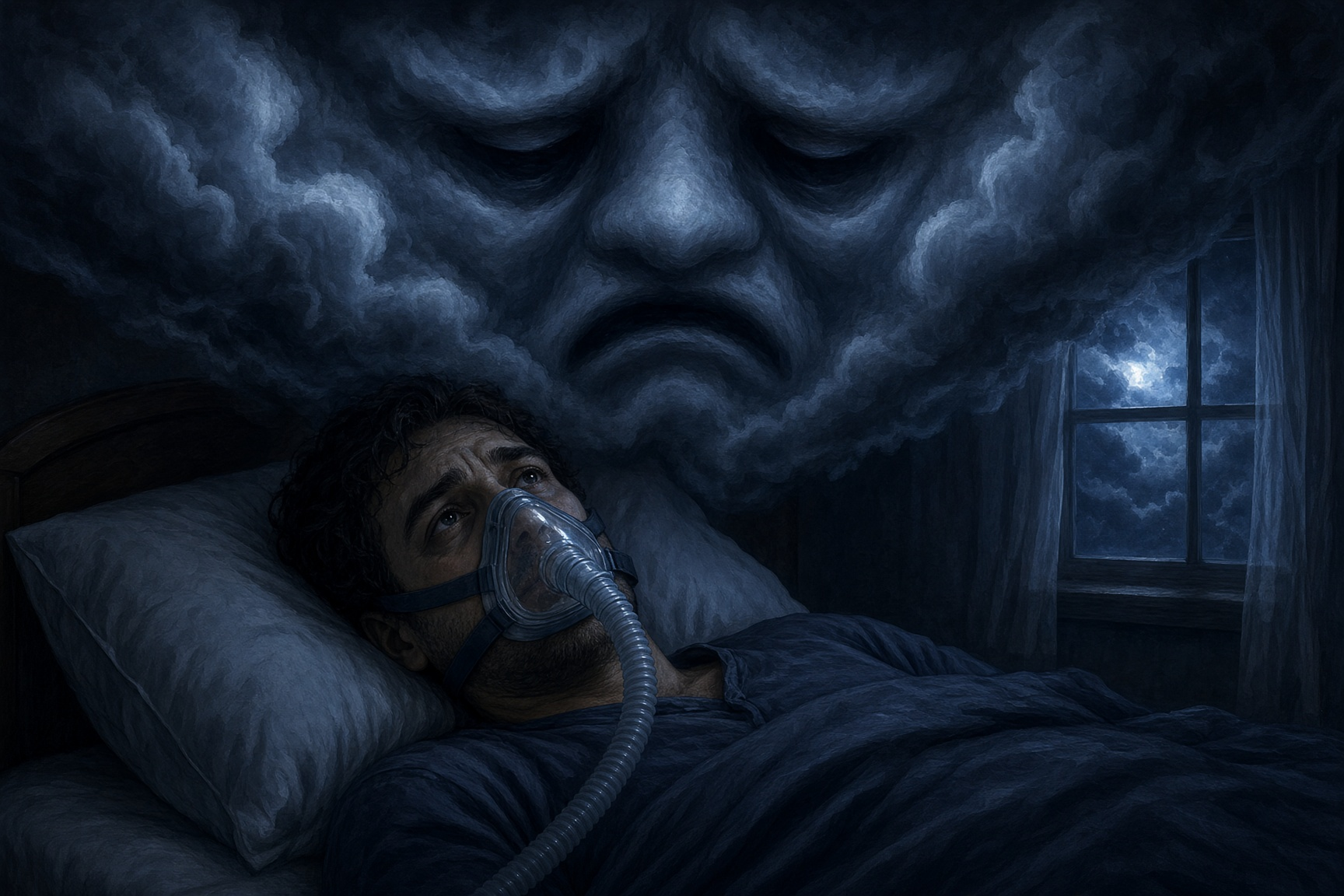
When an apnea event ends, it ends with an arousal: a surge of sympathetic nervous system activity, a jolt of adrenaline, an increase in heart rate, and often a gasp. If you happen to become consciously aware during one of these, the experience is: waking abruptly, heart pounding, short of breath, with a sensation of not being able to breathe and a wave of fear.
That is essentially indistinguishable, from the inside, from a nocturnal panic attack.
People who experience this repeatedly can develop genuine anxiety about sleep itself, along with anticipatory dread at bedtime. And because the description sounds so much like panic disorder, the underlying breathing problem can go unexamined for a long time.
None of this means nocturnal panic attacks are always sleep apnea. They're a real feature of panic disorder. But if someone's nighttime panic episodes come alongside snoring, gasping, or daytime sleepiness, screening for apnea is a reasonable step before settling on a purely psychiatric explanation.
Treatment-Resistant Depression Is Worth a Second Look
One of the more clinically useful patterns: sleep apnea appears at elevated rates among people whose depression hasn't responded well to treatment.
The logic is straightforward. If a substantial part of someone's symptom burden is being generated by an untreated breathing disorder, antidepressants are working on the wrong target. Sleep quality doesn't improve, exhaustion continues, and the treatment looks like a failure of the antidepressant rather than a diagnostic gap.
If you've tried multiple antidepressants without meaningful benefit, and you snore, wake unrefreshed, or feel sleepy during the day, asking about a sleep evaluation is a reasonable thing to raise with your doctor.
Does Treating Sleep Apnea Improve Mood?
Reasonably good evidence says yes for many people, with sensible caveats.
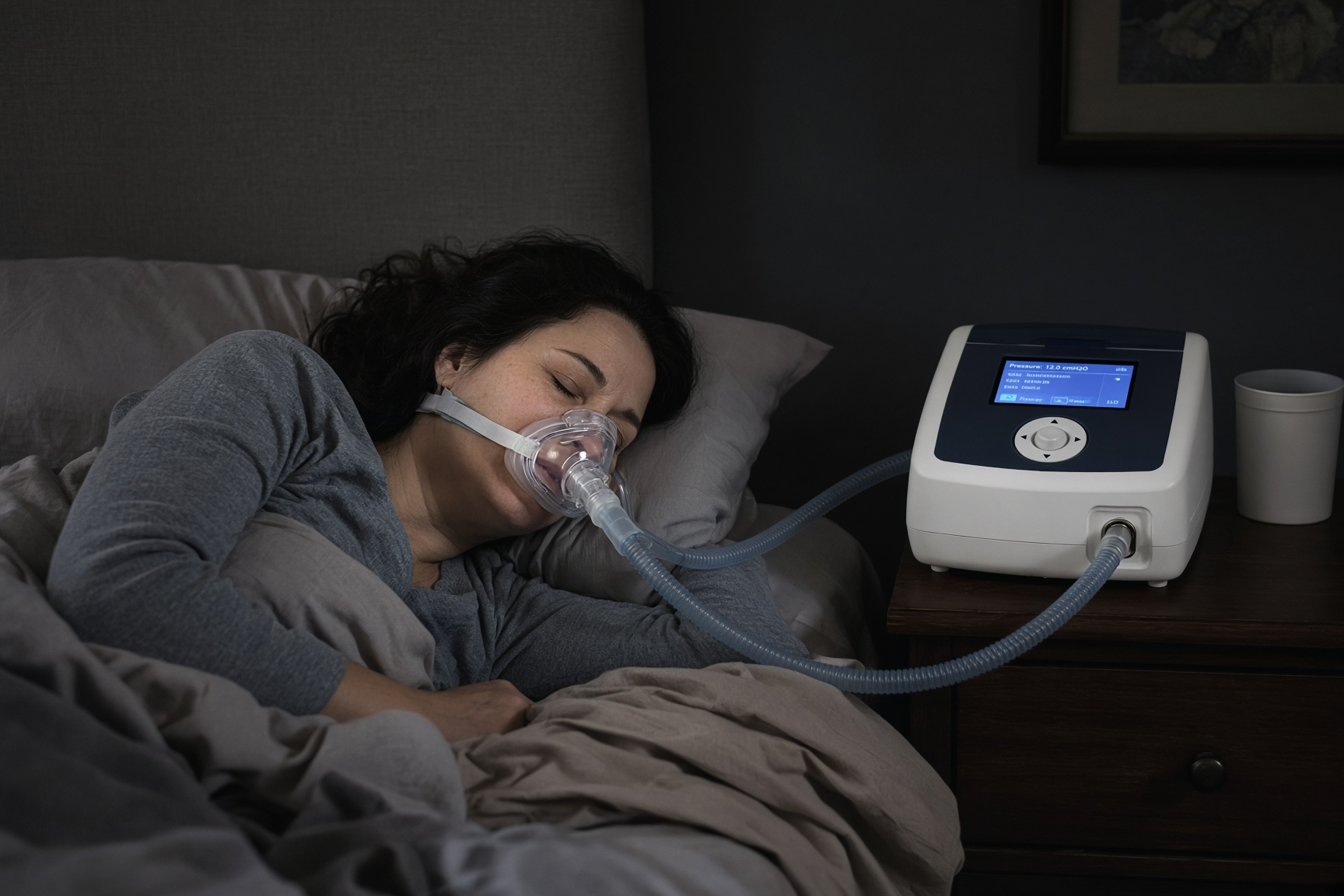
Multiple studies and meta-analyses have found that CPAP treatment is associated with reductions in depressive symptoms in patients with obstructive sleep apnea, with larger improvements generally seen in those who use the treatment consistently and who had more significant symptoms at baseline.
Three caveats worth stating honestly:
It's not a substitute for mental health treatment. For people with a primary depressive disorder, treating apnea addresses a contributing factor, not the condition itself. Both may need treating.
Improvement isn't universal. Some people's mood improves substantially with apnea treatment. Others see little change, which usually means the mood disorder was primary rather than secondary.
Adherence matters. As with the cardiovascular benefits of CPAP, mood benefits track with actually using the device consistently.
The practical upside is that this is testable. If untreated apnea is contributing to your symptoms, treating it and observing what happens is informative in a way that guessing isn't.
An Important Safety Note About Medications
This matters and is frequently missed.
Sedative-hypnotics and benzodiazepines relax the muscles of the upper airway. In someone with undiagnosed sleep apnea, sleeping medications prescribed for insomnia or anxiety can worsen the breathing disorder, increasing the frequency of events and the depth of oxygen desaturation.
This is one of the more consequential reasons to establish whether apnea is present before treating persistent insomnia with sedatives, particularly in someone who snores. Our guide on insomnia versus sleep apnea covers why distinguishing them changes the treatment path entirely, and CBT-I is the recommended first-line approach for chronic insomnia regardless.
Some antidepressants also affect sleep in relevant ways, including suppressing REM sleep or worsening restless legs symptoms in susceptible people. None of this is a reason to avoid necessary psychiatric medication. It is a reason for your prescriber to know about your sleep symptoms.
A Note on Women
Sleep apnea in women is misdiagnosed at a notably high rate, and depression is one of the most common labels applied instead.
Part of the reason is presentation. Women with apnea more often report fatigue, insomnia, morning headaches, anxiety, and low mood, and less often present with the loud snoring and witnessed apneas that clinicians associate with the classic picture. That symptom profile maps almost perfectly onto depression, so that's frequently where the workup lands.
If you're a woman who has been treated for depression or anxiety without much benefit, and you're persistently exhausted, this is worth raising specifically.
When to Get Screened for Sleep Apnea
Consider evaluation if you have mood or anxiety symptoms alongside any of:
- Loud or irregular snoring, or witnessed breathing pauses
- Waking with gasping, choking, or a pounding heart
- Persistent exhaustion despite adequate time in bed
- Falling asleep easily during passive daytime activities
- Morning headaches or dry mouth on waking
- Waking to urinate more than once a night
- Depression or anxiety that hasn't responded well to treatment
- High blood pressure, excess weight, or a larger neck circumference
Our guides on sleep apnea symptoms and snoring versus sleep apnea cover what to look for, and why you might always be tired covers the broader differential.
Sleep apnea can only be confirmed with a sleep study, either at home or in a lab depending on your situation. Our guide on home tests versus in-lab studies explains how that choice is made.
The Bottom Line
Sleep apnea and mood disorders are genuinely linked, through sleep fragmentation, intermittent oxygen loss, inflammation, and the plain reality of long-term exhaustion. They also share enough symptoms that one is regularly mistaken for the other, particularly in women and in people whose depression hasn't responded to treatment.
This isn't an argument that depression is "really" sleep apnea. It usually isn't, and mood disorders deserve treatment on their own terms. It's an argument that when mood symptoms travel with snoring, gasping, or unrefreshing sleep, there's a treatable medical contributor worth ruling out, and that finding it can make everything else work better.
Struggling with mood and exhaustion together? Use our sleep clinic directory to find an accredited sleep center near you and ask about screening for sleep apnea.
Is your weight affecting your sleep?
As this article covers, the relationship between weight and sleep runs in both directions, and excess weight is one of the most common risk factors for sleep apnea specifically. HealSend offers doctor-prescribed GLP-1 weight loss treatment, with clinician-led care delivered to your door. Talk to your sleep doctor about whether weight loss could be part of your treatment plan.
See if you qualifyAdvertising disclosure: this is a paid partnership. We may earn a commission if you sign up through this link, at no extra cost to you.
Written by
Daniel Marin
Sharing insights on sleep health and wellness to help you achieve better rest and improved quality of life.