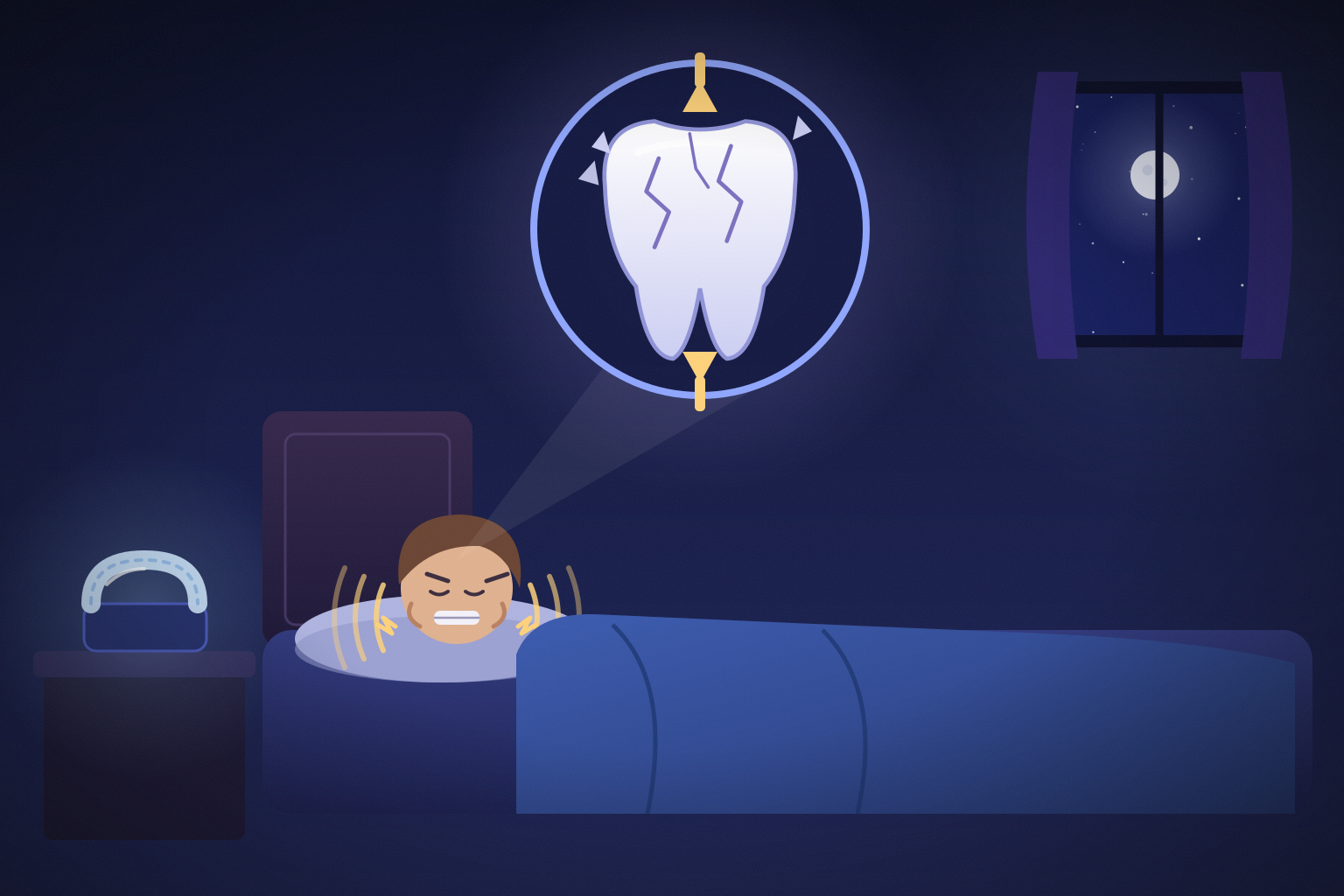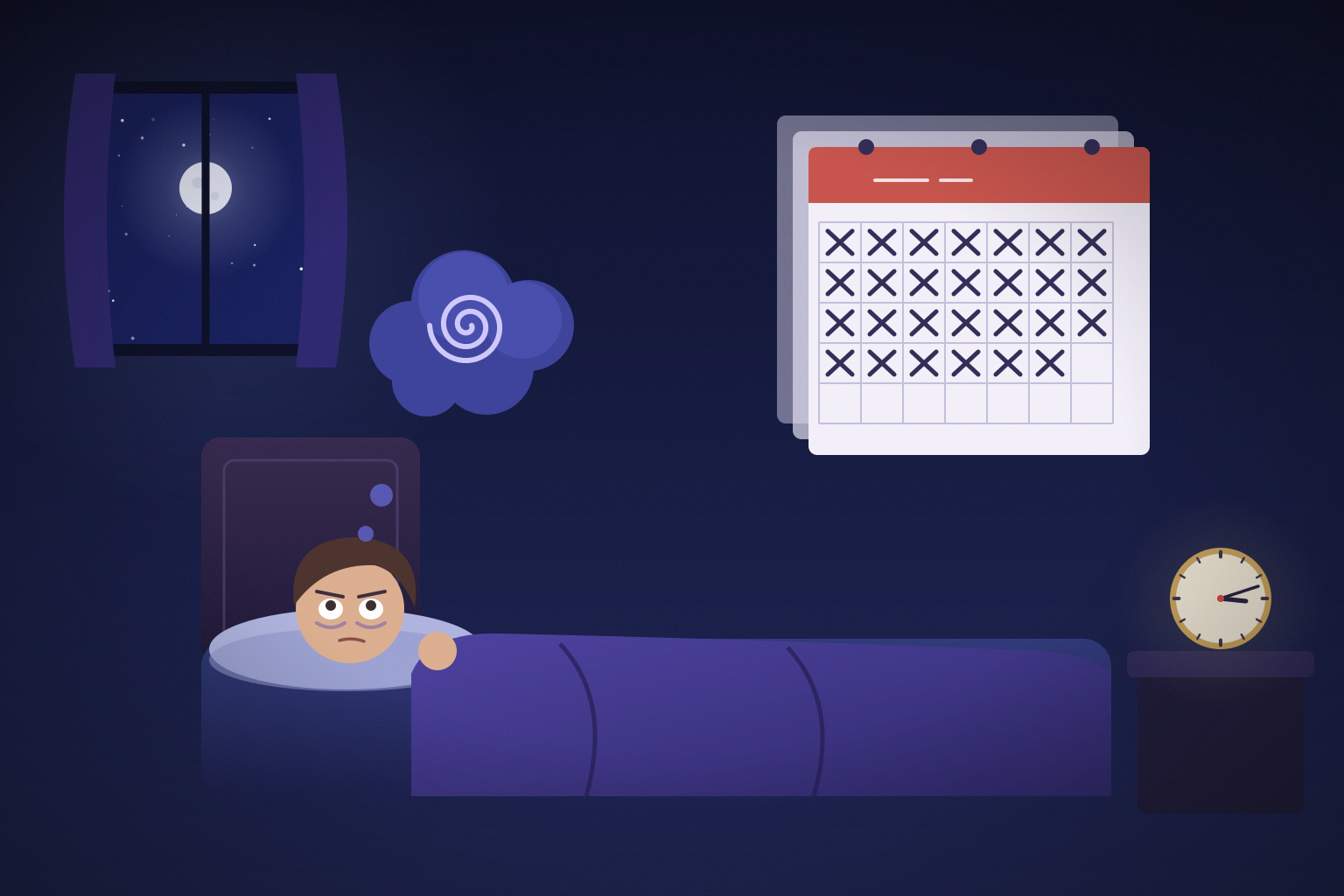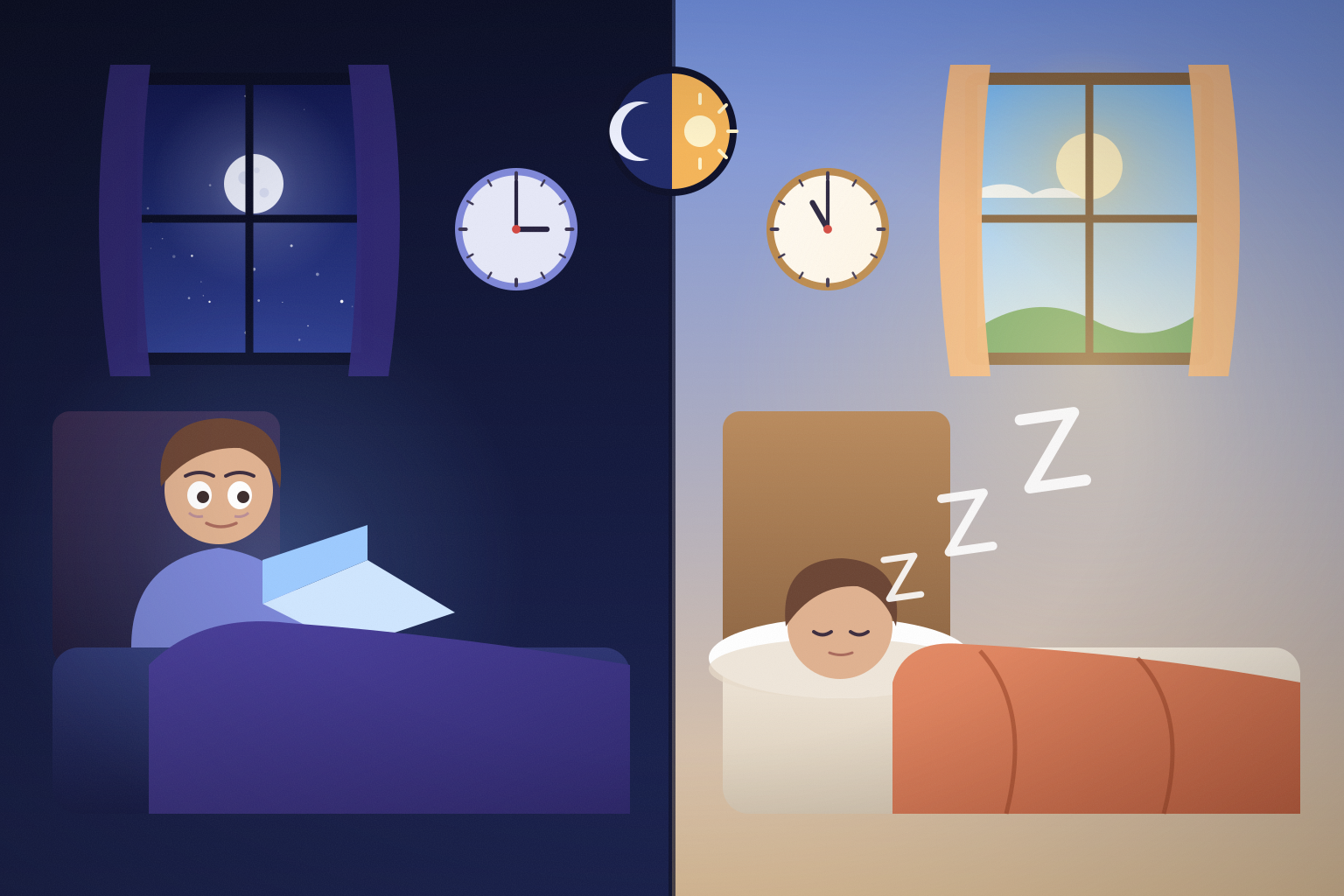
The shift ends at 7 AM. You've been awake all night, and your body knows it. You drive home in bright morning light, climb into bed with the sun coming through the curtains, and sleep four fitful hours. A lawn mower starts up. You're awake again, exhausted, and you have to be back at work in twelve hours.
For nurses, truck and bus drivers, paramedics, police officers, firefighters, warehouse and factory workers, and anyone else whose job runs when the rest of the world sleeps, this is not a rough patch. It's the job. But for a large share of shift workers, it develops into shift work disorder (SWD), a recognized sleep disorder with measurable consequences for health and safety.
The good news is that there is real guidance on what helps, including a clinical practice guideline the American Academy of Sleep Medicine published in October 2026. Much of it is practical, and much of it is within your control.
What Shift Work Disorder Is
SWD is a circadian rhythm disorder. Your internal body clock is set by light and expects you to be awake in the daytime and asleep at night. When your schedule overlaps your biological night, two things go wrong at once: you can't get enough good sleep during the day, and you feel sleepy or impaired when you need to be awake at night.
The disorder is generally defined by insomnia, excessive sleepiness, or both, linked to a work schedule that overlaps normal sleep time, with symptoms that persist for around three months and reduced total sleep.
Common symptoms:
- Difficulty falling or staying asleep during the day
- Sleeping substantially less than your body needs
- Excessive sleepiness at work, especially in the small hours
- Difficulty concentrating, memory lapses, and slowed reactions
- Irritability, low mood, or anxiety
- Falling asleep, or nearly so, while driving or on the job
- Reliance on caffeine to function, and difficulty relaxing when it's time to sleep
Not everyone who works shifts develops SWD. The AASM's guideline cites a meta-analysis that put the figure at about 27 percent of adult shift workers, and other estimates range lower, in the 10 to 40 percent range. How much it affects you depends on the schedule, your age, and your natural tendency to be a morning or evening person.
Why It's So Hard on the Body
The clock is set by light, not your schedule. Daylight on the drive home tells your brain it's morning, which works against the sleep you're about to attempt.
Daytime sleep is shorter and lighter. The body's alertness signal rises during the day, so daytime sleep tends to be fragmented and shorter than nighttime sleep, even in a perfectly dark, quiet room.
Sleep debt accumulates. Repeated short sleeps add up. Our guide on sleep debt explains why this isn't fixed by one long day off.
Life gets in the way. Daytime noise, family obligations, and appointments cut into the sleep window.
For the underlying biology, our guide on circadian rhythm disorders explains how the body clock works and why it's so resistant to being overridden.
The Stakes: Safety and Health
Drowsy driving is the most immediate danger, particularly on the commute home after a night shift, when you're at your most impaired. Our guide on sleep apnea and car accidents explains how microsleeps and impaired self-judgment make drowsy driving so hazardous.
Errors and accidents at work rise when people are sleep-deprived, which is a concern in every safety-sensitive job.
Longer-term health is also affected. Chronic sleep loss and circadian misalignment are associated with metabolic problems, weight gain, and cardiovascular risk. Our guides on sleep and weight gain and sleep apnea and type 2 diabetes cover parts of that picture.
Mood and mental health can suffer too, and our guide on sleep apnea and mood discusses how sleep and mood influence each other.
What the New AASM Guideline Recommends
In October 2026, the AASM published a clinical practice guideline on managing shift work disorder in the Journal of Clinical Sleep Medicine. Its recommendations are cautious: they are conditional, and the evidence behind most of them is of low or very low certainty. They still give a useful framework.
- Bright light during the night shift is suggested for adults who want to adapt their body clock to night work
- Melatonin is suggested for daytime sleep after a night shift, for switching back to nighttime sleep, and before a nap ahead of the first night shift. The panel judged the benefit modest, and the guideline notes that melatonin can cause temporary sleepiness and may reduce performance, which matters for safety
- Armodafinil or modafinil is suggested for excessive sleepiness, taken before the night shift, based on moderate-certainty evidence
- Clockwise rotating schedules (days, then evenings, then nights) are favored over counterclockwise ones
- Triazolam and other benzodiazepines with unfavorable risk-benefit profiles are steered away from, because of risks such as falls, misuse, dependence, and withdrawal
The guideline's wording on benzodiazepines has been summarized slightly differently in different coverage, so if this matters for your own prescriptions, ask your clinician what the full text says for your situation.
Not everything has strong evidence behind it, and that's worth knowing. As a practical matter, if your schedule rotates or changes frequently, fully adapting your body clock is rarely realistic, so the emphasis shifts to protecting sleep opportunities and managing symptoms. Most of the practical advice below comes from expert consensus and clinical experience as much as from large trials.
Practical Strategies That Help
Protect Your Daytime Sleep
- Make the bedroom dark. Blackout curtains or a quality sleep mask matter, because daylight is a powerful wake signal
- Reduce noise with white noise, earplugs, or a fan, and silence your phone
- Keep it cool. A slightly cooler room supports sleep
- Tell the people you live with your sleep window, and ask for their help protecting it
- Keep a consistent daytime sleep schedule as much as your life allows, including days off if you can
Manage Light Deliberately
- Bright light early in the night shift can improve alertness
- Wear dark sunglasses on the commute home to limit the morning light that tells your brain it's time to be awake
- Avoid bright light in the hours before your daytime sleep, including from screens
If your schedule changes frequently, you won't be able to fully adapt, so consistency in the parts you can control matters more than perfect alignment.
Use Naps Strategically
- A short nap before a night shift can build a buffer of alertness
- Brief naps during breaks, when your workplace allows them, can help. Keep them short, around 20 to 30 minutes, to avoid waking in deep sleep
- Allow a little time to shake off grogginess before safety-critical tasks
Be Smart With Caffeine
- Use it earlier in the shift rather than steadily throughout
- Stop several hours before your planned sleep. Caffeine stays in your system for hours, which is why a late dose can wreck daytime sleep
- Don't rely on caffeine to push through dangerous sleepiness, especially behind the wheel
Time Your Meals and Activity
Heavy meals close to sleep can disrupt it, so a light snack is a better bet than a big meal. Regular exercise helps sleep generally, though it's best not to do it right before bed.
Design Your Schedule, If You Have Any Say
When you have choices, certain patterns are easier on the body:
- Shifts that rotate forward (from days to evenings to nights) are generally easier than those that rotate backward
- Limiting the number of consecutive night shifts and giving yourself recovery days helps
- Avoiding very short turnarounds between shifts preserves sleep time
Make the Drive Home Safer
- Don't drive if you're drowsy. Rideshare, carpool, or take public transit if you can
- Nap before driving if you're too tired, even for a short time in a safe place
- Pull over at the first signs of nodding off, such as heavy eyelids, drifting, or missing exits
- Know the warning signs. Our guide on excessive daytime sleepiness covers the difference between ordinary tiredness and dangerous sleepiness
Medication Options
Medication isn't the first line, but it has a place, and any decision belongs with a physician.
Wake-promoting medications. Modafinil and armodafinil are FDA-approved to improve wakefulness in adults with excessive sleepiness associated with shift work disorder, as well as narcolepsy and sleep apnea. They address sleepiness, not the underlying circadian misalignment or the lost sleep. They're taken ahead of the shift, and the labels advise against driving or other hazardous activities if you're still sleepy.
Melatonin. As noted, it's suggested by the AASM guideline for daytime sleep problems. Timing matters, and because it can cause temporary sleepiness, it shouldn't be taken right before driving.
Sleep medications. Short courses of prescription sleep aids are sometimes used, but the new guideline steers clinicians away from triazolam and other benzodiazepines with unfavorable risk-benefit profiles. Some sleep medications, particularly zolpidem and related drugs, are associated with complex sleep behaviors, which we cover in our guide on sleepwalking in adults.
CBT-I. The behavioral treatment for insomnia can be adapted for shift workers and may help with daytime sleep problems. See our guide on CBT-I.
Don't Assume It's Only the Schedule
Shift work can hide other sleep disorders, and it can make existing ones worse. Obstructive sleep apnea, restless legs syndrome, and other conditions are common in the same workers who struggle with their schedules, and treating only the schedule leaves them unaddressed.
If you snore loudly, have witnessed breathing pauses, wake gasping, or feel sleepy even on days off, ask about a sleep evaluation. Our guide on sleep apnea symptoms covers the warning signs.
Notes for Specific Jobs
Nurses and other healthcare workers. Long shifts, rotating schedules, and the drive home afterward make this a high-risk group. Patient safety depends on alertness, so fatigue is an occupational issue and not only a personal one. Don't let "that's just nursing" stop you from seeking help.
Commercial drivers. Drowsy driving risk is acute, and sleep apnea is a major concern in this group. Our guide on sleep apnea and commercial driving explains how screening and certification work.
First responders. Unpredictable call-outs, long stretches awake, and exposure to stressful events add to the sleep problem. Insomnia and anxiety commonly coexist with shift-related sleep disruption, so a thorough evaluation should address both.
When to See a Sleep Specialist
Consider an evaluation if:
- Insomnia or sleepiness related to your schedule has lasted around three months or more
- You've nodded off at work, or nearly had an accident while driving
- You work in a safety-sensitive job
- You suspect sleep apnea or another sleep disorder
- Your mood, relationships, or health are suffering
- Your own efforts haven't helped
A board-certified sleep physician can sort out whether SWD is the whole story, and can guide timing of light, melatonin, and any medication to your actual schedule. Our guides on choosing a sleep clinic and board-certified sleep physicians explain what to look for. A diagnosis may also support a conversation with your employer about schedule adjustments.
The Bottom Line
Shift work disorder affects a large share of the people who keep hospitals, highways, and emergency services running overnight. It's driven by a body clock that can't be fully overridden, and the consequences range from poor sleep and low mood to drowsy driving and workplace errors.
The best-supported steps are practical: protect your daytime sleep, use bright light at night and dark glasses on the way home, time your caffeine and naps, consider melatonin with a clinician's guidance, and treat any other sleep disorder underneath. Be honest about drowsy driving. Your safety, and other people's, depends on it.
Working nights and struggling to sleep? Use our sleep clinic directory to find an accredited sleep center near you, or browse sleep doctors near you.
Written by
Daniel Marin
Sharing insights on sleep health and wellness to help you achieve better rest and improved quality of life.